Friday Dec 5, 2025
NEWSLETTER
www.israelhayom.com
  • Home
  • News
    • Israel
    • Israel at War
    • Middle East
    • United States
  • Opinions
  • Jewish World
    • Archaeology
    • Antisemitism
  • Lifestyle
    • Food
    • Travel
    • Fashion
    • Culture
  • Magazine
    • Feature
    • Analysis
    • Explainer
  • In Memoriam
www.israelhayom.com
  • Home
  • News
    • Israel
    • Israel at War
    • Middle East
    • United States
  • Opinions
  • Jewish World
    • Archaeology
    • Antisemitism
  • Lifestyle
    • Food
    • Travel
    • Fashion
    • Culture
  • Magazine
    • Feature
    • Analysis
    • Explainer
  • In Memoriam
www.israelhayom.com
Home Commentary

Shaping the Middle East's future

Netanyahu's challenge is to translate this foundation into concrete agreements with President Trump on several interconnected issues, primarily three key matters: phase two of the hostage deal, the Iranian nuclear issue, and the possibility of normalization with Saudi Arabia.
by  Michael Herzog
Published on  02-05-2025 04:30
Last modified: 02-05-2025 13:07
Shaping the Middle East's futureJim Watson/AFP

US President Donald Trump greets Israel's Prime Minister Benjamin Netanyahu as he arrives at the North Portico of the White House in Washington, DC, on February 4, 2025 | Photo: Jim Watson/AFP

Share on FacebookShare on Twitter

It is deeply symbolic that Israeli Prime Minister Benjamin Netanyahu is the first foreign leader to be hosted by US President Donald Trump at the White House. The current US administration has shown strong support for Israel, already making several significant decisions in its favor. However, the administration does not align with all Israeli positions – it maintains its own worldview and interests, expecting Israel to respond to its requests in return for its steadfast support.

Israel's military achievements against Iran, Hezbollah, and Hamas have created an unprecedented opportunity to reshape the Middle East more profoundly. The Trump administration understands this well. Netanyahu's challenge is to translate this foundation into concrete agreements with President Trump on several interconnected issues, primarily three key matters: phase two of the hostage deal, the Iranian nuclear issue, and the possibility of normalization with Saudi Arabia.

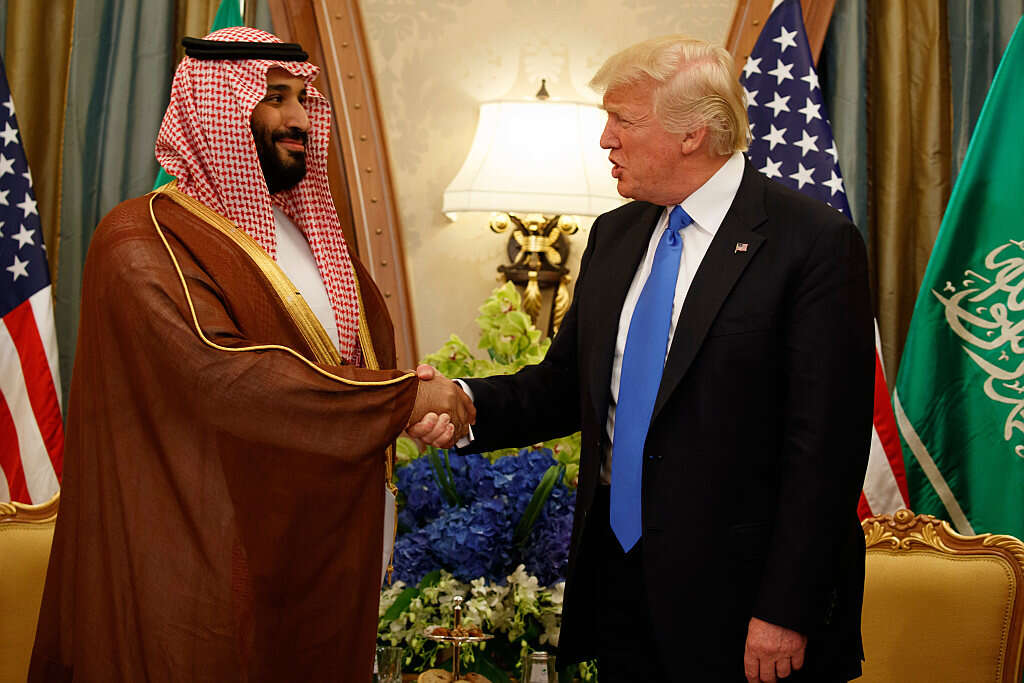
President Donald Trump shakes hands with Saudi Deputy Crown Prince and Defense Minister Mohammed bin Salman during a bilateral meeting, in Riyadh, May 20, 2017. Photo credit: Evan Vucci/AP

The immediate challenge is phase two of the hostage deal. The current agreed-upon framework contains an inherent difficulty: on one hand, it establishes that the second phase means ending the war. On the other hand, Israel has defined Hamas' removal from power as one of its war objectives and declared it would not cease fighting until this goal is achieved. In practice, despite our military achievements, we remain far from realizing this objective.

Trump sees himself as a dealmaker who prevents wars. His involvement, along with his envoy Steve Witkoff, was instrumental in implementing phase one of the hostage deal. He undoubtedly wants to proceed with phase two, while sharing the position that Hamas must not continue ruling Gaza. How can this circle be squared? The second phase could be based on Israeli-American understandings about the post-Hamas era, and/or arrangements allowing Israel to resume fighting.

In the broader regional context, addressing Iran's nuclear program tops the agenda. The situation has reached a dangerous point – but as mentioned, the weakening of the Iranian axis has created a unique opportunity to address it.
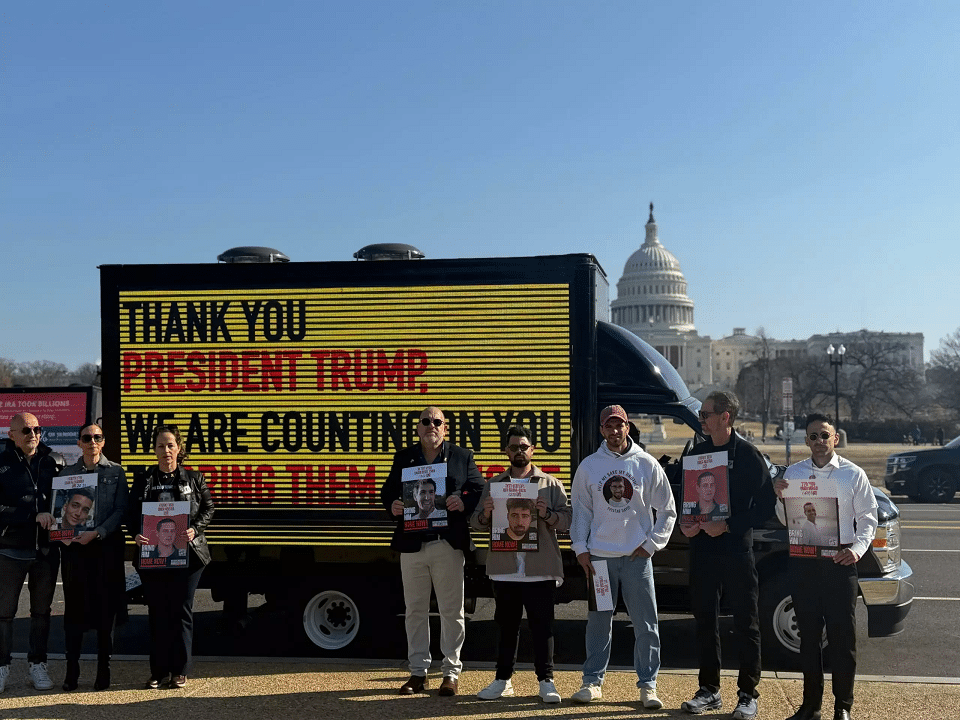
A truck displaying a thank-you message to President Trump from hostages' families circles near the White House. Photo: Hostages and Missing Families Forum

The actions we have taken in the Middle East have transformed regional realities in ways that serve US interests. Trump, viewing himself as a dealmaker and war preventer, is considering returning to a diplomatic path with Iran based on economic and political pressure. Israel needs to clarify the diplomatic framework, its timeline, and crucially – what the US will do if it fails. Personally, I doubt its chances of success, and in any case, dialogue with Iran must be backed by a credible military option.

Trump is also interested in advancing Israeli-Saudi normalization, but for the Saudis, this depends on a ceasefire in Gaza and outlining a political horizon for the Palestinian issue – a sensitive topic in Israel. A breakthrough serves everyone's interests but it may need to be postponed until after addressing the Iranian and Gaza issues.

This meeting holds supreme importance for shaping the Middle East's future. The Trump administration understands that Israel's enemies are also the enemies of the West and the US, and our success in the war serves American strategic interests.

In the past, there were issues where Israel stood firm without compromise. The same applies to current discussions – this is a negotiation where both sides speak and listen.

Tags: Benjamin NetanyahuDonald Trump

Related Posts

More Mamdanis to come and Trump can't stop itAFP/Jim Watson

More Mamdanis to come and Trump can't stop it

by Yoav Limor

Despite the belief that the president will solve all the problems, in the battle for public opinion among young Americans,...

Netanyahu is gambling with Israel's security

Netanyahu is gambling with Israel's security

by Yoav Limor

Prime Minister Benjamin Netanyahu has named Roman Gofman as director of the Mossad, despite Gofman having no background in intelligence...

Netanyahu's Washington visit comes with a hard decisionChip Somodevilla / POOL / AFPף EPA/WILL OLIVERף Stephanie Lecocq/Pool via AP

Netanyahu's Washington visit comes with a hard decision

by Danny Zaken

While the US is set to request curbs on IDF operations, officials acknowledge that no comprehensive Middle East arrangement is...

Menu

Analysis 

Archaeology

Blogpost

Business & Finance

Culture

Exclusive

Explainer

Environment


Features

Health

In Brief

Jewish World

Judea and Samaria

Lifestyle

Cyber & Internet

Sports


Diplomacy 

Iran & The Gulf

Gaza Strip

Politics

Shopping

Terms of use

Privacy Policy

Submissions

Contact Us

About Us

The first issue of Israel Hayom appeared on July 30, 2007. Israel Hayom was founded on the belief that the Israeli public deserves better, more balanced and more accurate journalism. Journalism that speaks, not shouts. Journalism of a different kind. And free of charge.

All rights reserved to Israel Hayom

Hosted by sPD.co.il

  • Home
  • News
    • Israel at War
    • Israel
    • United States
    • Middle East
    • Sports
  • Opinions
  • Jewish World
    • Archaeology
    • Antisemitism
  • Lifestyle
    • Food
    • Travel
    • Fashion
    • Culture
  • Magazine
    • Feature
    • Analysis
    • Explainer
    • Environment & Wildlife
    • Health & Wellness
  • In Memoriam
  • Subscribe to Newsletter
  • Submit your opinion
  • Terms and conditions

All rights reserved to Israel Hayom

Hosted by sPD.co.il

Newsletter

[contact-form-7 id=”508379″ html_id=”isrh_form_Newsletter_en” title=”newsletter_subscribe”]

  • Home
  • News
    • Israel at War
    • Israel
    • United States
    • Middle East
    • Sports
  • Opinions
  • Jewish World
    • Archaeology
    • Antisemitism
  • Lifestyle
    • Food
    • Travel
    • Fashion
    • Culture
  • Magazine
    • Feature
    • Analysis
    • Explainer
    • Environment & Wildlife
    • Health & Wellness
  • In Memoriam
  • Subscribe to Newsletter
  • Submit your opinion
  • Terms and conditions

All rights reserved to Israel Hayom

Hosted by sPD.co.il