Friday Dec 5, 2025
NEWSLETTER
www.israelhayom.com
  • Home
  • News
    • Israel
    • Israel at War
    • Middle East
    • United States
  • Opinions
  • Jewish World
    • Archaeology
    • Antisemitism
  • Lifestyle
    • Food
    • Travel
    • Fashion
    • Culture
  • Magazine
    • Feature
    • Analysis
    • Explainer
  • In Memoriam
www.israelhayom.com
  • Home
  • News
    • Israel
    • Israel at War
    • Middle East
    • United States
  • Opinions
  • Jewish World
    • Archaeology
    • Antisemitism
  • Lifestyle
    • Food
    • Travel
    • Fashion
    • Culture
  • Magazine
    • Feature
    • Analysis
    • Explainer
  • In Memoriam
www.israelhayom.com
Home News Middle East War in Syria

NYT: Syria might have chemical weapons in more than 100 locations

This higher-than-expected figure represents the first estimate provided by the Organization for the Prohibition of Chemical Weapons (OPCW) as it assesses what remains of Assad's military program. Israeli strikes may have complicated efforts to secure Syrian chemical weapons, expert tells US paper.

by  Erez Linn
Published on  04-06-2025 13:18
Last modified: 04-06-2025 14:45
NYT: Syria might have chemical weapons in more than 100 locationsDigitalGlobe via AP

The Shayrat air base in Syria, following US Tomahawk Land Attack Missile strikes on Friday, April 7, 2017 from the USS Ross (DDG 71) and USS Porter (DDG 78) | Illustration: DigitalGlobe via AP

Share on FacebookShare on Twitter

The New York Times reported Sunday that more than 100 chemical weapons sites are suspected to remain in Syria, left behind after the fall of President Assad, according to the leading international organization tracking these weapons.

This figure, reported by The New York Times, represents the first estimate provided by the Organization for the Prohibition of Chemical Weapons (OPCW) as it seeks to enter Syria to assess what remains of Assad's military program. The number is far higher than any President Assad ever acknowledged, according to The New York Times reporting.

These sites are believed to have been involved in research, manufacturing and storage of chemical weapons. The New York Times notes that President Assad used weapons like sarin and chlorine gas against rebel fighters and Syrian civilians during more than a decade of civil war. The security status of these sites has remained uncertain since rebels toppled Assad last year.

The chemicals now represent a major test for the caretaker government led by Hayat Tahrir al-Sham (HTS), headed by Abu Mohammad al-Julani. The US designates HTS as a terrorist organization, though it has renounced its links to al-Qaida.

"There are many locations that we don't know about because the old regime was lying to the OPCW," said Raed al-Saleh, the leader of the Syria Civil Defense (White Helmets), a volunteer group that says it is working with the government to dismantle chemical weapons sites.

The stakes are high due to the deadly nature of these weapons, particularly in densely populated areas. Sarin, a nerve agent, can kill within minutes, while chlorine and mustard gas burn the eyes and skin and fill lungs with fluid.

Syria's foreign minister said during a March visit to OPCW headquarters that the government would "destroy any remains of the chemical weapons program developed under the Assad regime" and comply with international law.
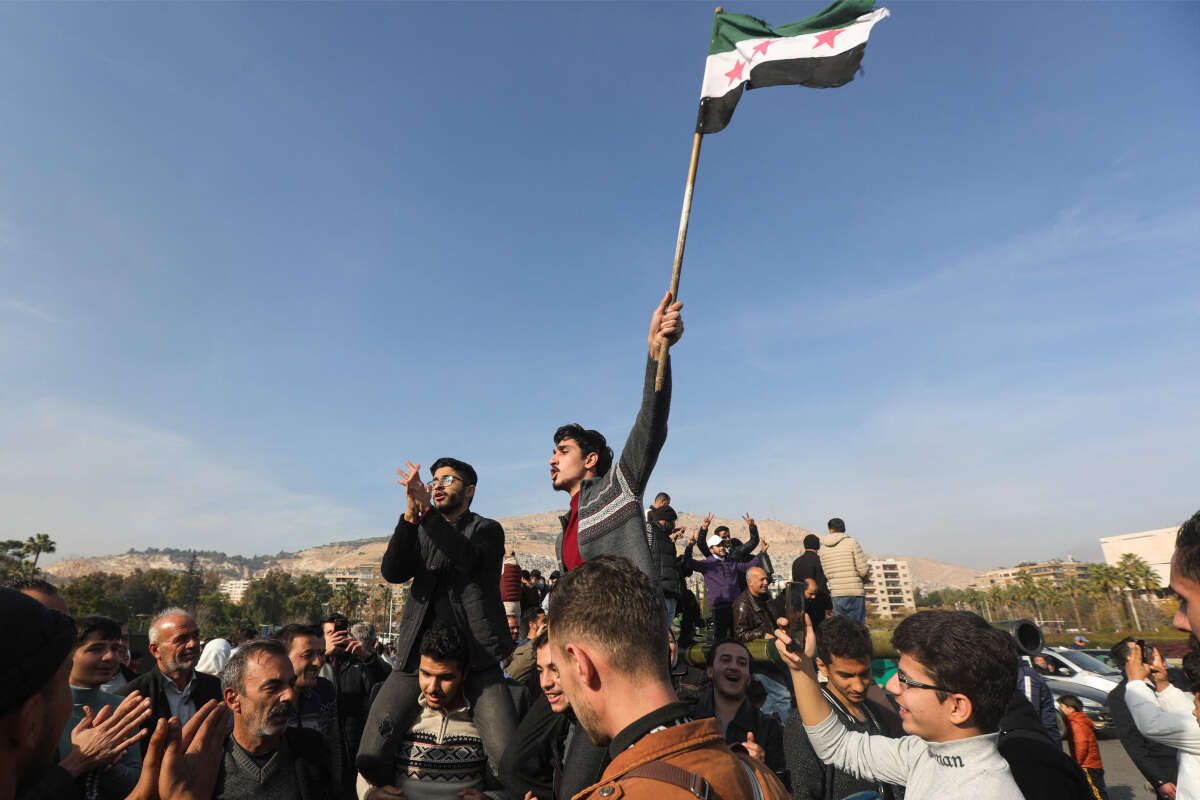
People in Damascus celebrate on December 9, 2024, after Islamist-led rebels declared that they have taken the Syrian capital in a lightning offensive Bakr Alkasem / AFP

Nidal Shikhani, who leads the Chemical Violations Documentation Center of Syria and has worked with the OPCW for years, told The New York Times his group identified dozens of new locations that could be chemical weapons stockpiles or former research sites based on interviews with Syrian government scientists living in Europe.

Finding and securing these sites is crucial not only for security but also to collect evidence for investigations into Assad's repeated use of chemical weapons. International observers have documented dozens of attacks with thousands of victims, including children. The most notorious was a 2013 sarin gas assault on Ghouta, a Damascus suburb.

Last year, Israel launched airstrikes on several Syrian regime facilities where chemical weapons were believed to have been held, though it remains unclear whether those strikes destroyed the weapons themselves, according to the Times. Shikhani and others worry that the strikes may have created environmental contamination and destroyed evidence. International groups hope chemical evidence will answer key questions about the Assad government's research and aid international prosecutions.

"The Israeli attacks that happened right after the fall of Assad are probably likely to not have put a dent in some of this, and potentially also obscured efforts toward accountability," said Natasha Hall, a senior fellow with the Center for Strategic and International Studies in Washington.

Syria's chemical weapons program began in the 1970s with hundreds of government scientists, many trained in Germany and other parts of Europe. Despite the new government's assurances, weapons inspectors remain cautiously optimistic, having heard similar promises before.

Tags: AssadIsraelSyria

Related Posts

What's next for Syria?AFP

Syria issues arrest warrant against ousted President Bashar Assad

by Shachar Kleiman

First warrant from Syrian authorities targets Assad for murder and torture charges from 2011 Daraa uprising.

Alawite homes marked with X's; forced evacuation from DamascusAP/Omar Albam

Alawite homes marked with X's; forced evacuation from Damascus

by Shachar Kleiman

Residents were reportedly forced to sign documents waiving their property rights. Incidents of looting gold jewelry and stealing cash from...

Free literature, new imams drive radical Islam in SyriaAP/Leo Correa

Free literature, new imams drive radical Islam in Syria

by Shachar Kleiman

Numerous mosque imams have been systematically replaced with ideologues who actively promote jihadist doctrine.

Menu

Analysis 

Archaeology

Blogpost

Business & Finance

Culture

Exclusive

Explainer

Environment


Features

Health

In Brief

Jewish World

Judea and Samaria

Lifestyle

Cyber & Internet

Sports


Diplomacy 

Iran & The Gulf

Gaza Strip

Politics

Shopping

Terms of use

Privacy Policy

Submissions

Contact Us

About Us

The first issue of Israel Hayom appeared on July 30, 2007. Israel Hayom was founded on the belief that the Israeli public deserves better, more balanced and more accurate journalism. Journalism that speaks, not shouts. Journalism of a different kind. And free of charge.

All rights reserved to Israel Hayom

Hosted by sPD.co.il

  • Home
  • News
    • Israel at War
    • Israel
    • United States
    • Middle East
    • Sports
  • Opinions
  • Jewish World
    • Archaeology
    • Antisemitism
  • Lifestyle
    • Food
    • Travel
    • Fashion
    • Culture
  • Magazine
    • Feature
    • Analysis
    • Explainer
    • Environment & Wildlife
    • Health & Wellness
  • In Memoriam
  • Subscribe to Newsletter
  • Submit your opinion
  • Terms and conditions

All rights reserved to Israel Hayom

Hosted by sPD.co.il

Newsletter

[contact-form-7 id=”508379″ html_id=”isrh_form_Newsletter_en” title=”newsletter_subscribe”]

  • Home
  • News
    • Israel at War
    • Israel
    • United States
    • Middle East
    • Sports
  • Opinions
  • Jewish World
    • Archaeology
    • Antisemitism
  • Lifestyle
    • Food
    • Travel
    • Fashion
    • Culture
  • Magazine
    • Feature
    • Analysis
    • Explainer
    • Environment & Wildlife
    • Health & Wellness
  • In Memoriam
  • Subscribe to Newsletter
  • Submit your opinion
  • Terms and conditions

All rights reserved to Israel Hayom

Hosted by sPD.co.il