This marks the fourth consecutive week in which Iranian and US representatives have met in a bid to advance an agreement that would curb Iran's nuclear program. Each meeting and every statement by former US President Donald Trump about the talks sends shockwaves through Israel, just as he once sent Wall Street plummeting, and then reviving, with a single remark.
At the time of writing, Trump has expressed confidence that a deal is near. "I think there will be a deal. It will happen. Without needing to start dropping bombs everywhere," he said with characteristic optimism earlier this week.
Trump made this claim even as the tone of briefings on both sides after the third meeting was less enthusiastic than before. A day after his remarks, Israeli Minister Ron Dermer declared his confidence that Trump "will not agree to a bad deal." Dermer, who is well-informed on the matter, suggested there's no reason to panic.
Still, according to a well-informed American source, nothing is final. Trump has yet to make a definitive decision, and those wishing to influence him still have time to act. In other words, instead of passively watching developments, Israel, and anyone who understands the dire consequences of a bad deal with Iran, must raise their voice now.

Trump, for all his bulldozing style, has exceptionally keen hearing. This means his administration listens to voices from the ground, especially those within his base. In the Israeli context, this is a call for ministers, MKs, experts, the media, and others knowledgeable about Iran to speak up, in Hebrew, and preferably in English.
These are fateful days, and how events unfold will depend not only on what's said inside the negotiating rooms, but also outside of them.
Hummus in Damascus
"Better cold peace than hot war," said Prime Minister Benjamin Netanyahu during an unscripted speech at the JNS conference Sunday night. Such appearances by him are now rare. Apart from obligatory speeches in the Knesset, Netanyahu rarely engages with critics of his policies.
"This is a home crowd," he told the mainly American Jewish audience at a Jerusalem hotel. And indeed, he faced no heckling over hostages or their political exploitation.
In a one-hour survey of Israel's conflict history with Arab states, Netanyahu noted the declining number of countries fighting Israel: "In the War of Independence there were seven. In the Six-Day War, three. In the Yom Kippur War, two. And in the Lebanon War, one," he summarized. He explained that Israel's military victories persuaded Arab nations to pursue agreements, and that today, the country faces one primary enemy, and it's not Arab: Iran.
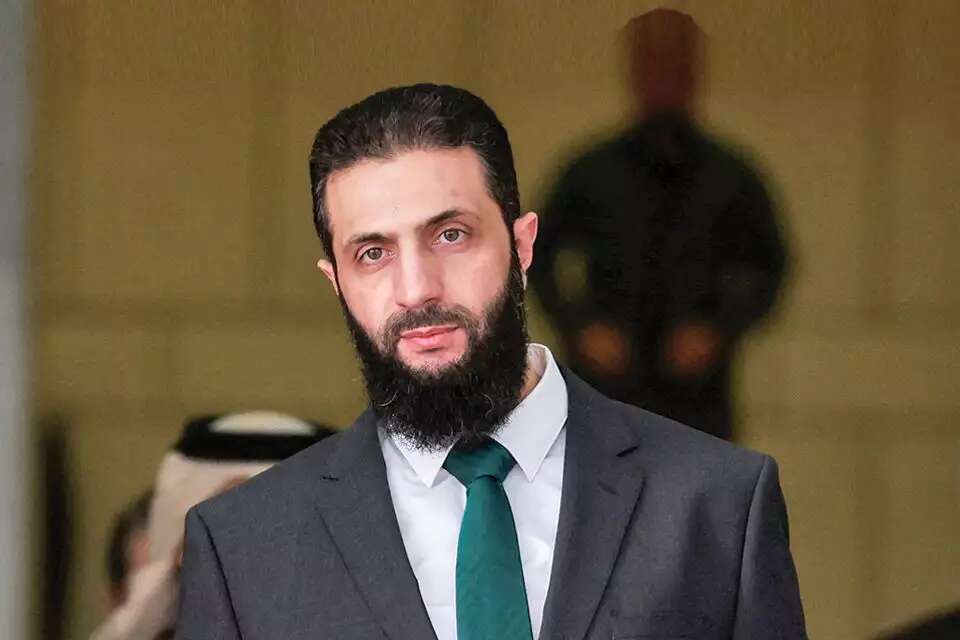
Peace with Iran is obviously off the table. But from Syria, more precisely, the newly reformed Syria under Ahmad al-Sharaa, surprising signals of peace have emerged. Sharaa, who previously went by the nom de guerre al-Julani, deposed the Assad regime in a storm of unexpected revolution and has since issued increasingly frequent messages suggesting his desire for peace with Israel.

The latest message came via two US congressmen close to Trump who visited Damascus last week. The trip, organized by Syrian exiles in the US, is part of an emerging campaign to normalize ties between Washington and "New Syria."
Corey Mills, a Florida Republican known for his proximity to Trump, met with Sharaa and later said that Syria's new president wants to join the Abraham Accords "under the right conditions." Mills also delivered a letter from Trump to Sharaa.
"I'm cautiously optimistic and want to maintain open dialogue. At one time, Germany and Japan were our enemies, but we had to move beyond that to achieve stability... I told him: let's speak soldier to soldier, it's a tough transition from battlefield to governance," Mills told reporters.
According to a Bloomberg report, Mills outlined Trump's expectations in exchange for lifting the harsh US sanctions imposed during Assad's rule. These reportedly include destroying Syria's remaining chemical weapons, coordinating counterterrorism with US allies, and providing security guarantees to Israel. However, according to the report, "Israel does not trust Sharaa and opposes lifting US sanctions."
Indeed, the prevailing instinct in Israel is to dismiss Syrian peace overtures. Both defense and political officials highlight Sharaa's jihadist roots, ideological ties to the Muslim Brotherhood, years under al-Qaeda patronage, a past terrorist attack on Israel by his group, backing from Turkish President Recep Tayyip Erdogan, enforcement of Islamic law, and mass killings of Alawites in western Syria. All are indisputable facts.
"This is a radical jihadist regime. It can't be trusted. The era of land-for-peace is over. The territories the IDF controls are vital and we're not leaving anytime soon. And anyway, Turkey and Qatar are his main backers," a senior political source said. That said, quiet security dialogues between the sides are ongoing.
There's also skepticism about the stability of Sharaa's rule. The Arab Spring in Egypt, for instance, showed how even a seemingly strong Islamist regime can collapse overnight. Syria remains deeply fractured, and many groups still reject Sharaa's authority. Violent clashes with the Druze near Damascus were reported just this week. A counter-coup by fearful minorities is not unthinkable. Since Sharaa seized power without election, concerns remain that his main priority is still consolidating control.
In short: even if Israel signed a great deal with him, his regime could fall the next day. Why pay a price for peace that might be void tomorrow?
The people behind al-Julani
Yet, there are upsides. Beyond words, Sharaa has completely halted Iranian weapons transfers to Hezbollah. He did this not out of love for Israel, but to serve his own interests. Turkey, his patron, is a historic rival of Iran, and Sunni-Shiite hostility runs deep. Sharaa understands that continued smuggling invites more Israeli airstrikes, which run counter to his stabilization goals.
He has also refrained from deploying forces against Israel or inciting anti-Israel hatred, a sharp departure from traditional Arab regimes. He likely realizes that anti-Israel rhetoric no longer unites Syrians and that any provocation could trigger overwhelming Israeli retaliation. He may not be a Zionist, but he's no fool.
Notably, he deliberately adopted the name "al-Julani," meaning "man of the Golan." If given the chance to harm Israel or seize territory, he won't hesitate. But there's another aspect to consider: throughout his 25-year militant career, Sharaa has consistently remained a hardline Sunni Muslim and a fighter for Syria. These core values are unlikely to change. Yet his life path shows political evolution, driven not just by cynical interests.
Years ago, long before becoming Syria's ruler, Sharaa expressed regret for joining Islamic State in his 20s, attributing it to youthful naiveté influenced by the Second Intifada. His ideological awakening led him to break with his former mentor, Islamic State leader Abu Bakr al-Baghdadi. Their factions clashed violently. He later formally left al-Qaeda as well, although that departure was largely symbolic.
What matters is that Sharaa has shown adaptability. A religious man, yes, but also a pragmatist. Since seizing power, he swapped combat fatigues for suits, Quranic quotes for diplomatic rhetoric. His goal: unify Syria, lift sanctions, attract investment, and forge regional alliances.
In sum, Syria's new president has a horrific past, but since taking power, he's shown impressive capacity for navigating a changed reality. A peace deal with Israel could help him. The question is, could it help us?
Reaching out
Israel stands to gain much from such an agreement. It would, of course, require ironclad security guarantees. But first, it's worth noting that the train may leave without us. Syrian advocacy groups in the US are already aiding the new regime, perhaps in hopes it will one day allow free elections.
Powerful global political and economic interests support Syria's return to the international fold. In the Arab world, the West, Turkey, and even the US, many stand to benefit from whitewashing Sharaa's past in exchange for good behavior going forward. The odds that Israeli opposition alone could halt this process are slim.
Moreover, Israel would be better off striking a deal now, while Sharaa is weak and must offer substantial concessions, rather than later, when his position will allow him to demand more. Today, we could get serious guarantees in exchange for IDF withdrawal to the international border. Tomorrow, the world may demand our withdrawal without compensation.
Third, there's a quiet competition among Sunni powers for influence over Sharaa. Saudi Arabia and the UAE, representing the pragmatic Sunni world, want to bring him into their camp. This is far preferable to him falling into the embrace of Erdogan and Qatar. An Israeli-Syrian agreement would also ease Lebanon's potential path toward reconciliation with Israel.
All this said, Israel must demand absolute guarantees. And right now, these would be easier to obtain. The 1974 Israel-Syria disengagement agreement, brokered after a tough war, included buffer zones and Syrian commitments to prevent terror, dutifully upheld for 50 years. Today, Israel is in a much stronger position to dictate even better terms: IDF presence on Mount Hermon, prohibition of foreign militias, restrictions on Syrian military buildup near the border, and more.
Sharaa wants Israeli air raids to stop. Israel can't oblige. Disagreements are likely. But it's unclear why Israel is so quick to dismiss the extended hand from the northeast. Removing Syria from the Iranian axis would deliver another major blow to Tehran.