

Israel is currently grappling with three critical fronts, each demanding strategic decisions with far-reaching consequences.
The first front is Gaza. The Israel Defense Forces are preparing to call up tens of thousands of reservists in anticipation of a major expansion of the operation underway in the Gaza Strip for the past month and a half. On Friday, the Diplomatic-Security Cabinet convened to approve the next stage of the campaign and, for now, authorized an intermediate plan involving a partial operation, aimed at increasing pressure on the Hamas terrorist organization to soften its stance in hostage negotiations.
The government's overall strategy remains unclear. It is evidently prioritizing Hamas' defeat over the return of the hostages, as Prime Minister Benjamin Netanyahu indicated last week. The IDF, in contrast, is placing the hostage issue first, as was made clear in comments by IDF Chief of Staff Lt. Gen. Herzi Halevi during Memorial Day and Independence Day events. A year and a half into the war, it is increasingly apparent that Israel cannot pursue both goals simultaneously. The country must make a decisive choice. This is a professional decision that will shape the IDF's operational plans, but even more, it is a moral decision: whether the hostages will be abandoned to their fate.
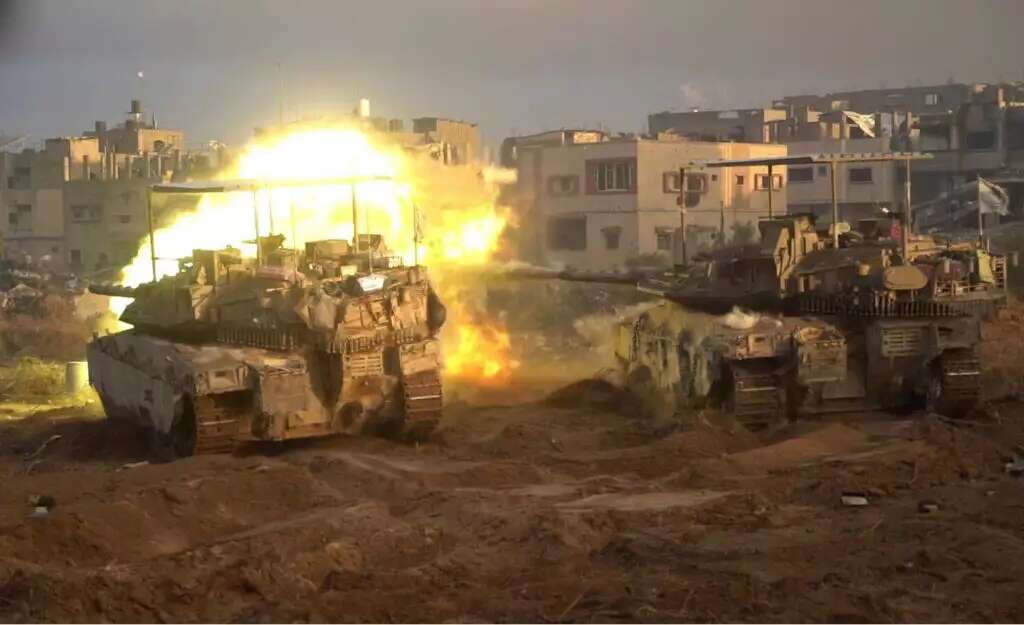
The fighting in Gaza, and the accompanying reservist call-up, will inevitably intensify debate over the IDF's needs and the government's priorities. Despite the encouraging recruitment figures reported here by Lilach Shoval on Friday, the IDF is signaling growing concern over a deepening crisis within both the reserve and standing armies. Commanders face the formidable challenge of explaining the objectives of the war to reservists who will once again pay a heavy price at home, at work, and in school. This challenge is compounded by the government's advancement of the draft evasion law, designed to appease the ultra-Orthodox parties.
Protecting the Druze amid uncertainty
The second front is Syria. The Israeli Air Force has carried out strikes on each of the past three days, in an effort to deter Syria's new regime from allowing continued jihadist attacks on the Druze minority, mainly around the Damascus suburbs. These strikes also targeted remaining Syrian army weapons stockpiles to prevent efforts to rebuild the regime's military.

Israel is trying to provide a protective umbrella for the Druze in Syria, as part of its historic blood alliance with the Druze community in Israel. This is a commendable move, though its broader strategic context is murky. Israel has not clearly defined how far it is willing to go or what it will do if Syria's new leadership escalates its attacks on the Druze, as it did against the Alawites last month. Is Israel prepared to target the regime and its leaders - who are currently enjoying "favored child" status in the West and among moderate Arab states - and is it ready to absorb tens of thousands of Druze refugees who may flee toward Israel if they feel endangered, as occurred with South Lebanon Army fighters during the 2000 withdrawal?
These issues demand immediate discussion, along with coordination with international actors in preparation for a potential crisis. As usual, the government is failing in both strategic thinking and preparation, opting instead to operate on a purely tactical level. Repeated statements by Netanyahu and Defense Minister Israel Katz contribute little, aside from an attempt to present themselves as politically aggressive within the domestic arena.
Between negotiations and a possible strike
The third front is Iran. As expected, after several weeks in which talks between Washington and Tehran seemed to be gaining momentum, negotiations are now faltering. Naturally, this revives the possibility that Israel may have to launch a military strike on Iran's nuclear facilities if the talks collapse completely. As previously reported in recent months, the Israeli Air Force is on high alert for a potential operation, which would require American approval and significant coordination with US Central Command.

Meanwhile, Israel is paying a price on a secondary Iranian front - in Yemen - where the Houthis have launched four missiles at Israel in recent days. This appears to be a direct consequence of US military pressure in Yemen: the Houthis are firing missiles before they can be destroyed on the ground. They are expected to continue, even though all the missiles have either been intercepted or disintegrated in midair.
From wildfires to government failures
And as if these three external fronts weren't enough, the government insists on inflaming the domestic front as well. Its failure to prepare for the massive wildfire that scorched tens of thousands of dunams on Memorial Day, and which, by sheer luck, did not cost lives, was followed by attempts by Netanyahu and his associates to divert attention. His son hinted that Shin Bet chief Ronen Bar and left-wing activists were behind the blaze, and Netanyahu claimed that 18 suspects had been arrested for arson, a number unknown to any official, with the investigation yet to yield definitive conclusions as to whether it was arson or negligence.
Netanyahu's "look, a bird!" tactic is no longer concealing the growing list of failures and scandals. These are not just about his ongoing refusal to establish a state commission of inquiry, a matter soon to be ruled on by the Israeli High Court of Justice, nor just his attacks on security chiefs, abandonment of the hostages, the "Qatargate" affair, and more. It reflects a broader realization that the government has lost interest in the public's concerns: reservists called back again to the front, kindergarten teachers whose salaries have been cut, while billions are diverted to coalition party interests and sustaining a bloated government. The sense is that nothing is properly managed.
Thus, on the most important day of the Israeli calendar - Independence Day - Netanyahu chose to skip the most significant national ceremony, the Israel Prize awards, in favor of a private celebration at a billionaire friend's winery. While Israel navigates between hostages, fires, sirens and call-up orders, and prepares for possible war expansion on multiple fronts, its leader chose to indulge in fleeting pleasures on the deck of the Titanic.


