

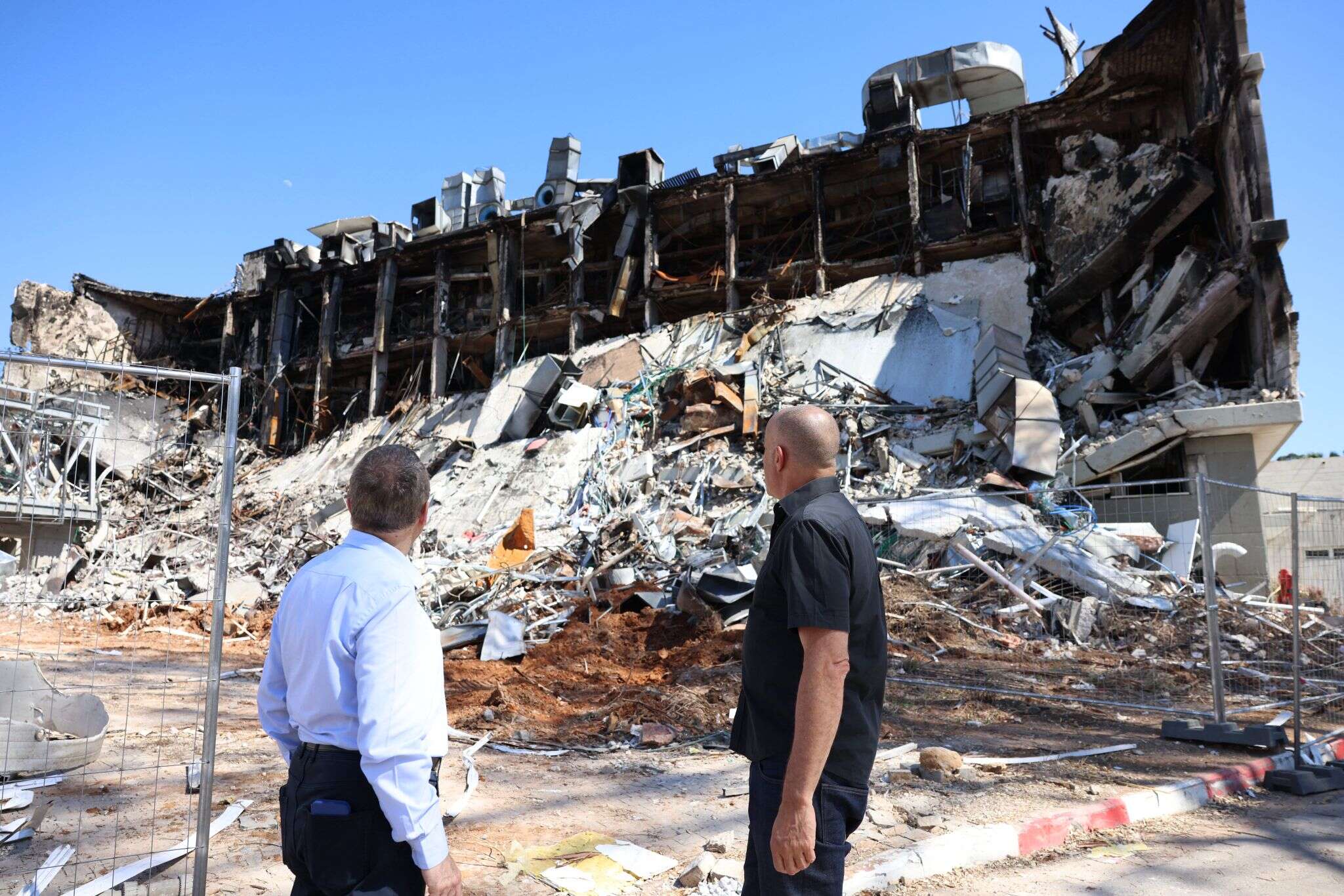
Israel's historic military operation in Iran delivered significant achievements whose complete impact will only emerge over time, whether through the elimination of key officials in the Islamic Republic's leadership or through meaningful damage to its nuclear capabilities. However, this powerful operation triggered devastating retaliation that killed Israelis and scarred the nation with widespread destruction – damage that extends far beyond Israel's borders affecting numerous European countries, and specifically, the European Commission.
We joined European Union Ambassador to Israel Dimiter Tzantchev during his visit to the Weizmann Institute of Science, among the hardest-hit locations from Iranian ballistic missile attacks, as part of a tour of strike sites nationwide. Two missiles rendered five buildings unusable, affecting research conducted by at least 52 research groups. The cancer research center suffered the worst damage, with laboratories now entombed beneath mountains of debris.

"We truly experienced the five stages of grief," Dr. Leeat Yankielowicz-Keren, who heads a team investigating connections between the immune system and cancer. Her laboratory housed cutting-edge, exclusive equipment essential to her Weizmann research team's work – all completely destroyed. "We obtained special permission to enter the building today, and several people wept. The devastation is beyond belief. One of my students, a reserve combat soldier who served in Gaza, insisted he would rappel through windows to salvage what he could, though we told him 'nothing's left.' He was really in denial."
Another laboratory that became unusable as a result of the blast belongs to Dr. Ranit Kedmi, who studies the immune system. "I only opened my laboratory two years ago," she shared." Both research teams share a crucial commonality – they were enabled by European Research Council (ERC) grants, financed through the European Commission. The destruction of these laboratories means Iranian strikes directly impact European interests.
Dr. Yankielowicz-Keren stresses the consequences reach even further internationally. "During the first week [after the attack], I had to spend at least an hour every day replying to emails from all over the world – people offering to help, people offering to send students, people showing compassion," she said. "After October 7th, I didn't feel the same kind of solidarity. I think that this time the scientific community and particularly the cancer community experienced this as their own loss. It's not a Weizmann-specific research – it's our understanding of cancer that got pushed back years because of this, on a global level."

The Weizmann Institute ranks among the world's top research facilities. Though based in Israel, its research teams include students from across the globe. "Scientists excel at problem-solving," Dr. Kedmi observed, describing how a South Korean student in her team chose to remain in Israel and help rebuild the damaged laboratory despite the wartime reality in Israel. Meanwhile, a colleague from Heidelberg, Germany, offered his laboratory facilities to one of Yankelvitz-Keren's students to continue crucial research.
While the determination shown by these research teams and their female leaders inspires admiration, the growing global recognition of Weizmann's damage cannot be overlooked. Worldwide discourse often reduces to either supporting or opposing Israel, missing the global ripple effects created when the Weizmann Institute becomes a target, impacting the European Research Council, scientists across the world, and potentially life-saving medical advances.

The tour naturally included Soroka Hospital, the Negev region's sole medical facility. We were granted special access to examine the damage in the northern surgical building, which sustained a direct upper-floor hit. Exceptional preparation and threat assessment by Soroka personnel enabled patient evacuation one day before the strike that completely destroyed that floor and caused the floor below to collapse.

The strike's severity and the ballistic missile's warhead power became evident through the extensive ground-floor damage. Shattered ceilings and walls, demolished elevator shafts, displaced door frames, and patient rooms reduced to rubble fragments intensified as we ascended through the building's floors. Medical staff that was inside the building during the attack followed proper defensive protocols and escaped injury.
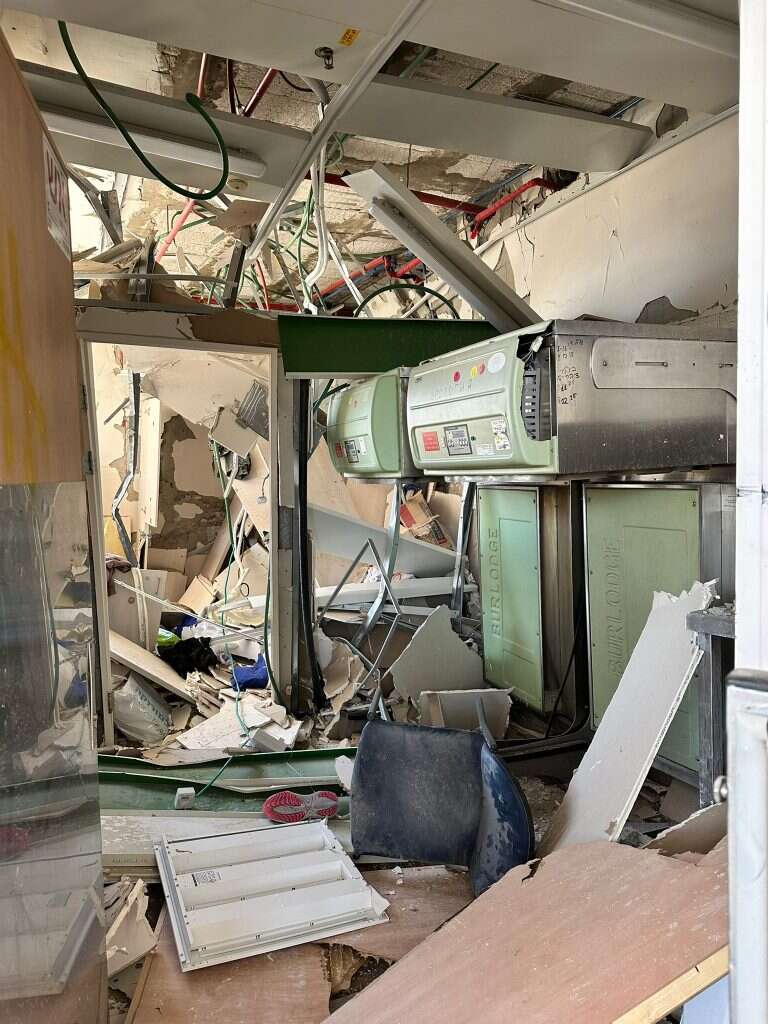
"Anywhere else worldwide, we would transfer all patients to alternative hospitals and spend a year recovering," Soroka Hospital Director Dr. Shlomi Kodesh told Ambassador Tzantchev. Remarkably, the hospital resumed 80% of operations surrounded by destruction and blast damage, in extremely difficult conditions for both patients and medical personnel alike. "We need tens of millions of dollars," Dr. Kodesh emphasized, highlighting the critical importance of maintaining Soroka's operations as southern Israel's only hospital. "The Negev deserves better," he concluded.


