


Much attention has recently been paid to the Arctic, a region once characterized by peaceful cooperation among Arctic powers, which includes the USA, Russia, Finland, Sweden, Norway, Iceland, Greenland/Denmark, and Canada. This shift is largely driven by global warming and renewed great power competition. China, historically peripheral to the region, has begun making significant inroads. Yet, the impact of Arctic developments extends beyond the polar circle, including to the Middle East. As tensions rise, one can only hope the Arctic remains a zone of relative peace, given its extreme environmental fragility.
The Arctic has long been a model of international cooperation, often described by the phrase "High North, Low Tensions." For years, the Arctic Council, made up of all of the Arctic powers, plus the organizations representing indigenous peoples in the Arctic, permanent observers, and selected NGOs, facilitated dialogue among Arctic states, intentionally excluding security issues from its mandate, while focusing on scientific cooperation, governance, and development. However, the Arctic Council's avoidance of security topics became unsustainable once global warming accelerated strategic interest in the region.
Climate change has dramatically increased the Arctic's geopolitical relevance. The region is estimated to hold 30% of undiscovered natural gas and 13% of undiscovered oil. Historically, the Arctic was too remote and icy to allow for economic extraction of these resources, but receding ice now makes these ventures more feasible. At the same time, melting permafrost risks releasing ancient pathogens that could pose unforeseen dangers to human health.
Simultaneously, the region is undergoing rapid militarization. Russia has stationed its most powerful fleet - home to a majority of its nuclear-armed submarines - in the Kola Peninsula as part of the Northern Fleet. Russian bomber bases in the Arctic support nuclear deterrence and have been used in strikes against Ukraine. The United States, recognizing the Arctic's growing strategic value, reactivated the 11th Airborne Division in Alaska in 2022 to bolster Arctic readiness. Even President Donald Trump's much-derided interest in purchasing Greenland stemmed partly from national security considerations related to the Arctic.
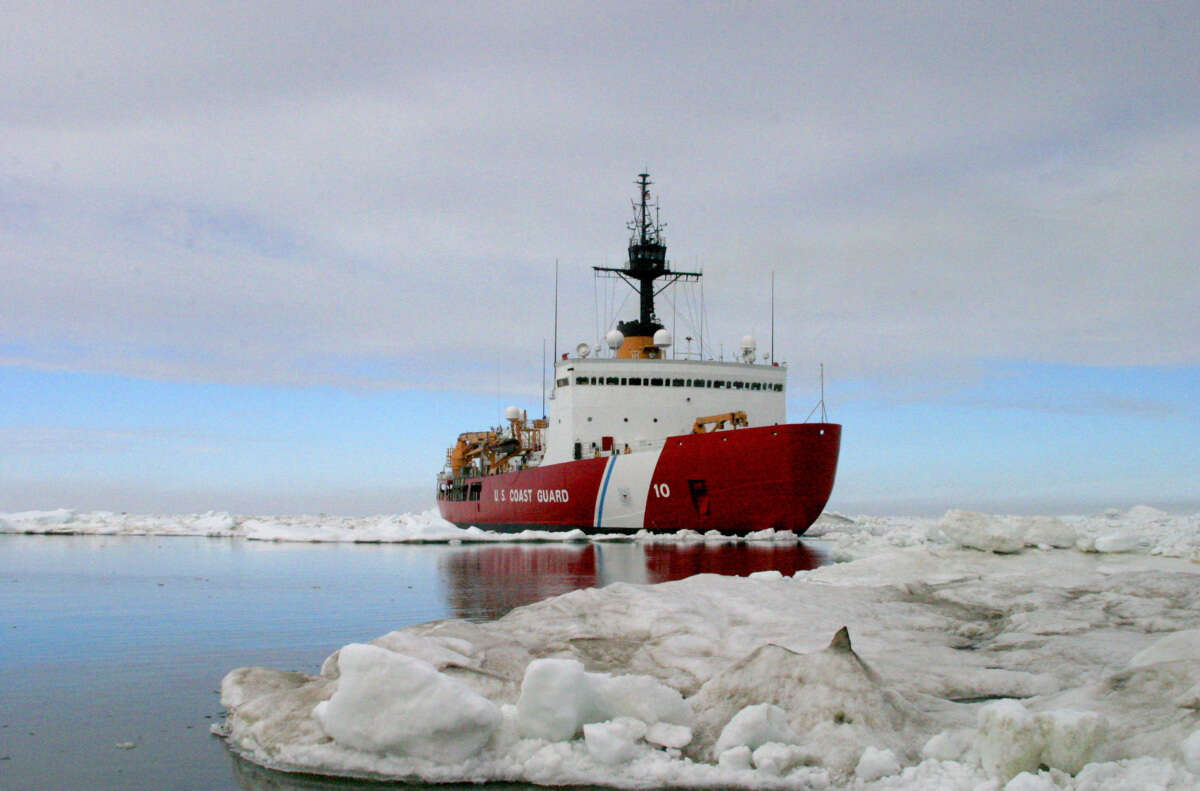
China's Arctic engagement, though newer, is expanding quickly. Chinese involvement falls into three main areas: economic, scientific, and military. Economically, China has invested in Russian Arctic infrastructure, especially in natural gas, generating revenues that indirectly support Russia's war in Ukraine. Scientifically, Chinese research, conducted in research stations in Iceland and Norway - carried out in some cases by scientists linked to China's military - conduct Arctic studies with potential military applications. Militarily, China has conducted joint exercises with Russia's coast guard and air force in the Arctic and near-Arctic waters, downplaying their purpose but raising alarm in Western capitals.
Why should the Middle East care about developments in the Arctic? The answer lies in the shifting dynamics of global trade and geopolitics. Due to melting ice, the Northern Sea Route (NSR), which is administered by Russia, is becoming navigable for longer periods each year and may be fully viable by the 2030s.This route significantly shortens shipping times between Asia and Europe, reducing reliance on the Suez Canal. Security concerns in the Red Sea, especially from Houthi attacks, make the NSR even more appealing. Even if these attacks cease, the NSR's logistical and economic advantages could divert traffic from the Suez, threatening Egypt's vital canal revenues.
The Arctic may also impact global norms in ways that resonate in the Middle East. Trump's Greenland ambitions, while unfulfilled, challenged core principles of the post–World War II order, namely, that allies do not annex territory from one another. If these norms are weakened, questions may arise about the reliability of U.S. defense commitments, including potential agreements with Saudi Arabia and Israel.
The Arctic is unlikely to be the starting point for a great power conflict - but it is increasingly likely to be a theater into which such a conflict will spill over.. Any such confrontation in the Arctic risks catastrophic environmental damage, compounding the already dire effects of climate change. Worse still, if conflict escalates to nuclear exchange in the region, the consequences could be irreversible. The Arctic, once seen as a symbol of cooperation, may yet become a flashpoint in a dangerously warming world.
Paul Weisko is a Diane and Guilford Glazer Israel-China Policy Center Research Associate. His foci are China in the Arctic and China in the Pacific Islands.


