

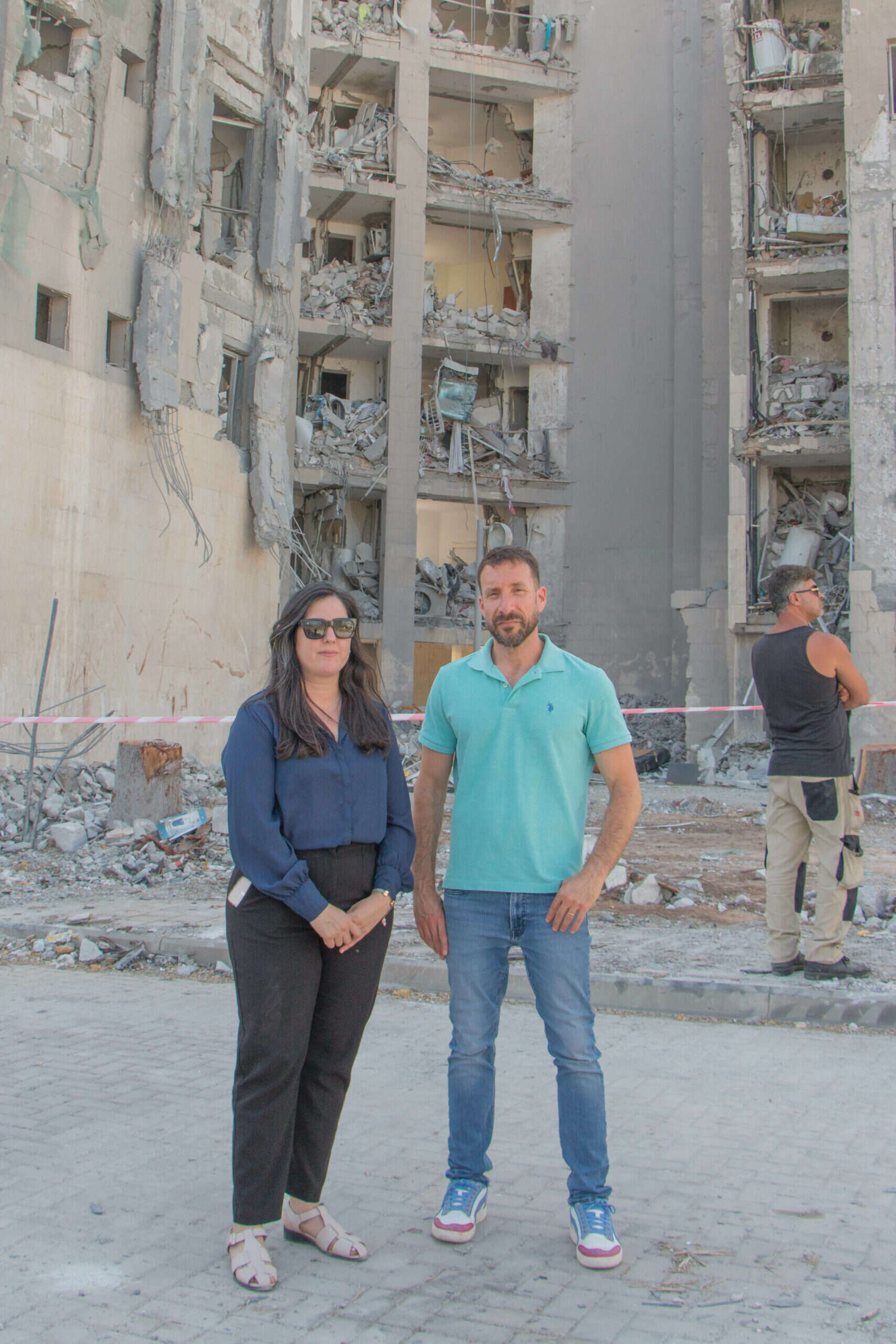
Beersheba Mayor Rubik Danilovich recalls vividly every detail of the morning of June 23, shortly after the ceasefire was declared in the war with Iran.
"I live about 800 meters from the site of the tragic direct hit," he says. "I arrived within minutes and witnessed scenes of total devastation: burning cars, collapsed buildings - and, above all, unimaginable human pain. Four residents were murdered, dozens injured, homes destroyed, families lost everything. About 670 families were evacuated and 112 buildings were damaged."

The urgent need to support residents mobilized many organizations, including the UJA-Federation of New York.
"We arrived on-site immediately with the local authorities and quickly mapped the needs - both at the destruction sites and the evacuation centers," says Itzik Shmuli, the federation's Director General in Israel. "Evacuees were moved to hotels across the region, placing enormous pressure on local authorities who suddenly had to manage dozens of sites at once. We supported those sites through our partner organizations on the ground assisting with evacuations, salvaging important belongings from the rubble, and helping residents in the initial days of chaos."
"I met with evacuees, people in shock. One moment you're at home, the next you have nothing. We were there first to help people meet their basic needs, some literally fled in pajamas and slippers. But beyond that, we offered broader support trauma care and educational frameworks in the hotels, and aid for elderly residents who are often overlooked. Some of the victims are new immigrants who don't speak Hebrew, this adds another layer of difficulty. And there are residents whose homes weren't destroyed but who live meters from the strike site and were deeply traumatized. We worked with the city to make sure they too received support, recognizing this was a citywide, multi-layered trauma."
Danilovich describes the attack on the day of the ceasefire as the most harrowing event the city has ever endured. "Frankly, we couldn't have handled it without our partners. Support from Israel and abroad wasn't just generous, it was an act of solidarity. The UJA-Federation of New York was among the first to act, not just with words but with deeds. Their support was both financial and deeply moral. It was a bold, value-driven commitment that showed both respect and care for this city
"In addition to the UJA-Federation of New York, many partners across Israel and the Jewish world stepped in to help. This wasn't just solidarity, it was a powerful message of shared destiny. Global Jewish communities continue to prove that the Jewish heart beats strong across oceans. They came, they offered solutions, they listened. They chose to link their fate to ours, and we don't take that for granted."
Lessons must be learned - and implemented
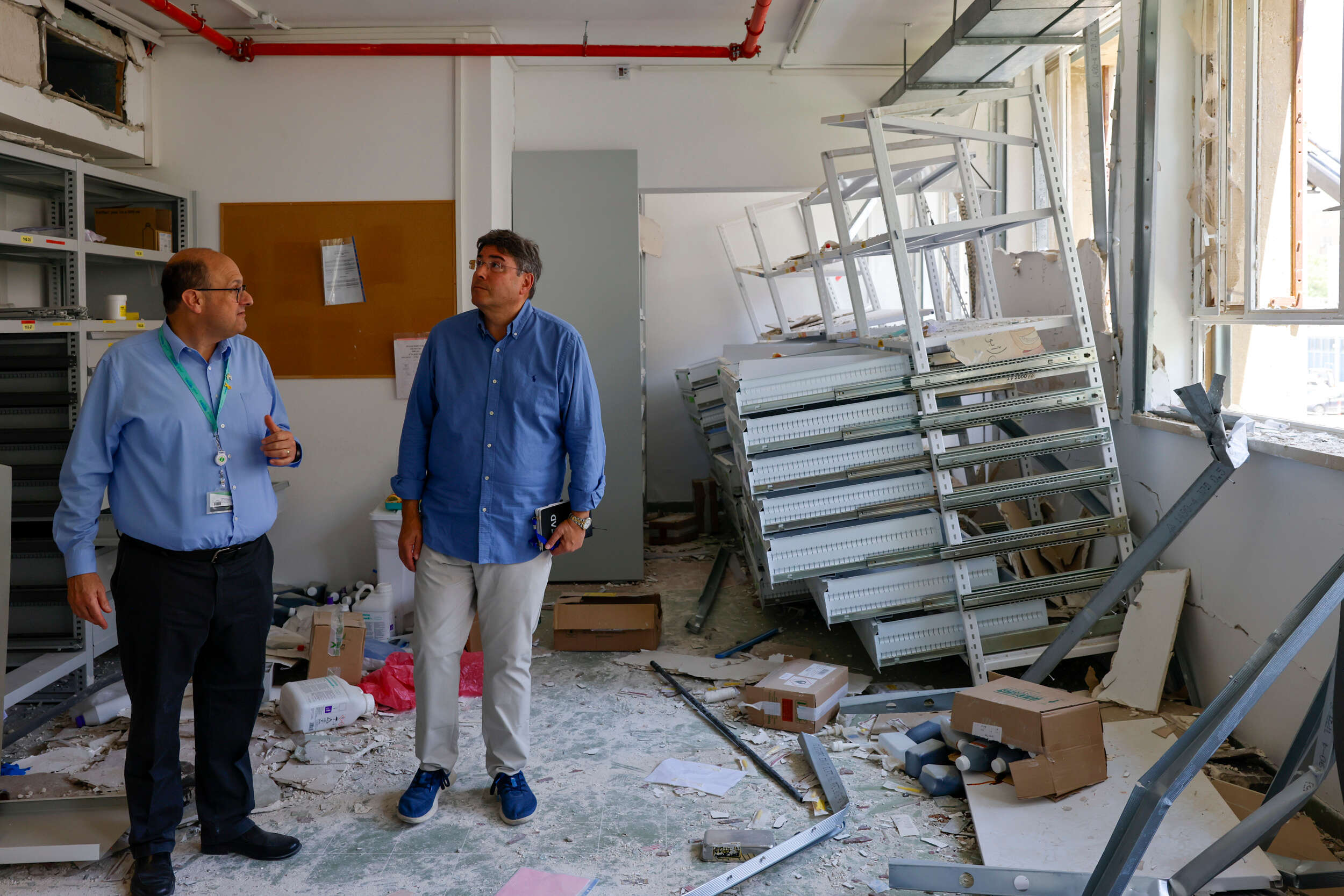
Five days before the deadly strike on Beersheba, a missile directly hit Soroka Medical Center, causing major damage.
"As a strategic medical hub, Soroka holds national importance - even in peacetime," says Hospital Director Prof. Shlomi Codish. "Our staff work with a sense of mission - it's part of our ethos. We live here, in the Negev, and the connection to this place is deep. That's why these hits are so emotional."
"We serve a complex, diverse population - the Israeli mosaic - and the missile damaged our ability to carry out our mission. I look out the window at a building meant to house eight departments, but only three are currently functioning."
According to Codish, all damaged departments had to relocate. "Within days, everyone was back at work, not because it was easy, but because we had no choice. Surgeons kept operating in makeshift buildings. Entire operating theaters were shut down. Staff showed up unprompted, carrying equipment up the stairs to salvage what they could. Janitors worked tirelessly to clear debris so departments could reopen. That spirit, I've never seen anything like it."
Looking ahead, Codish fears lessons won't be learned - again. "The state must take major responsibility for our recovery. We can't be shutting down departments and hoping for the best in the next war. A fortified building isn't a luxury, it's a matter of survival. We're not asking to live in bomb shelters, but our departments must be protected. Goodwill and promises are not enough. I've seen this before - Operation Cast Lead, Pillar of Defense, Protective Edge - pledges were made, but too often not fulfilled. That must not happen this time."
"The damage is immense. If we don't act now, we won't be able to guarantee services for Negev residents in the next emergency. What we need now isn't words of encouragement, we need infrastructure and funding. The state must raise 960 million shekels (about $260 million) to ensure Soroka won't collapse during the next crisis."
A life-saving decision
The UJA-Federation of New York has long supported Soroka, and even more so during and after the war.
"Our ties with them are very close," Codish says. "Thanks to their help, we expanded the Frances and Nathan Kirsh Emergency Department by 50%, allowing us to absorb patients when other buildings were hit. They helped us build a fortified imaging unit for children, and a child trauma center - all from donations."
"On the day of the missile strike, we used facilities built with federation support. Thanks to one donation, we purchased a mobile catheterization device we could use in protected spaces. After the hit, they immediately called to ask what we needed, and later pledged $1 million for recovery, and that's just the beginning."
Shmuli adds, "Since Oct. 7, we've provided massive support to hospitals in the periphery. These events are not only humanitarian - they're huge financial and logistical operations. Our continued backing has kept them afloat and operational, and helped them as well with preventive actions during the war. One example: they evacuated an entire building a day before the strike, a decision that saved lives. Their judgment was exceptional. We're proud to have played even a small role in enabling them to keep functioning. Our ongoing support ensures their flexibility and resilience in emergencies."
"Two days after the strike, I visited the hospital. I spoke with Prof. Codish, who knows we're committed to supporting them. My heart broke while walking through the hospital, but what amazed me was Shlomi already talking about the future - how to rebuild, how to create a new innovation hub they've dreamed of for years. Not just to repair, but to build better. We're on that journey with Soroka. We've already set aside significant initial funding for their immediate needs, and when reconstruction begins, the UJA-Federation of New York will be their first partner."
Despite the trauma, Danilovich says Beersheba's resilience shone through: "Everyone worked side by side - and most of all, residents and families who lost everything stood strong. From the very place they tried to break us, Beersheba's spirit rose. They attacked our bodies, and we fortified our souls. That is our greatest victory."
Published in partnership with the UJA-Federation of New York


