


This represents a story about a strategic threat that grew right under Israel's nose. A project involving Qatar and Iran has been ongoing for two decades. People visited Lebanon and Qatar, received remote training, created connections, and raised funds. Yet no one in Israel felt urgency to prepare accordingly.
Much has been said about the political failure in recent weeks. Israel appears to the world as solely responsible for the Gaza crisis despite streaming enormous quantities of food. Beyond the government's failure in managing humanitarian aid and lack of public diplomacy, this development also results from a well-funded propaganda apparatus with multiple arms. A system managed by the terror organization's leadership abroad, receiving assistance from international media corporations, penetrating deep into Gaza's health system, training Palestinians for social media activity, and receiving support from students in the US. Most of its people have survived so far, and they have no intention of stopping. Still, there's nothing like playing on the almost empty field left by the Israeli side.

The seeds were planted in a Gaza newspaper printed in January 1996. Al-Risala was Hamas' publication, serving as a platform for extensive incitement against Israel and the Palestinian Authority. Indeed, the Authority often tried to shut it down without success. The initial editor was Salah al-Bardawil. Later, he would become one of the Political Bureau members in Gaza, led by Yahya Sinwar. This past March, he was eliminated in the Khan Younis area. A year after Al-Risala's publication, the "Palestinian Information Center" was established – a network of Palestinian news sites identified with Hamas in multiple languages.
Al-Bardawil didn't settle for written media. In 2006, he was a partner in establishing the Al-Aqsa TV propaganda network. Another partner was Fathi Hamad, who operated the channel through a subsidiary company he managed. Before the war, Hamad managed to leave for Turkey. During those years, the network established a radio station and a news agency called "Shihab."
Each platform was designed to capture a different segment of the Palestinian population. "Shihab" was responsible for the youth wing, and, not coincidentally, earned millions of followers on social networks. Over the years, every Hamas media entity (Al-Risala, Al-Aqsa TV, and others) established its own social media accounts. Together, an enormous mass of Hamas mouthpieces was created in the digital space. And this doesn't include influencers of all kinds, of course.
One of the network's managers is Palestinian media figure Wissam Afifa. This wasn't his first role. Previously, he managed Al-Risala. These days, Afifa is careful to present himself as a "commentator." In this capacity, he appears on the Qatari network Al-Jazeera and participates in echoing Hamas messages.
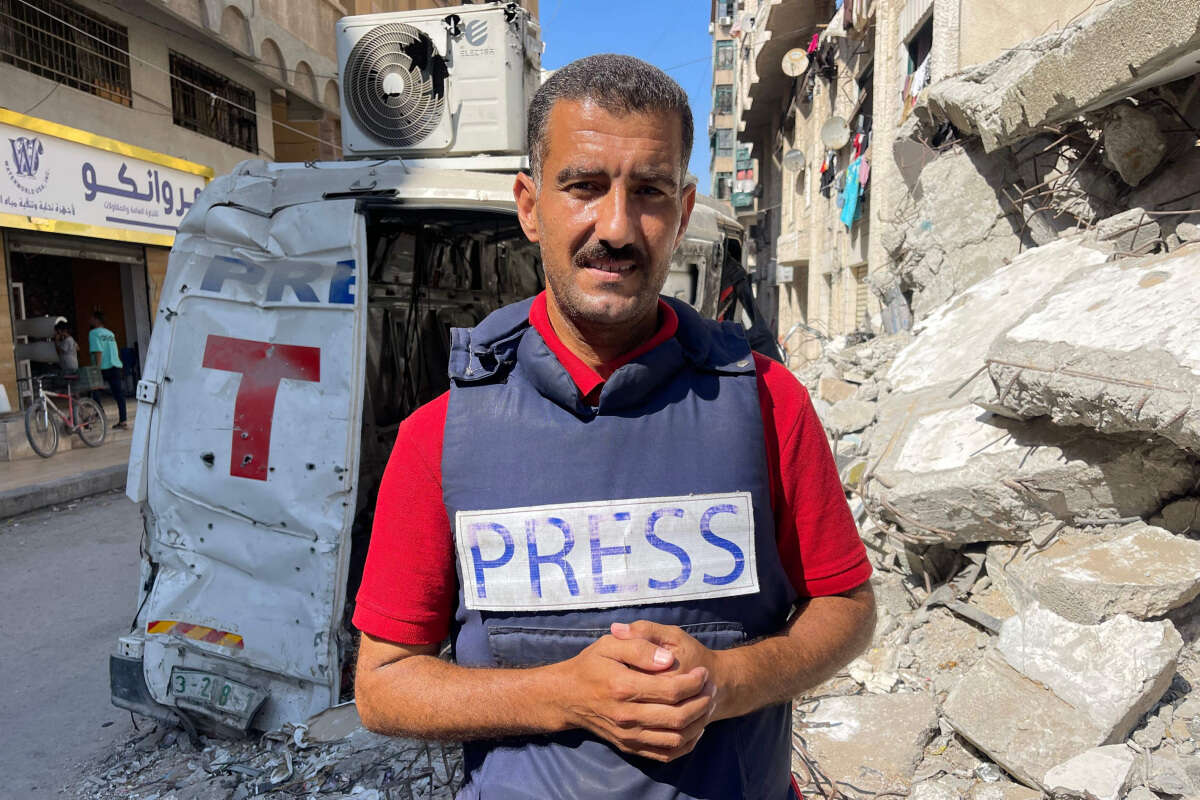
In a conversation with Israel Hayom, Dr. Ariel Admoni, a researcher at the Jerusalem Institute for Strategy and Security and Qatar expert, said that part of the Al-Aqsa TV network's staff received training from the Qatari Al-Jazeera network. "From the beginning, the Qataris were very involved in Hamas rule," Dr. Admoni said. "Qatari media knew how to break down the Gaza event into content suitable for different audiences. Those suitable for the supposedly institutional network of Al-Jazeera, and those suitable for more subversive platforms, like Al-Jazeera Plus, the Middle East Eye website, or even various influencers that Qatar finances.
"Qatar was a force multiplier in this context when recent campaigns received institutional support. That is, videos of Israeli soldiers being killed in the Gaza Strip received an echo from Qatari newspaper editors, like Jaber al-Harmi, editor of the Al-Sharq newspaper, owned by the Qatari Emir's family. Similarly, we can see how, in the recent starvation campaign, it wasn't just an Al-Jazeera production. Qatari ministers also participated, like Mariam al-Masnad, Qatar's Minister of State for International Cooperation, who usually reports more on meetings here and there, and suddenly she supposedly took a position on the shocking hunger in Gaza and how Israel is wrong."
The echo chamber
Simultaneously, Hamas still maintains a well-oiled spokesperson apparatus divided into military and civilian arms. The first is managed by Hadaifa al-Kahlout, known as Abu Obaida. Its missions include documenting hits on IDF soldiers, filming hostage videos, and transmitting the wing's messages through social networks. In short, pure psychological warfare. Here, there's expression of additional Al-Jazeera support – echoing these contents, sometimes in exchange for "exclusives," and employing terrorists on the network.

The "civilian" wing is responsible for distributing data regarding the population's condition and publishing statements to the media. One of its spokesmen was Abd al-Latif al-Qanua, considered close to Sinwar and eliminated in March. Additional spokesmen operate abroad within "Political Bureau" branches in Qatar, Turkey, and Algeria. For example, Basem Naim, Osama Hamdan, Mahmoud Mardawi, and Izzat al-Rishq.
Today, three spokesmen head the civilian wing in Gaza – Hazem Qasem, responsible for statements, Salama Maarouf, defined as head of the "governmental communications" office, and Ismail Thawabta, who manages the office. The latter two are responsible for publishing casualty data in the war – naturally, those that fit the narrative Hamas wants to broadcast. Beyond that, Maarouf served on the boards of Al-Risala publication and Al-Aqsa TV network.
The Iranian connection
Iran also sensed the opportunity. Dr. Michael Barak, a terrorism expert from Reichman University, told Israel Hayom about the involvement of a giant media conglomerate – IRTVU – which unites over 200 radio stations, news sites, and television channels. Some entities are identified with Hezbollah in Lebanon, the Houthis in Yemen, and Shiite militias in Iraq. The conglomerate, defined as the Revolutionary Guards' propaganda arm by the US, transferred training to Hamas media personnel in Beirut studios, including instruction in news program presentation.
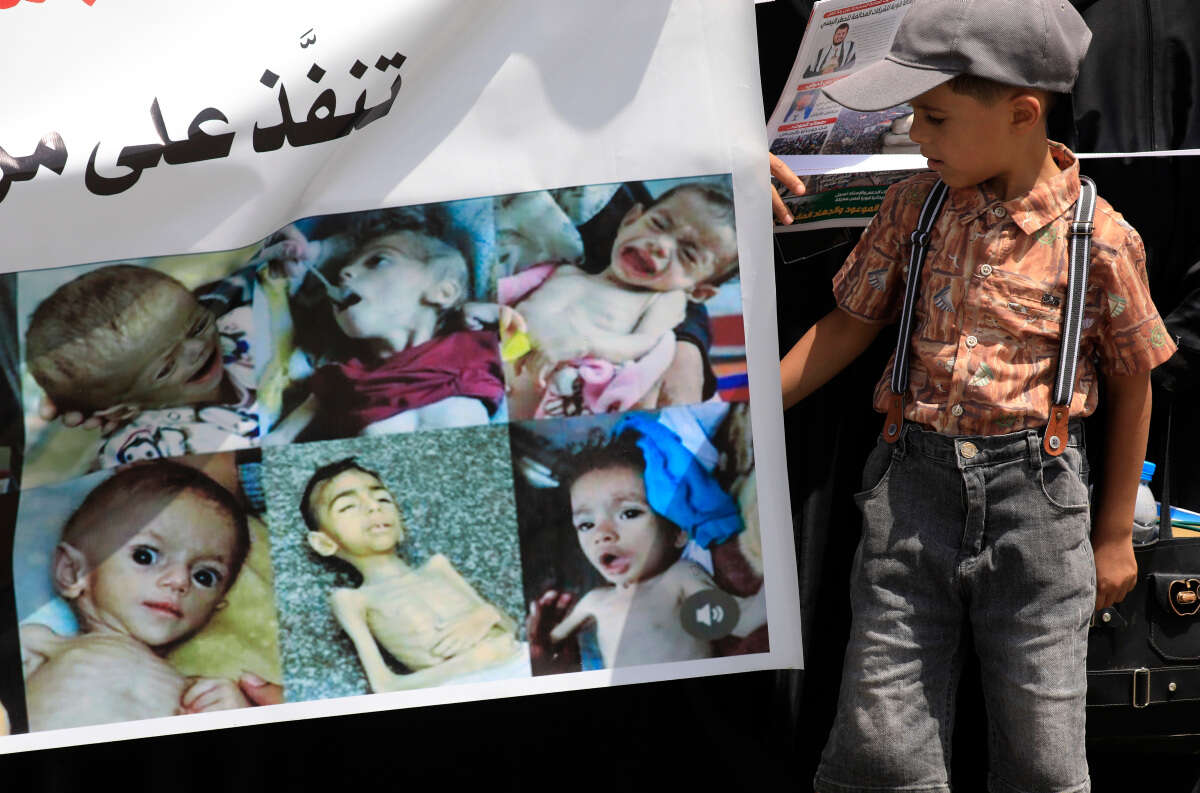
Hezbollah supervised the process, with the model being the Al-Manar propaganda network. "During COVID, they did the training on Zoom," Dr. Barak said, "Hamas and Islamic Jihad members spoke with a Hezbollah representative, a Lebanese journalist named Safa Salmani. The Palestinian branch of IRTVU was established in 2017. This is essentially another Iranian foothold in Gaza in the 'public diplomacy' field."
The senior researcher reveals that the person responsible for Palestinian training in Lebanon was a Hezbollah figure named Nassar Akhdar. Since then, he has been appointed as IRTVU deputy secretary-general and a senior official in the Iranian axis. He recently accompanied Quds Force commander Ismail Qaani on his visit to Baghdad in July. About four months before the October 7 massacre, a delegation from Hamas' spokesperson apparatus arrived in Lebanon and met with Akhdar. There, the sides discussed mobilizing joint propaganda efforts against Israel.
In Gaza, the conglomerate's representative was Salah al-Masri, a journalist identified with Islamic Jihad. According to Dr. Barak, Hezbollah's training over the years included the following topics – how to counter the Israeli narrative, how to train social media influencers, how to train school children to produce their own content, and even how to try recruiting Israeli citizens for propaganda efforts. Akhdar, needless to say, defined the activity of Iranian axis media entities as "the first front in the campaign."
One of the Iranians' contacts in Hamas, responsible for "children's training," was someone we already mentioned – Salama Maarouf. Through the governmental communications office, he dictated content to the Palestinian education system aimed at explaining how to distribute propaganda content on networks.
Another body assisting the campaign is the organization "National Students for Justice in Palestine," operating on US campuses (National SJP). "They're connected to Hamas and the Muslim Brotherhood in the US, and they also helped the starvation campaign. They distribute content on Instagram, TikTok, and additional platforms to pressure decision-makers at universities to sever ties with Israel. It's not just in the Middle East."
Doctors with borders
The echo chamber Hamas created in Gaza doesn't end here. Dr. Ashraf al-Qudra is the spokesman for the Gaza Health Ministry. He's one of the most quoted information sources in Israeli and international media. Except Dr. al-Qudra isn't in the Strip at all. During the war, he left for Qatar, where he maintains direct contact with Hamas leadership. Al-Qudra indeed relies on information from Gaza health system personnel, but they, too, depend on Hamas.

In 2007, following Hamas' coup in Gaza, this health system underwent purges for all intents and purposes. The then-Health Minister in Hamas' government, Basem Naim, now sitting in Qatar, made sure to fire central hospital directors, remove approximately 600 doctors, and get rid of an unknown number of staff members. Unfortunately, they were "identified with Fatah," so they were replaced with terror movement loyalists. In other words, every senior figure in Gaza's health system depends on Hamas or belongs to it. Indeed, under the watchful eyes of Gaza hospital administrators, Israeli hostages were held, and some were even murdered by terrorists in those same centers. Moreover, those same complexes served Hamas as headquarters and hiding places, with underground tunnels dug in their vicinity.
Another factor to note is the spokesman for the "Civil Defense System," Mahmoud Basal. This refers to Hamas' rescue team mechanism, subordinate to Hamas senior Tawfiq Abu Naim. According to the IDF, the defense system spokesman was responsible in recent months for publishing fabricated data received by international media outlets. Furthermore, it was revealed that simultaneously, he operated as a Hamas terrorist. This is obviously the tip of the iceberg. Hamas' propaganda apparatus also extends across additional accounts in the digital arena, like GAZA NOW, and includes various influencers with millions of followers. While the mechanism swells daily, Israel has been leaving the arena almost empty for many long years.


