


Once a week, an IDF truck convoy crosses the border into Syria carrying wheat, diesel fuel and a fixed list of basic supplies. Occasionally, the Druze communities on the slopes of Mount Hermon request additional items. Last week, it was medicines and basic medical equipment. The four Druze villages in the northern Syrian Hermon are almost completely cut off from the world, and their only connection is through Israeli soldiers.
Coordination with the village councils is carried out by an IDF unit tasked with liaising with them. The troops guarding the convoy are reservists from Battalion 299, the Druze "Herev" Battalion, which once served under the 300th Brigade in the western sector of the Lebanon border as part of the Mountain Brigade.
Today, veteran Druze soldiers make up 30% of the battalion, with the remaining 70% mostly Jewish veterans of the Golani Brigade and paratroopers. Most of the command remains Druze. Many of the Druze troops have relatives in the villages across the border, making the unit a human bridge between the local population and Israel. "There isn't a Druze soldier who hasn't asked to visit these villages," Lt. Col. N. said of the emotional encounters. "They offer coffee and snacks, and at most we'll take a piece of fruit to return the gesture."
'The children beg for an Israeli flag'
"It's our duty, and it's part of our core values, to provide them with basic needs," Lt. Col. N. said. "They don't ask for much, and they are very happy the IDF is here. The children beg me for the Israeli flag from my uniform. They tell me, 'Next time you come, bring us an Israeli flag.'"
While the aid is mainly basic supplies, patients have also been brought into Israel for treatment. "At the end of the day, there are babies, families, people here. This isn't our primary mission, but we can't ignore the humanitarian need," he said. "They ask me how much control the army has here, and whether someone could surprise us and kill them. They're afraid of what happened in Sweida. The younger ones are already saying they want to be part of Israel, while the village sheikhs are still afraid and don't express an opinion. They worry we might abandon them."
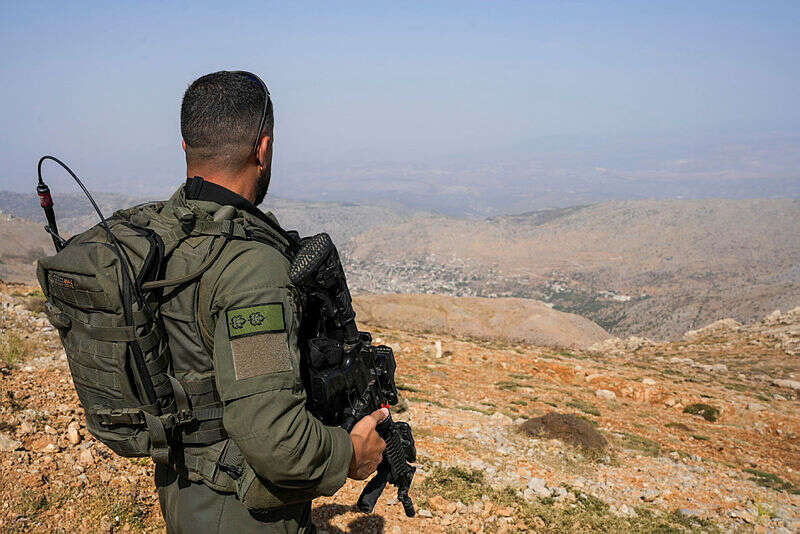
The residents, most of them farmers who grow deciduous fruit and raise livestock, live as if time has stood still. Running water is available for only one hour every five hours, electricity for limited periods each day, and to bathe, residents heat water over a fire. "They live like people did 100 years ago," said Lt. Col. N., who comes from a Druze village in the Galilee and is now finishing his term as commander of the 299th Reserve Battalion.
We drove from the Israeli outpost line to the border after looking down from above at the Syrian village of Hader and the hospital built by Israel to provide its residents with medical care. We continued deeper into Syrian territory along a road the IDF expanded under Israel Nature and Parks Authority guidelines. Once we passed the red barrels marking the border, the road widened. "This is the Hermon's Highway 6," one soldier joked.
The wider road ensures that trucks and supplies can get through even when the mountain is covered in snow. Along the way is Majdal Beit Jann, a Sunni village separating Hader from the northern Druze villages. Roadblocks there prevent the Druze from reaching Hader, so the IDF delivers supplies through the Hermon sector. While Sunnis can travel to nearby Damascus without concern, such a trip could cost a Druze their life.
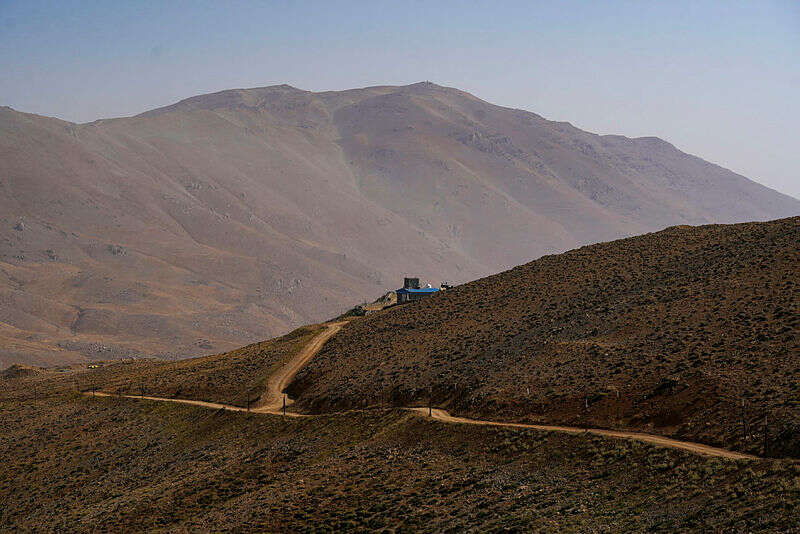
"This sector demands a lot of our attention, especially when there's instability," said Lt. Col. N., the sector commander. "Once you go in, you feel there's no control - no laws, no functioning government. We're the ones trying to create order, helping people and bringing some aid. The Syrian state isn't felt here at all."
Below us are the villages of Arneh, Rima, Buq'ata and Qalaat Jandal. Most residents are Druze, with small Christian and Sunni minorities. The IDF assists them all. Beyond the humanitarian aspect, control of the area is a clear security interest, Lt. Col. N. explained. "If these villages fall, the next step is our outposts and communities. That's why we must strengthen the villages and the population. As long as Syria is unstable, we cannot leave the Hermon."
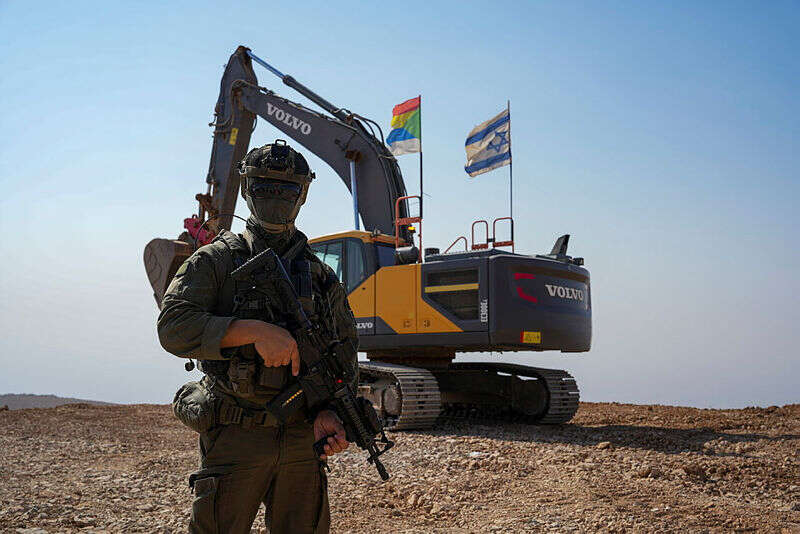
'Hummus in Damascus?'
In the past, Israel held only 7% of the Hermon. Today, it controls the entire mountain, a strategic buffer against any military force that might try to take it. "It was absolutely the right decision to take the Hermon," said Lt. Col. N. "To get a sense of its size, the drive from the Hermon ski site to the far end of the Syrian Hermon takes about an hour. On the way, you cross the smugglers' route, which leads to the villages, once used to move goods to Shebaa and southern Lebanon, including electronics and cigarettes. Now that the IDF controls the area, the smuggling has stopped or shifted further north, beyond the Hermon ridge."
The IDF has two outposts on the Hermon: One which overlooks the Druze villages and the smugglers' route, and further north, and another built on the site of a former Syrian position. "When we first entered the outpost, I could barely breathe even with a mask on. They lived in terrible conditions. Every year, soldiers died from the cold, and they were buried in the outpost yard. We saw the graves," said Lt. Col. N.
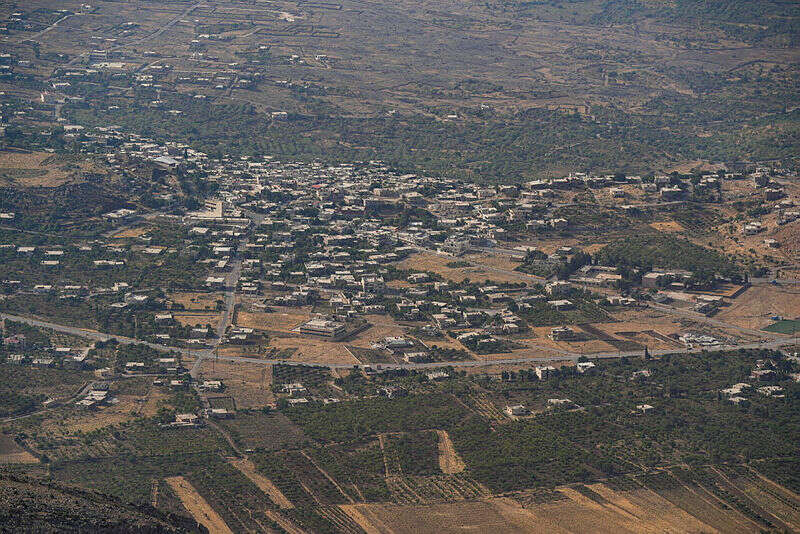
Snow on the highest peaks can pile up more than 10 meters (33 feet) deep, with freezing winter temperatures and snow lingering into mid-summer. The IDF prepares for the possibility that the outposts could be cut off for weeks, ensuring they can function independently in terms of supplies and combat readiness.
"Eating hummus in Damascus is detached from reality," said Lt. Col. N. "As a Druze who follows social media, I don't believe [al-Qaida-linked terrorist leader] Abu Muhammad al-Julani. A terrorist remains a terrorist. But maybe we can have hummus here in the Druze villages." Looking ahead with a more tourist-minded vision, he added, "Israel could develop an international ski resort here, something the Syrians never did."


