

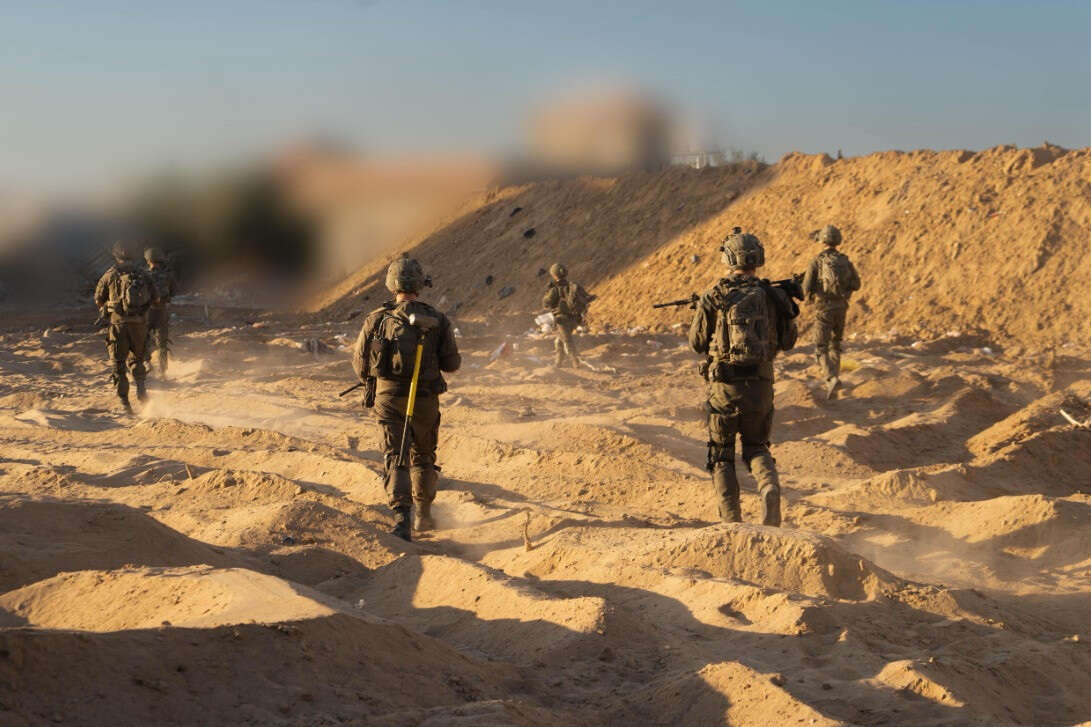
Following Defense Minister Israel Katz's approval of the Israeli Defense Forces' assault plan on Gaza City on Tuesday, the IDF is gearing up for the next stage, Operation Gideon's Chariots II, leveraging the successes of Operation Gideon's Chariots. This week, plans were finalized, though they remain adaptable and subject to change.
The operation will deploy five divisions, 12 brigade battle groups, and two Gaza regional brigades, incorporating reserve and constripted forces across engineering, air, sea, and special units. Preparations are underway – the Givati Brigade launched a maneuver in the Jabalia area on Tuesday – with further steps planned before reservist call-ups.
Simultaneously, humanitarian efforts will persist – the IDF will issue prior warnings to civilians and facilitate safe evacuation. The IDF will surround Gaza City until achieving operational control, with preliminary civilian support measures in progress. These include setting up additional distribution centers, field hospitals, and preparing facilities like the European Hospital to accommodate displaced civilians. Plans also include establishing water and medical services in the Central Camps and Al-Muwasi areas.

A security source noted, "To prepare for relocating Gaza City's population to the south, talks with international organizations have started to establish more field hospitals in southern Gaza, receiving positive feedback. Plans to enhance existing medical infrastructure in the south, in partnership with these organizations, are underway, alongside efforts to open access to additional medical facilities. The UN and other groups have begun developing a plan to resume the activity of the European Hospital as a further medical solution."
For the next phase, current forces' service will be extended by 30–40 days on a case-by-case basis – not all personnel will face extensions, as some have already served over 140 days this year. Approximately 60,000 reservists – equivalent to three brigades and additional battalions, including non-combat roles – will be mobilized, with most not required to report before September 2. Additional call-ups are planned, but flexibility will be maintained through at least November.
Reserve mobilization orders were issued today, with an expected peak of 110,000–130,000 reservists, while regular divisions form the linchpin for the Gaza operation. Some reservists will replace regular forces to support this. Further mobilization waves are scheduled for October or November, with another in early 2026.
Estimates suggest that of Hamas' original five brigades, only two remain – one in Gaza City and one in the Central Camps. Should a deal be secured, the IDF will follow the political leadership's guidance. Forces will prioritize hostage safety, working closely with intelligence to avoid harming captives.
The IDF emphasized that Operation Gideon's Chariots met its goals successfully, controlling 75% of Gaza's territory and neutralizing over 2,000 terrorists. Hamas' military chain of command has been holed up in Gaza City, with extensive infrastructure destroyed – conditions aimed at pushing Hamas toward a diplomatic resolution and hostage release deal.


