


Is the European Broadcasting Union (EBU) growing tired of the noise surrounding Israel's participation in the Eurovision contest? Just hours after Vienna was revealed as the host city for Eurovision 2026, competition manager Martin Green addressed the question of Israel's participation in an interview with the Austrian Broadcasting Corporation (ORF), and his answer suggested the issue is far from settled, and that Israel may no longer have the full backing of the union.
When asked in the interview about the controversy surrounding Israel's participation, Green responded carefully but with a disturbing hint: "At this moment, every union member who submits an application is entitled to participate in the competition," he said. "But this is a discussion that will continue throughout the year. In any conflict situation, we all want to see an end. We'll see how participation develops in the coming months." While he did not explicitly mention Israel, it was hard to mistake whom the remarks were directed toward.
This marks the first time the competition manager has delivered a public message that leaves a question mark in the air, even if indirectly. Until now, the EBU has made a habit of emphasizing at every opportunity that "Eurovision is not a political event" and that all member countries are entitled to participate without reservation.
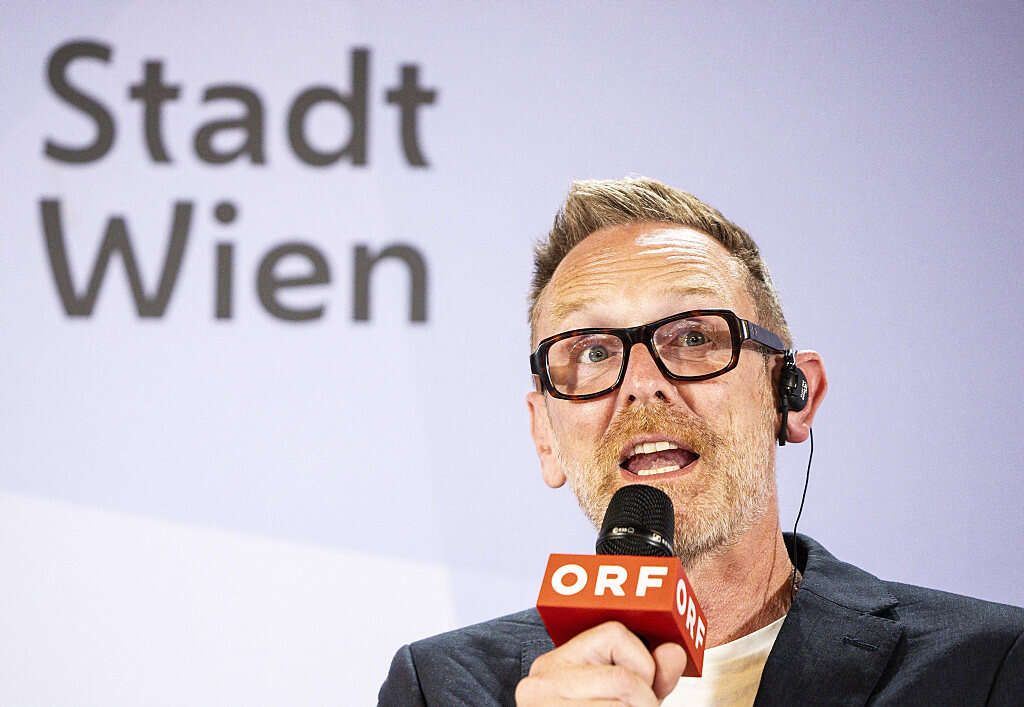
Green's recent remarks signal a different tone, one that acknowledges political sensitivity and leaves open the possibility that public and diplomatic pressures might also affect one of the world's largest cultural stages.
As recalled, in December the issue is expected to return to the discussion table of the European Broadcasting Union, following a formal demand from Iceland, Ireland, Slovenia, and Spain. These four countries submitted a request for renewed discussion of Israel's status, claiming that its participation requires fresh examination in light of the regional situation and public reactions in Europe.
The very decision to hold a repeat discussion indicates a change of atmosphere in the union's discussion hall. Even if ultimately no decision is reached that would prevent Israel's participation, the fact that the issue is on the official agenda undermines the sense of certainty that has accompanied the Israeli delegation so far and signals that Israel no longer enjoys automatic consensus.
Meanwhile, the EBU recently announced the renewal of its contract with Israeli company Moroccanoil, which has served as Eurovision's main sponsor since 2019.
Despite calls to end the cooperation, the EBU extended the partnership for the 2026 edition as well, a decision perceived as a sign that the union is still not prepared to sever ties with Israel completely, at least on the commercial level.
Either way, it appears that uncertainty surrounding Israel's participation in Eurovision 2026 will continue to accompany preparations for Vienna.
Despite mixed signals from the EBU and pressure from several European countries, the assessment is that Israel's public broadcasting corporation does not intend to voluntarily relinquish its right to participate in the competition, and preparations continue as usual.


