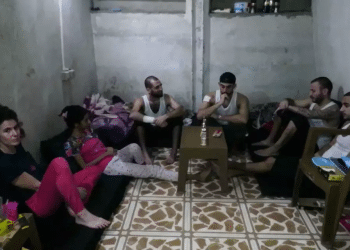
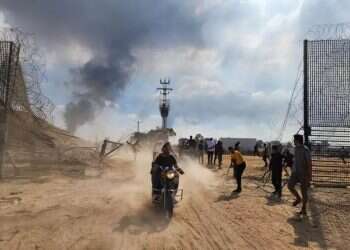
It is doubtful whether anyone besides Netanyahu truly knows what Israel intends to do in Gaza. The road ahead splits in two directions: one leads to a deal that would bring home 10 living hostages and 15–18 deceased hostages. The other points toward a major operation to capture Gaza City, and possibly the entire Strip.
Netanyahu seems convinced he can continue straight ahead: both secure the release of all the hostages and defeat Hamas. He has not explained to the public, his political partners or the security establishment how he plans to do so. Unless Hamas blinks in the coming days and agrees to concessions to avoid a wider war, it will be Israel that must decide.
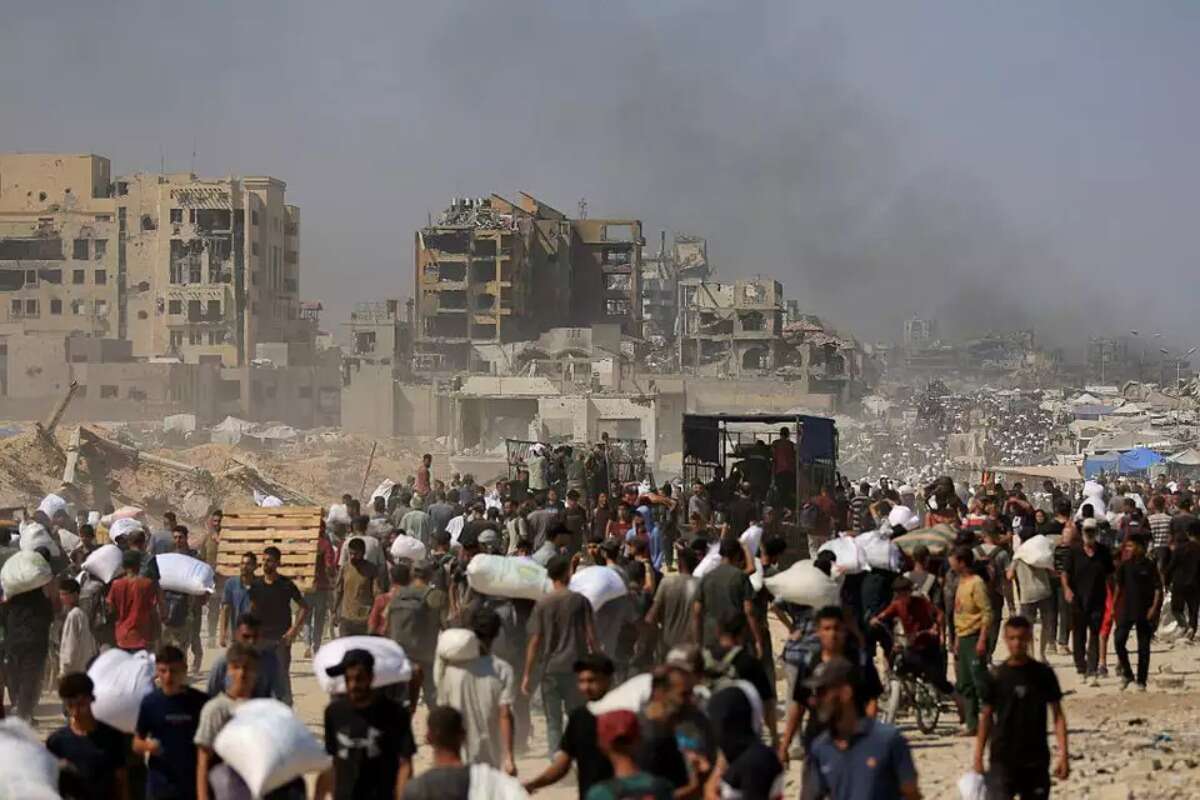
Contrary to what emerges from official declarations and political slogans, the IDF has no way of guaranteeing any part of the cabinet's decisions. The military cannot ensure the safety of the hostages or prevent executions. It cannot guarantee that there will not be heavy casualties in the battle for Gaza City, and certainly cannot commit to a timetable for clearing the underground tunnel network, known as Gaza's "lower city" (securing the above-ground areas will be easier). Nor can it ensure the evacuation of 1 million Palestinians, roughly one-third of whom refused to leave even when Israeli forces captured Gaza City in November–December 2023.
The cabinet has instructed the IDF to complete the mission by Oct. 6, to mark two years since the war began with an image of victory. But it is unclear what victory means: the current path all but guarantees that on the third anniversary of the disaster, Israeli soldiers, and likely hostages, will still be in Gaza. The chief of staff and top security officials warn that instead of ending the war, Israel may deepen it and become mired in it.

Costs of military rule
They also warn that instead of finding a path that frees Israel from ruling 2.2 million Palestinians, the government risks imposing a military administration that would exact five immense costs Israel may not be able to bear. First, effectively giving up on rescuing all or some of the hostages. Second, losing many soldiers to guerrilla attacks, like the one foiled last week against the Kfir Brigade. Third, an economic burden the Israeli economy cannot sustain. Fourth, years of strain that could erode or even collapse the regular army, the reserves and the career military. And fifth, worsening Israel's diplomatic isolation to the point of becoming a pariah state.
A recruiting hand and a releasing hand
These warnings are not being heeded. Netanyahu has so far shown little concern about mounting public pressure over the hostages, or from parents of soldiers. His confidence is such that his allies are expected to advance the "draft-dodging law" this week. On the one hand, the government is issuing emergency call-up orders to reservists who have already served hundreds of days. On the other, it is pushing to exempt tens of thousands from shouldering the burden.
Netanyahu avoided convening the cabinet last week. Perhaps he did not want to face the security establishment's pressure, or perhaps that of his coalition partners. His eyes are constantly on Washington, taking the temperature of the White House. As long as he feels he has the backing of President Donald Trump, the war will continue. If he believes Trump is shifting course, Israel is likely to halt.
For now, Netanyahu interprets Trump's demand to end the war literally: destroying Hamas. But it is far from clear that the American president knows or understands how long, complex and elusive that would be on the ground. US military commanders assured him the Houthis could be eliminated easily. Yet it was the US that backed down after a few weeks, unwilling to be dragged into an open-ended campaign. Gaza is far more complicated, especially with hostages and an immense civilian challenge in the background.
Hostage hourglass running out
Trump seems less concerned with the details. Over the weekend, he rattled hostage families by saying that some of the 20 captives still classified as alive were already dead. Government hostage coordinator Gal Hirsch issued a clarification, though it is doubtful it reassured anyone. Anyone who has seen the videos of Rom Breslavsky and Evyatar David knows that even if Trump does not know what he is talking about, he may still be right: every minute in captivity is a life-threatening danger.
The coming week will be critical. On Tuesday, the Israeli market will shut down in solidarity with the hostages. Based on last week's strike and recent polls, a solid majority of the public supports a deal that would pause or halt the war. Over the weekend, Israel will mark a year since six hostages were murdered in a tunnel in Khan Younis, another reminder of the price of sabotaged deals. Immediately afterward, on Sept. 2, mass reservist call-ups will begin. This will likely be accompanied by intensified strikes and raids on Gaza City.

Netanyahu has said he will pursue both tracks simultaneously: negotiations and war. For now, Israel is carrying out only the fighting, while avoiding real progress on talks. Without a shift, the government will find itself in a dangerous trap. It is convinced, like the legendary escape artist Harry Houdini, that Israel can always wriggle free. One can only hope that unlike Houdini, it does not meet an unexpected fatal blow.