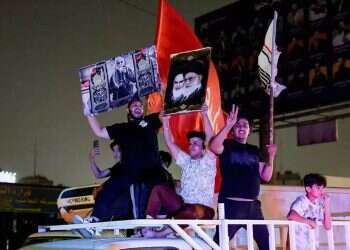
Syrian President Ahmad al-Sharaa told Arab journalists in a briefing that talks on a security agreement between Damascus and Tel Aviv are "at an advanced stage."
According to Nadim Koteich, director of Sky News Arabia, who attended the meeting, al-Sharaa said he was "betting that a security agreement between Syria and Israel will be reached, if it happens, on the basis of the 1974 line, the ceasefire line." The Islamist leader wants to renew the disengagement agreement between the two countries, establish security arrangements that preserve Syria's sovereignty, and only afterward open the door to confidence-building steps that could potentially lead to peace negotiations.

Still, the Syrian president said he does not currently see the possibility of a full peace agreement. He explained that the necessary conditions, such as mutual trust, do not yet exist. According to Koteich, al-Sharaa was candid in saying that if he came to believe a peace deal with Israel served both the Syrian people and the region, he would not hesitate to accept it and would personally explain to the public why peace was essential.
Al-Sharaa stressed that "there will be no secrets and no agreements under the table." While he did not go into details, Koteich said he got the impression the president was betting on a security agreement with Israel.
In the briefing, al-Sharaa also emphasized that Syria must remain united and that the issue of "independent entities" was a red line for him. His second red line, he said, was that no armed forces be allowed outside the control of the state. Still, Koteich said he came away with the sense that al-Sharaa was "open to a negotiating position."
Despite talk of progress, gaps remain between Israel and the Syrian regime on several issues.
First is the 1974 disengagement agreement. Damascus is demanding its renewal, which would mean a full withdrawal of Israeli forces to the positions they held before the Assad regime collapsed in December 2024. Israel, however, has reportedly insisted on maintaining certain control points in the Mount Hermon area.
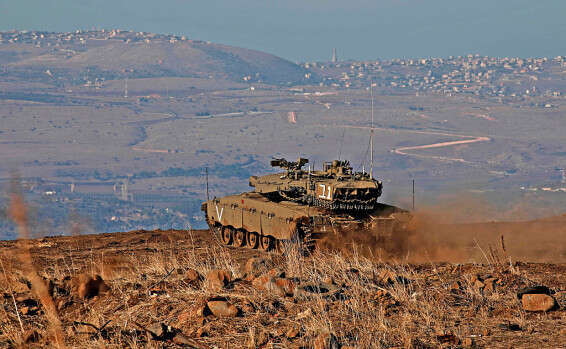
The second issue is the Druze province. Israel is said to want a humanitarian corridor between the Golan Heights and Sweida, while Syria opposes it. Within Sweida itself, Druze leaders are demanding a degree of autonomy, which al-Sharaa firmly rejects.
The third issue concerns the presence of Syrian regime forces in the southern provinces. A source familiar with the matter told Israel Hayom that there is willingness to allow an Interior Ministry security force to carry light arms, but nothing beyond that. Damascus, naturally, is seeking a more significant military presence.