

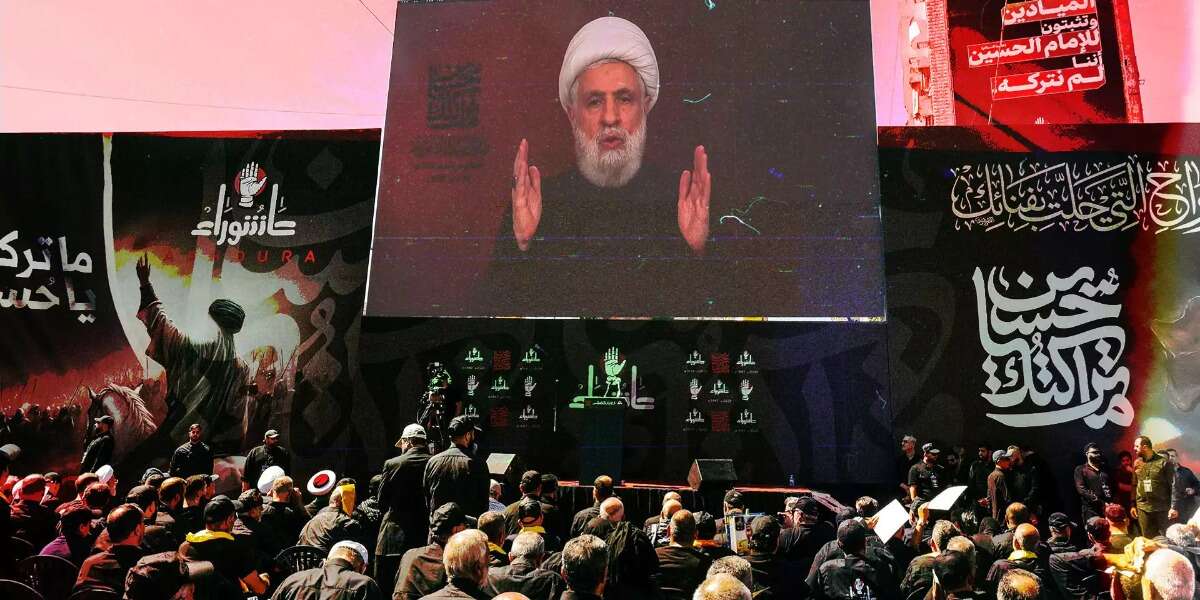
Hezbollah's secretary-general Naim Qassem's latest speech this week is an escalating signal from the terrorist organization of its readiness to threaten the state of Lebanon with civil war. This comes amid continuing pressure from Lebanese authorities to disarm Hezbollah. Qassem declared that the Lebanese government's decision to demilitarize Hezbollah is an American dictate, and called on the government to annul it.
Ahead of the Hezbollah and Amal protest rally this week at Riyad al-Solh Square, adjacent to the parliament building in Beirut, Qassem emphasized Hezbollah's uncompromising stance, whose main points are these: the terrorist organization refuses to hand over its weapons and is even prepared to confront Lebanon's authorities in order to preserve them, which he described as "our spirit, our honor and the future of our children."

The clear addressees of Qassem's remarks are President Joseph Aoun and Prime Minister Nawaf Salam. Hezbollah propagandists are already calling both of them on social media "Yazid," after the Umayyad caliph Yazid, detested by Shiites, who was responsible for the killing of Imam Husayn at the Battle of Karbala in 680. Alongside this, other Hezbollah propagandists on social media called for violent confrontation during the protest rally. In this context it is worth noting that security around President Aoun and Prime Minister Salam has recently been reinforced, out of fear that their fate could resemble that of former Lebanese prime minister Rafik al-Hariri, who was assassinated by Hezbollah in 2005.
Will Lebanon be torn apart again?
Hezbollah is not interested in a civil war. Such a war would inflict severe reputational damage on the terrorist organization, which seeks to cling to its hackneyed slogan, "the army, the people and the resistance," a phrase Qassem repeated in his speech even though Lebanon's leaders have made clear it has expired. A civil war would drag Lebanon back into the all too recent past of a bloody internal conflict and would embolden the government in Beirut, namely that Hezbollah prefers its weapons over Lebanon's stability.

Hezbollah has been pushed into a corner, and therefore seeks to exert counter-pressure on Lebanon's leadership through a series of shows of force, the nearest of which will take place tomorrow. The significant support the terrorist organization still enjoys within its social base, the Shiite community in Lebanon, enables it to take a firm stand against the Lebanese government's historic decision to disarm it by the end of 2025.
At the same time, despite the political revival of the Lebanese state, its army and security services remain weak and will not be able to force Hezbollah to disarm. Iranian backing also imbues Naim Qassem's policy with confidence and encourages him to resist pressure from the Lebanese government and the Trump administration.
The cards Israel could lose
However, the deep dispute currently shaking Iran's political arena over the regime's policy after the war against Israel is spilling over into Tehran's position on the Lebanese crisis. In contrast to the unequivocal backing Iran's conservatives give Hezbollah's position, in recent days parts of the reformist camp have called on the regime to change course. In their view, Tehran should not interfere in an internal Lebanese matter. Hezbollah, they argue, must respect the Lebanese government's decision, as the state is the sovereign, weapons must be held exclusively by it, and the presence of an armed militia in Lebanon is unacceptable. The reformist camp also questioned the usefulness of the visit to Beirut by the secretary of the Supreme National Security Council, Ali Larijani. They warned that Tehran's involvement in Lebanon could harm the regime and provide the US and Israel with a pretext to act against Iran again. Therefore, the solution they propose is to integrate Hezbollah into the Lebanese Army.
Even so, the regime's support for Hezbollah's position was made clear in the statement by Quds Force deputy coordinator Iraj Masjedi, according to whom the Lebanese government's decision to disarm Hezbollah is a "US-Zionist scheme that is unacceptable to the Lebanese people and will never be realized."
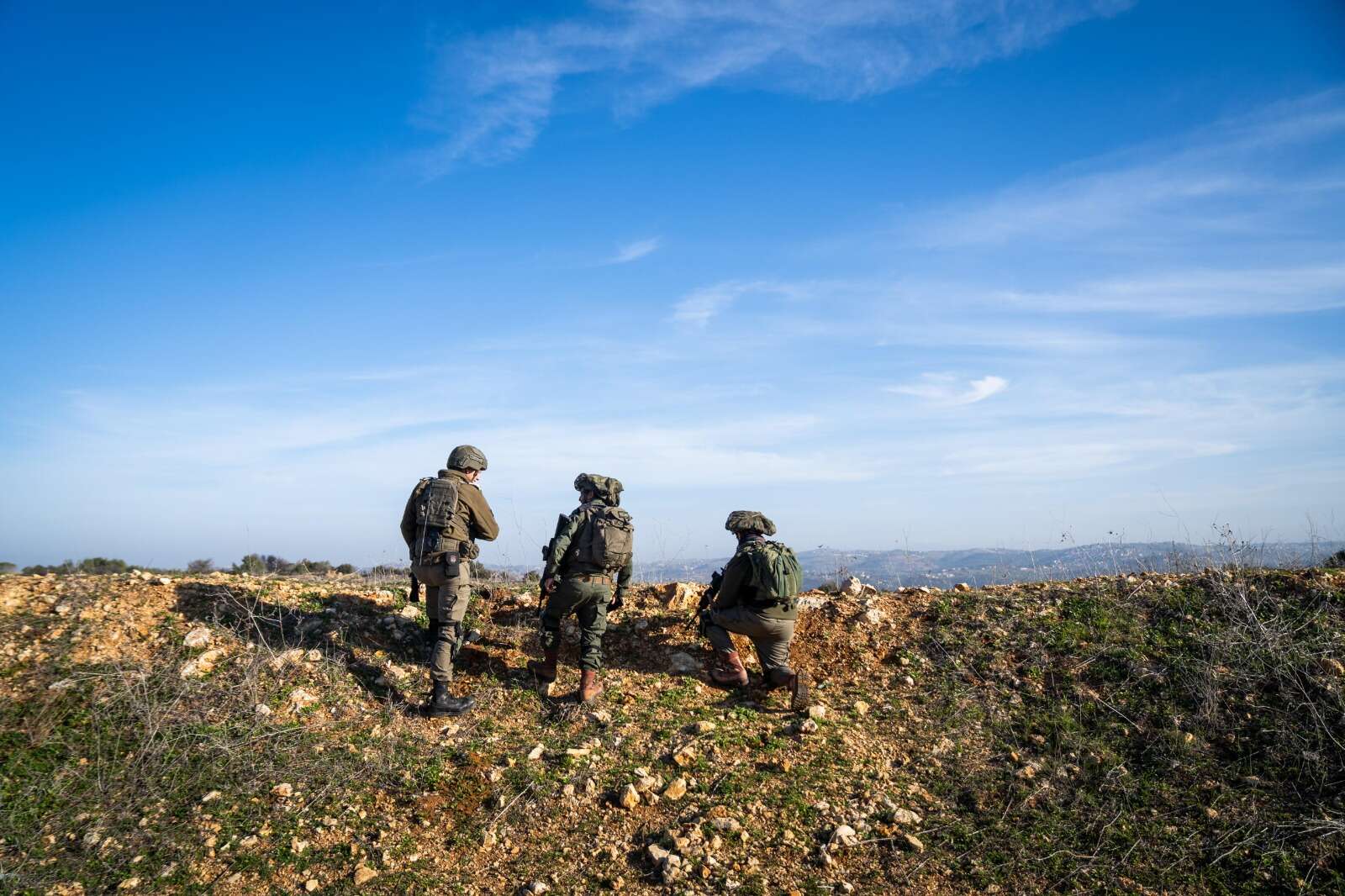
In his speech Qassem called on the government, of which Hezbollah remains a member, to hold intensive discussions on how to restore its sovereignty, which he said is harmed by the ongoing Israeli presence in five outposts in southern Lebanon. He also called on the parties, elites and influential figures in the country "to assist the government in thinking and implementing the plans," and alongside this presented Hezbollah's proposed solution: Israel must withdraw from southern Lebanon, stop its attacks on Hezbollah and release its captives, while the Lebanese state begins rebuilding the south. In return, after these steps are completed, which would strip Israel of its strategic cards, Hezbollah would be ready to discuss Lebanon's "defense strategy," in Qassem's words.
In recent contacts with the US government's envoy to Lebanon and Syria, Tom Barak, Israel proposed, according to Lebanese media reports, turning the belt of contact villages in southern Lebanon into an uninhabited, demilitarized economic zone. In exchange, Israel proposes a gradual halt to strikes and targeted killings, a gradual withdrawal from several occupied areas and "the completion of the issue of Lebanese prisoners." Such an Israel–Lebanon agreement could indeed speed the return of residents of Israel's north to their homes. However, it does not meet the need to deliver a severe political blow to Hezbollah as well, given the new reality. Israel could therefore forfeit important cards and leave Hezbollah as a popular force among the country's Shiites, who form its base of power.

It appears that in the struggle against Iran's years-long investment in Lebanon, there are no shortcuts. Israel and the US must strive to undermine Hezbollah among the Shiites by building a rival network to the terrorist organization's da'wa apparatus and by providing political support to its opponents within the community. Until then, Hezbollah will likely dare to threaten Lebanon's stability, relying on the extensive support it enjoys among the country's Shiites.


