

Israel is expanding and upgrading the Negev Nuclear Research Center near Dimona, according to an in-depth AP report released Wednesday.
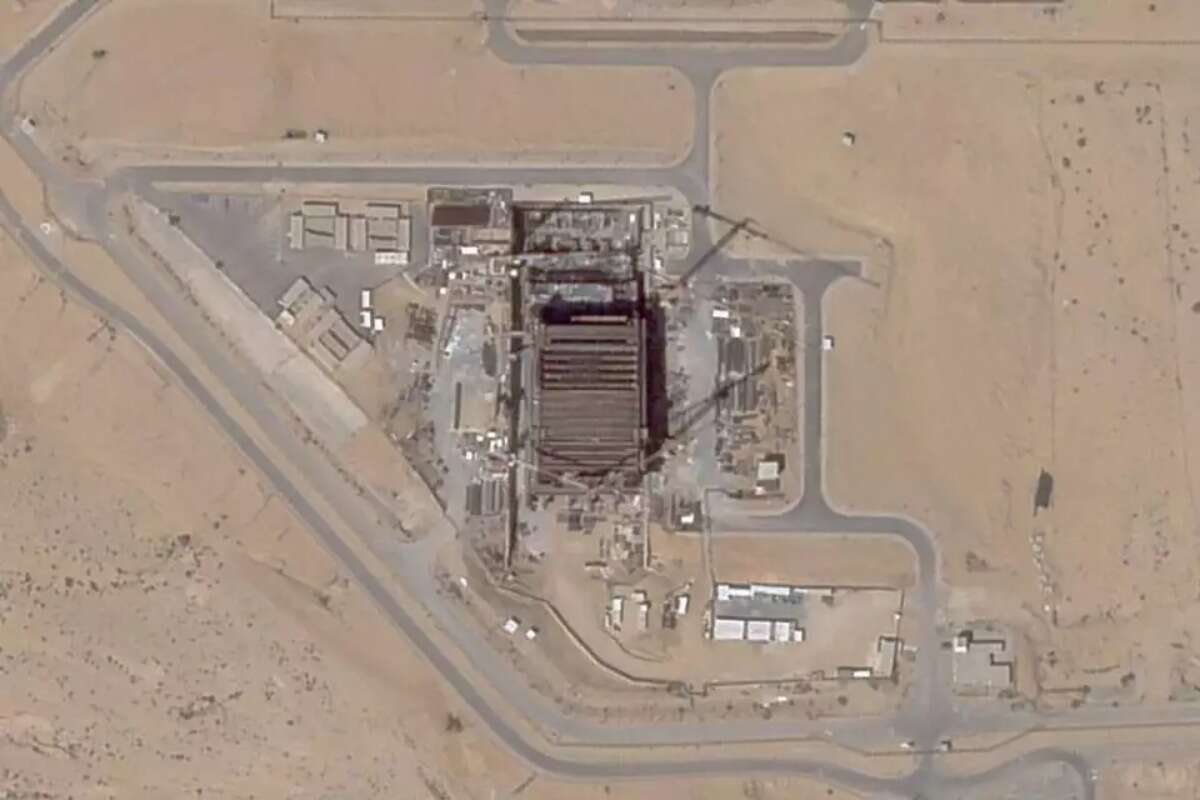
The report said construction of a new, large building has intensified at the core site of Israel's nuclear program. The assessment is based on satellite images analyzed by nuclear experts, who said the project could be a new reactor or a facility for assembling nuclear weapons. The secrecy surrounding Israel's program makes it impossible to determine with certainty.
"The work at the Shimon Peres Negev Nuclear Research Center near the city of Dimona will renew questions about Israel's widely held status as the Middle East's only nuclear-armed nation," the agency wrote.
AP suggested the project could trigger international criticism, particularly given its timing: Israel and the US bombed nuclear sites across Iran in June, fearing Tehran could exploit its enrichment facilities to pursue nuclear weapons. Among the targets hit was Iran's heavy-water reactor at Arak.
Seven experts who reviewed the satellite photos agreed the construction is linked to Israel's nuclear weapons program, given its proximity to the Dimona reactor, which does not serve any civilian power function. However, they disagreed on whether the work represents a new heavy-water reactor or another type of nuclear-related facility.
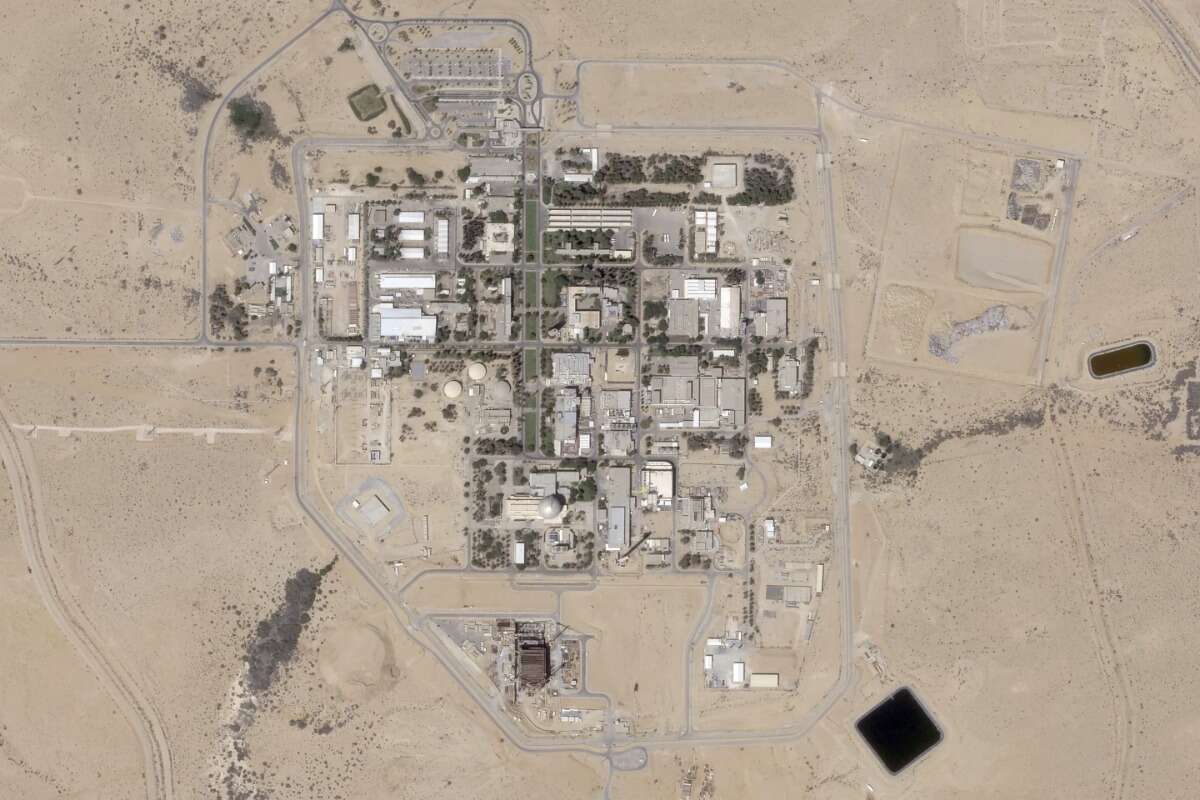
Three said the site's location, size and multiple underground levels strongly suggest a new heavy-water reactor, which can produce plutonium and other materials critical for nuclear arms. Four others allowed it might be a reactor but said it could also be an assembly site for nuclear weapons, noting the early stage of construction makes conclusions tentative.
"This is probably a reactor. That judgment is circumstantial, but that's the nature of these things," said Jeffrey Lewis, a nonproliferation expert at the James Martin Center for Nonproliferation Studies at the Middlebury Institute of International Studies. He based his conclusion on both the satellite images and Dimona's history. "It's very hard to imagine it being something else."
Israel neither confirms nor denies possessing nuclear weapons. Its government did not respond to requests for comment, nor did the White House, Israel's closest ally.
Years of construction underway
AP first reported in 2021 that excavations were underway at the Dimona site. Satellite photos at the time showed workers digging a 150-meter-long (492-foot) and 60-meter-wide (197-foot) pit near the original heavy-water reactor.
Images taken on July 5 by Planet Labs PBC show intensified building at the excavation site, including thick concrete retaining walls and several underground floors, with cranes looming overhead.
Experts noted the structure lacks a containment dome or other standard features usually associated with heavy-water reactors. Such features could still be added later, or the design may call for a reactor without a dome.
Dimona's current reactor, operational since the 1960s, has been running far longer than most reactors of its generation, meaning it will need replacement or major refurbishment soon.
Lewis said the building's height is consistent with housing a reactor core: "Based on the location, the size and the lack of other construction there, it's more likely a reactor than anything else."
Edwin Lyman, a nuclear expert with the Union of Concerned Scientists in Cambridge, Massachusetts, agreed the project could be a box-shaped reactor without a visible dome but stressed that the lack of transparency makes it difficult to know for sure.
"Israel does not allow international inspections or verification of what it is doing, forcing the public to speculate," Lyman said.
While details of Dimona remain among Israel's most closely guarded secrets, a whistleblower in the 1980s revealed information and photographs that led experts to conclude Israel had produced dozens of nuclear warheads.
"If this is a heavy-water reactor, they are seeking to preserve the ability to produce spent fuel that can then be reprocessed to extract plutonium for more nuclear weapons," said Daryl G. Kimball, executive director of the Arms Control Association in Washington. "Or they are building a facility to maintain their arsenal or manufacture additional warheads."
Israel, like India and Pakistan, relies on heavy-water reactors to produce its nuclear arsenal. While such reactors can be used for scientific purposes, they also generate plutonium, which drives the chain reaction in an atomic bomb. Another byproduct, tritium, can be used to boost the yield of nuclear warheads.
Because of Israel's policy of secrecy, it remains unclear how many warheads the country possesses. In 2022, the Bulletin of the Atomic Scientists estimated Israel's stockpile at around 90 nuclear warheads.
Lyman noted that producing more tritium, which decays at about 5% a year, may explain the Dimona project: "If they are building a new production reactor, it doesn't necessarily mean they are seeking to expand their plutonium stockpile but rather to produce tritium."
Israel's policy of nuclear ambiguity
Israel is believed to have begun building the Dimona site in the late 1950s after surviving several wars with neighboring Arab states following its establishment in 1948 after the Holocaust.
Its nuclear ambiguity policy is widely credited with deterring its enemies.
Israel is one of nine countries believed to possess nuclear weapons, and one of only four never to have signed the Nuclear Non-Proliferation Treaty, the landmark international accord meant to prevent the spread of nuclear arms. As a result, the International Atomic Energy Agency, the UN's nuclear watchdog, has no authority to inspect Dimona.
Asked about the construction, the IAEA, headquartered in Vienna, reiterated that Israel "is not obligated to provide information on other nuclear facilities in the country" beyond its small research reactor at Soreq.


