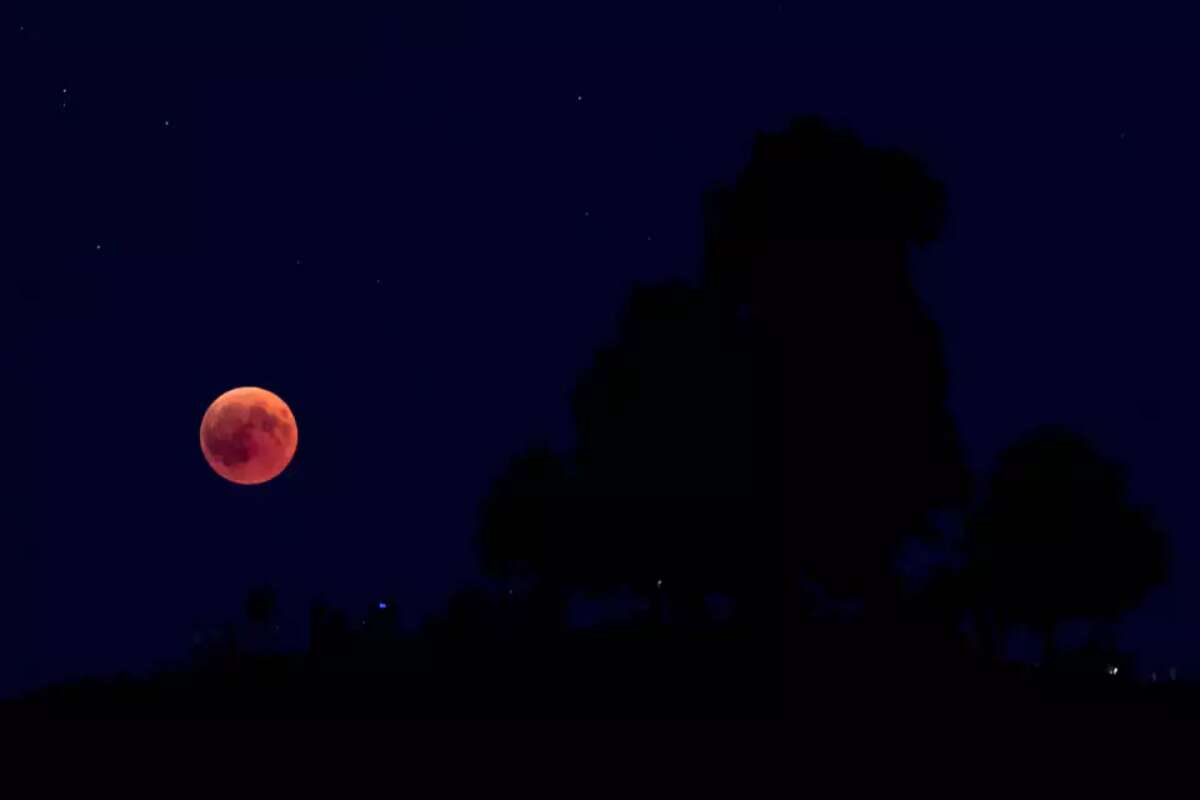
For the first time in three years, a total lunar eclipse will be visible from Israel on Sunday night, treating skywatchers around the world to the dramatic spectacle of a blood moon. Unlike a solar eclipse, which requires protective eyewear, a lunar eclipse is completely safe to watch with the naked eye and lasts for several hours.
A lunar eclipse occurs when the sun, Earth and moon align, with the moon passing through Earth's shadow. In a total eclipse, the entire moon is enveloped in the darkest part of that shadow, known as the umbra.

At the height of the event, around 8:30 p.m. Israel time, the moon will remain in Earth's shadow for about 65 minutes, glowing with a striking red hue. The color is caused by sunlight filtering through Earth's atmosphere, which scatters blue light and allows red wavelengths to bend toward the moon, giving rise to the phenomenon's popular nickname.
Unlike a solar eclipse, which requires special filters to prevent eye damage, a lunar eclipse can be observed directly and comfortably, making it accessible to anyone willing to look up.

The eclipse begins with the moon entering Earth's lighter outer shadow, the penumbra, when it appears to dim slightly. As the moon slips deeper into the umbra, the partial eclipse phase begins. Viewers in Israel will see the start of this phase, but the moon will set below the western horizon before the full eclipse becomes visible.
For the best view, experts recommend heading to an open area with a clear view of the western sky, away from the glare of city lights.