

- Sponsored Content -
Published in partnership with Decker, Pex, Levi Law Offices
A new door opens
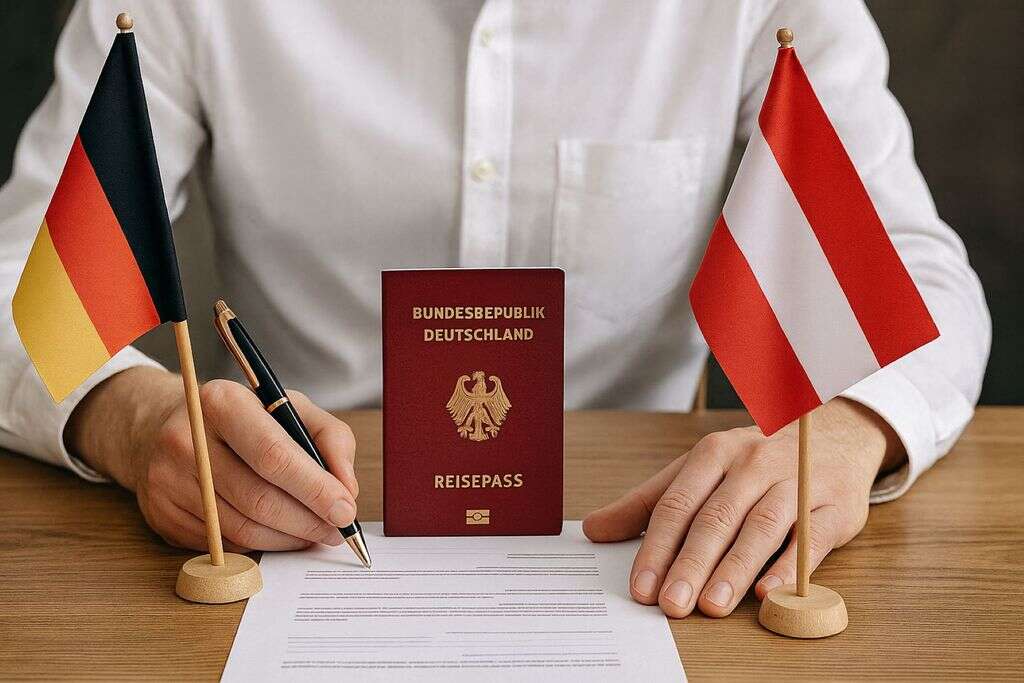
For decades, the idea of returning to Germany or Austria, let alone reclaiming citizenship, was unthinkable for many descendants of Holocaust survivors. But today, across the United States, Jewish families are doing exactly that. Through programs focused on getting German Citizenship by Jewish descent, Americans are finding new ways to reconnect with their family history and reclaim nationality that was unjustly taken.
In many cases, the right to apply is rooted in family ties, such as having a German citizen Jewish grandparent who lost their nationality under Nazi rule. These legal reforms aim to restore what was stripped away and offer descendants the rights and recognition once denied to their relatives.
In Austria, a similar process is available through Austrian citizenship for Jews under §58c of the Austrian Nationality Act. This law was introduced in 2019 to provide a path for descendants of Holocaust victims and political refugees to reclaim their Austrian citizenship, even generations later.
For many, this is a powerful act of remembrance. For others, it's also a chance to claim the practical benefits of European Union citizenship, from the right to live, work, and study in 27 countries, to easier travel and global flexibility.
This article breaks down who's eligible, how to apply, and what reclaiming citizenship means, legally, personally, and generationally.
Who's eligible to reclaim citizenship?
Germany and Austria have each passed legislation granting citizenship to descendants of those who were citizens or permanent residents but lost it due to Nazi persecution. These recent laws offer a streamlined, reparative process for reclaiming nationality, often without the typical language, residency, or renunciation requirements.
In Germany, Article 116(2) of the Basic Law and Section 15 of the German Nationality Act entitle descendants of Jews and other groups stripped of citizenship between 1933 and 1945 to apply. Eligibility extends through both maternal and paternal lines, includes children born out of wedlock, and covers cases where citizenship was denied due to discriminatory laws.
In Austria, §58c of the Nationality Act, enacted in 2019, grants citizenship to children, grandchildren, and even great-grandchildren of Holocaust victims and political refugees. Designed to be inclusive from the outset, the law has no language or residency requirement.
Each country has different documentation requirements, but both generally allow dual citizenship and aim to make restitution accessible across generations.
How the application process works
While Germany and Austria have simplified their laws, the process of reclaiming citizenship still requires gathering documents, navigating foreign bureaucracies, filing the application correctly and adhering to country-specific procedures. That said, the steps are manageable, especially with clear guidance.
- Confirm Eligibility: Start by identifying your ancestor who lost citizenship due to Nazi persecution. For Germany, this typically means someone who was a citizen between 1933 and 1945 and lost their status under discriminatory laws. For Austria, eligibility can extend as far back as great-grandparents forced to flee or stripped of citizenship.
- Collect Documentation: Required documents (with certified translations and apostilles) typically include:
- Proof of your ancestor's German or Austrian nationality (e.g., old passports, residency records)
- Evidence of persecution or emigration (e.g., visa applications, ship manifests, refugee papers)
- Your own birth and marriage certificates to establish a clear family link
- Submit the Application: Applications are typically submitted through the nearest German or Austrian consulate. Both countries now offer online checklists and forms, but working with an expert can help ensure a complete and compliant submission.
- Wait for Approval: Processing times vary—some applications are approved in 6–12 months, while others may take longer depending on the completeness of your file and current consular volume.
Reclaiming citizenship: Legacy, law, and moving forward
For many Jewish-American families, reclaiming German or Austrian citizenship is about more than legal status, or specific benefits; it's a personal journey of remembrance and justice. Holding a passport from the country a grandparent once fled isn't just symbolic; it's a quiet act of defiance, resilience, and continuity.
But emotional significance alone doesn't make the process simple. Gathering documents, translating records, and navigating foreign legal systems can be overwhelming, particularly if family papers were lost or scattered. That's why many applicants turn to professionals for guidance.
Israeli immigration law firm Decker, Pex, Levi specialize in helping Americans of Jewish-European descent pursue restored citizenship. With knowledge of both legal systems and the emotional sensitivity the process demands, they assist with verifying eligibility, locating archival records, and ensuring paperwork meets strict consular standards.
In the end, reclaiming lost European citizenship is not just about looking back. It's about opening doors for the next generation, to study, work, or live in Europe, and to carry forward a connection that history once tried to sever.
Published in partnership with Decker, Pex, Levi Law Offices
Addresses: 150 Menachem Begin Road, Tel Aviv | 10 Yad Harutzim Street, Jerusalem
Phone: +972-3-3724722 | +972-55-9781688
WhatsApp: +972-50-348-9649
Email: office@lawoffice.org.il
- Sponsored Content -
Disclaimer: Sponsored content on Israel Hayom is contributed by third-party authors. The opinions, facts, links, and any other content included in them are provided by and solely represent the authors, and Israel Hayom does not assume any responsibility for them. Please contact us in case of abuse.


