

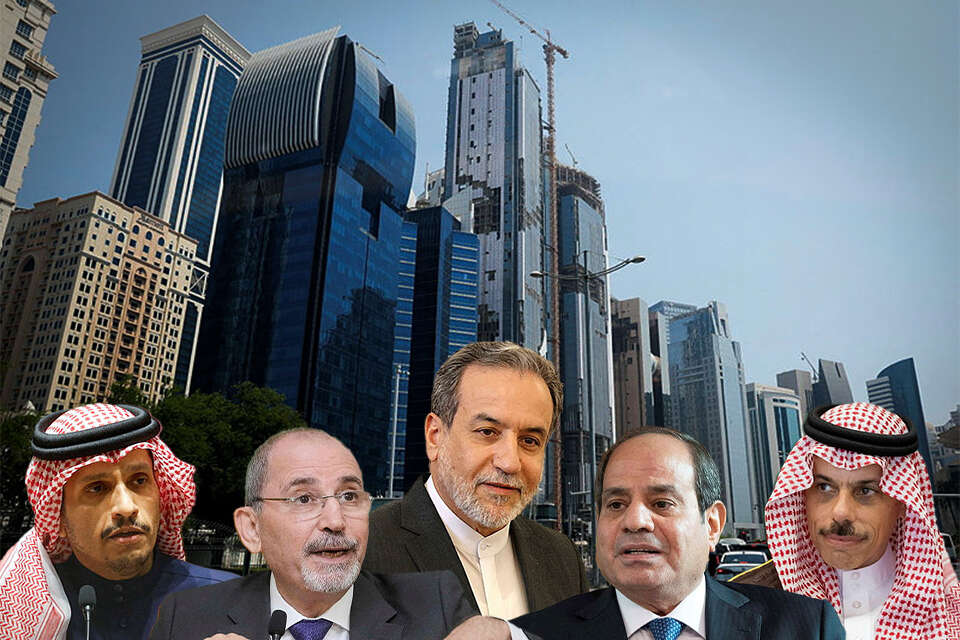
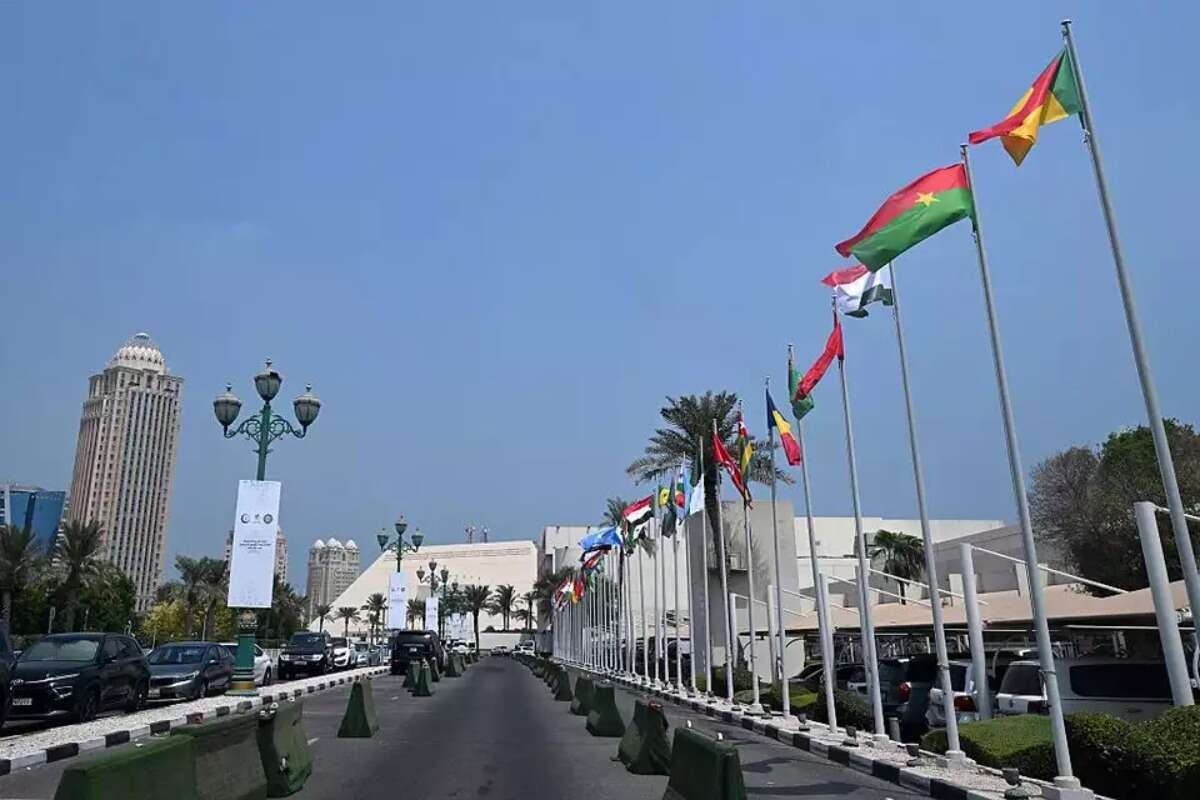
Following the attempted Israeli strike on members of Hamas' political bureau, the Arab-Islamic "emergency summit" will open Monday in Doha, the capital of Qatar. Ahead of the summit itself, foreign ministers from the participating countries will meet in the afternoon to prepare a draft statement.
Nearly 50 ministers and senior officials representing the Arab League and the Organization of Islamic Cooperation are arriving to take part in the discussions.
Among those expected: Egyptian President Abdel Fattah el-Sissi, Iranian President Masoud Pezeshkian, Iranian Foreign Minister Abbas Araghchi, Saudi Foreign Minister Prince Faisal bin Farhan, Emirati Minister of State Khalifa bin Shaheen al-Marri, Bangladeshi Foreign Minister Mohammad Tawhid Hossain, and Jordanian Foreign Minister Ayman Safadi.
The Qatari newspaper Al-Araby al-Jadeed reported that several options are being considered:
-
A joint statement condemning Israel's strike, seen as the most likely scenario given past precedents.
-
A coordinated diplomatic effort at the UN Security Council and other international bodies aimed at "pressuring Israel," including the possible adoption of "economic and media steps that could include a boycott."
-
A call for "unity" and overcoming Arab and Islamic divisions in the face of "shared threats."
However, divisions are expected among member states over each of these options. Former Egyptian Deputy Foreign Minister Maasoum Marzouk said the summit would "attract international attention, which is closely watching its potential decisions." He added that such gatherings face a "structural problem" due to competing interests and opposing stances, meaning outcomes typically do not go beyond a minimal consensus.
An Egyptian source said el-Sissi's attendance reflects Cairo's concern with "uniting Arab and Islamic positions against Israel and seeking common mechanisms to confront it." The source added that Egypt views the summit as an opportunity to pass decisions "that match the scale of the aggression" and to "restore the prestige of joint Arab action." According to the official, Cairo sees the meeting as a chance to "rebalance the Arab arena" and highlight that "Qatar's security is part of the Arab-Islamic security system."

The summit will open with an address by Qatari Prime Minister and Foreign Minister Sheikh Mohammed bin Abdulrahman al-Thani, followed by speeches from Arab League Secretary-General Ahmed Aboul Gheit and Organization of Islamic Cooperation Secretary-General Hissein Brahim Taha. According to Qatar's state news agency, more than 200 local and foreign journalists will cover the event.
Qatari Foreign Ministry spokesman Majed al-Ansari said the summit will deliberate on a draft joint declaration against the Israeli strike.

"The gathering carries several meanings," al-Ansari said. "It reflects broad Arab and Islamic solidarity with Qatar in the face of Israel's cowardly aggression, which targeted the residences of senior Hamas officials, and the opposition of these countries to Israel's policy of state terrorism."
Arab League spokesman Jamal Rushdy said the emergency summit would send a "message of solidarity."


