

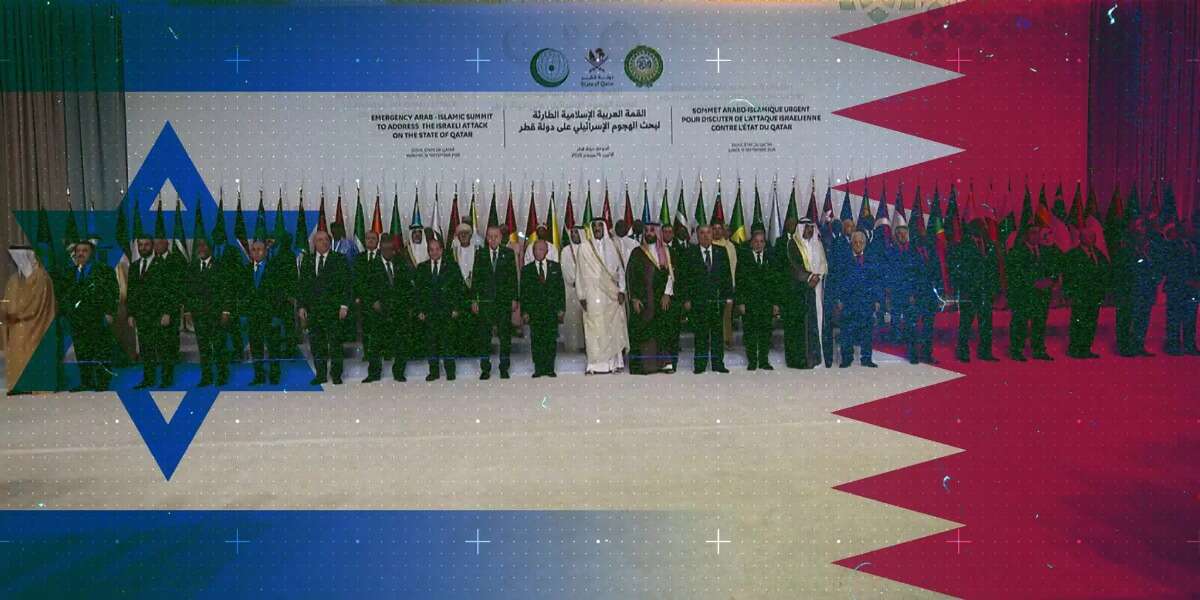
After Operation Summit of Fire, which targeted Hamas' senior leadership in Doha, Qatar decided to host a summit of its own. This one was less about firepower, and more about letting off steam.
Following condemnations voiced by Qatari officials and statements at the UN General Assembly that "Israel must pay," Doha convened a gathering of dozens of leaders and representatives from Arab and Muslim countries. Its aim was to denounce Israel's alleged aggression and present a unified front of support for Qatar.
As a possible poke in Israel's eye, one of the Hamas leaders targeted in the Doha strike, Taher al-Nounou, who has since given interviews to Al Jazeera, was expected to appear at the summit. Even before that, Qatar had gained diplomatic momentum when 142 countries backed the French-Saudi initiative to recognize a Palestinian state.
But beyond the glitter of international summits, the real question arises: how does Qatar actually intend to retaliate against Israel? What concrete measures, beyond accusations and condemnations, does it have at its disposal?

Soft power only
Qatar's main leverage lies in its economic clout, which it may use to pressure European states to advance moves against Israel. Still, it is doubtful these would go much further than what is already on the table, such as suspending economic and security cooperation or even imposing embargoes on Israel – steps promoted partly under pressure from Muslim and progressive audiences.
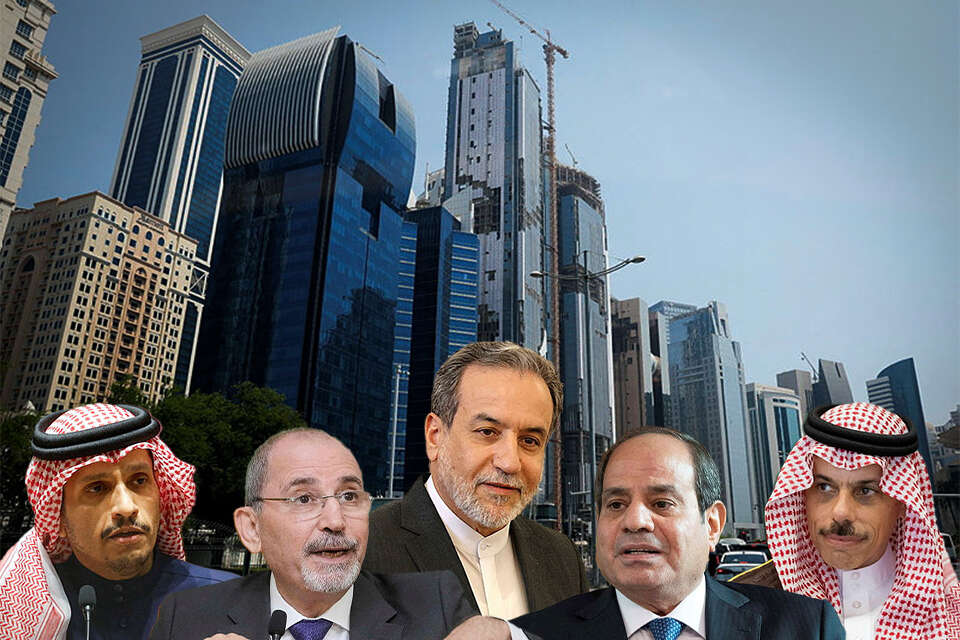
As for military options, these appear to be off the table. Unlike its skill in wielding "soft power," Qatar is at a clear disadvantage compared with Israel when it comes to "hard power." Attempts to form a NATO-style Arab alliance are also unpromising at present. Countries such as Egypt, Saudi Arabia and even Turkey are bound by complex interests with Israel, and despite combative rhetoric, none are eager to risk opening a front against it.

All of them also rely heavily on US security backing, while Israel enjoys unprecedented coordination with Washington, not to mention Qatar itself depends on the American security umbrella for its protection. Even if Washington were to lend rhetorical support, it is hard to imagine it amounting to more than a symbolic move, one that could rebound against Qatar, and painfully so.
To this must be added the internal disputes and lack of unity within the Arab League. Qatar itself faced a boycott by Gulf states over its subversive policies and support for the Muslim Brotherhood, their sworn enemy. These states would be glad to see Doha humiliated, even if they have to pay lip service to the Arab public.
Too soon to write off
Qatar's arsenal is mainly diplomatic – blackening Israel's image and fueling the delegitimization campaign that has gathered pace since the outbreak of the Swords of Iron War. Anything harsher is beyond its reach, and even if devised, would struggle to gain meaningful backing from regional states or Washington.
It may be too early to write off Qatar's revenge altogether, but for now it looks like a faded draft: lots of rhetoric, and very little real substance – not much different from the resolution proposal that leaked from the summit.


