

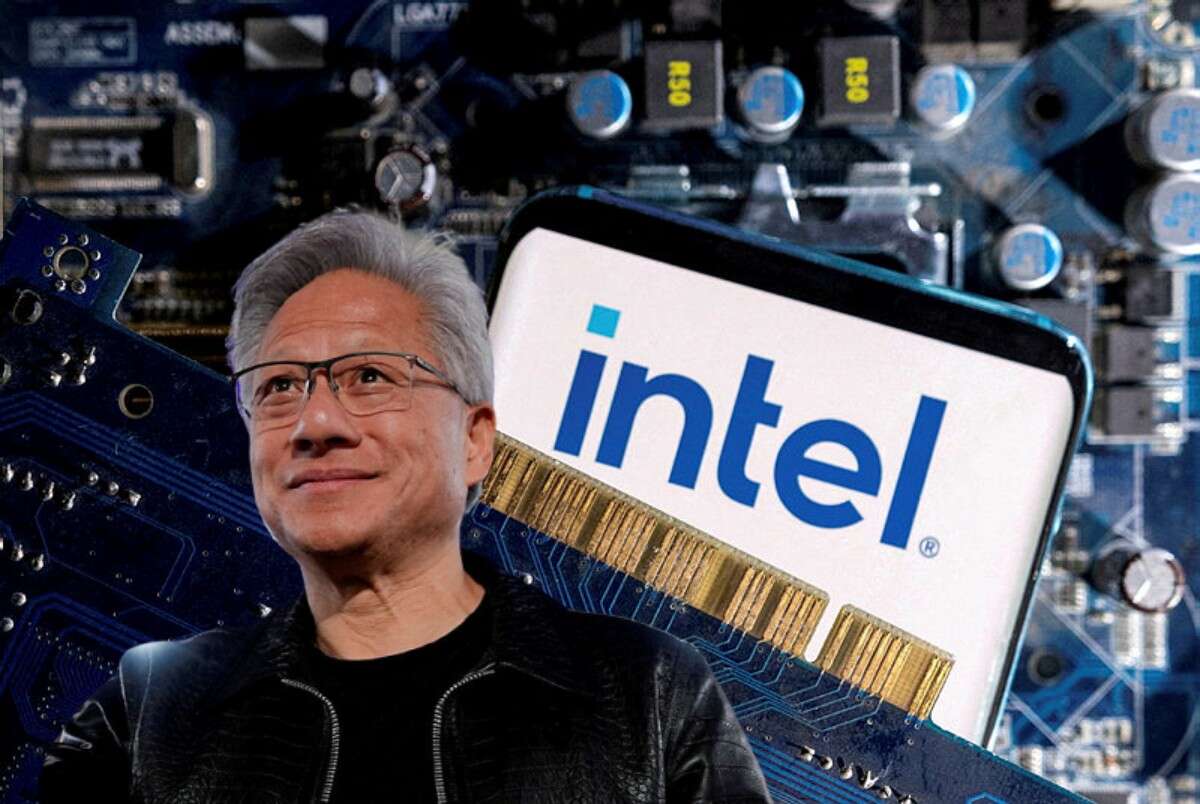
NVIDIA and Intel Corporation announced today a comprehensive collaboration to jointly develop multiple generations of custom data center and personal computing products designed to accelerate applications and workloads across hyperscale, enterprise, and consumer markets. Intel's stock INTC was up almost 30% in the futures market immediately following the announcement.
The collaboration focuses on seamlessly connecting NVIDIA and Intel architectures using NVIDIA NVLink technology, integrating NVIDIA's AI and accelerated computing capabilities with Intel's CPU technologies and x86 ecosystem to deliver advanced solutions for customers.
NVIDIA produces its chips mainly in Taiwan through Taiwan Semiconductor Manufacturing Company. Intel's expanded role in chip manufacturing, particularly through the NVIDIA partnership, offers a critical pathway to reducing the geopolitical risks associated with Taiwan's semiconductor dominance and the fragility of the industry should there be a cross-strait escalation between mainland China and the island, which Beijing considers a renegade province.
As one of the few companies globally with advanced foundry capabilities, Intel provides a geographically diversified alternative to Taiwan Semiconductor Manufacturing Company (TSMC), which currently dominates global chip production. Intel's manufacturing infrastructure is primarily based in the United States, with major facilities in Oregon, Arizona, New Mexico, and planned expansions funded by the CHIPS Act.
For data centers, Intel will build NVIDIA-custom x86 CPUs that NVIDIA will integrate into its AI infrastructure platforms and offer to the market. In the personal computing space, Intel will build and market x86 system-on-chips (SOCs) that integrate NVIDIA RTX GPU chiplets. These new x86 RTX SOCs will power a wide range of PCs requiring integrated high-performance CPUs and GPUs.

As part of the agreement, NVIDIA will invest $5 billion in Intel's common stock at a purchase price of $23.28 per share. The investment remains subject to customary closing conditions, including required regulatory approvals.
"AI is powering a new industrial revolution and reinventing every layer of the computing stack – from silicon to systems to software. At the heart of this reinvention is NVIDIA's CUDA architecture," said NVIDIA founder and CEO Jensen Huang. "This historic collaboration tightly couples NVIDIA's AI and accelerated computing stack with Intel's CPUs and the vast x86 ecosystem – a fusion of two world-class platforms. Together, we will expand our ecosystems and lay the foundation for the next era of computing."

Intel CEO Lip-Bu Tan commented: "Intel's x86 architecture has been foundational to modern computing for decades – and we are innovating across our portfolio to enable the workloads of the future. Intel's leading data center and client computing platforms, combined with our process technology, manufacturing and advanced packaging capabilities, will complement NVIDIA's AI and accelerated computing leadership to enable new breakthroughs for the industry. We appreciate the confidence Jensen and the NVIDIA team have placed in us with their investment and look forward to the work ahead as we innovate for customers and grow our business."
NVIDIA produces its chips mainly in Taiwan through Taiwan Semiconductor Manufacturing Company . Intel's expanded role in chip manufacturing, particularly through the NVIDIA partnership, offers a critical pathway to reducing the geopolitical risks associated with Taiwan's semiconductor dominance. As one of the few companies globally with advanced foundry capabilities, Intel provides a geographically diversified alternative to Taiwan Semiconductor Manufacturing Company (TSMC), which currently dominates global chip production. tel's manufacturing infrastructure is primarily based in the United States, with major facilities in Oregon, Arizona, New Mexico, and planned expansions funded by the CHIPS Act.


