

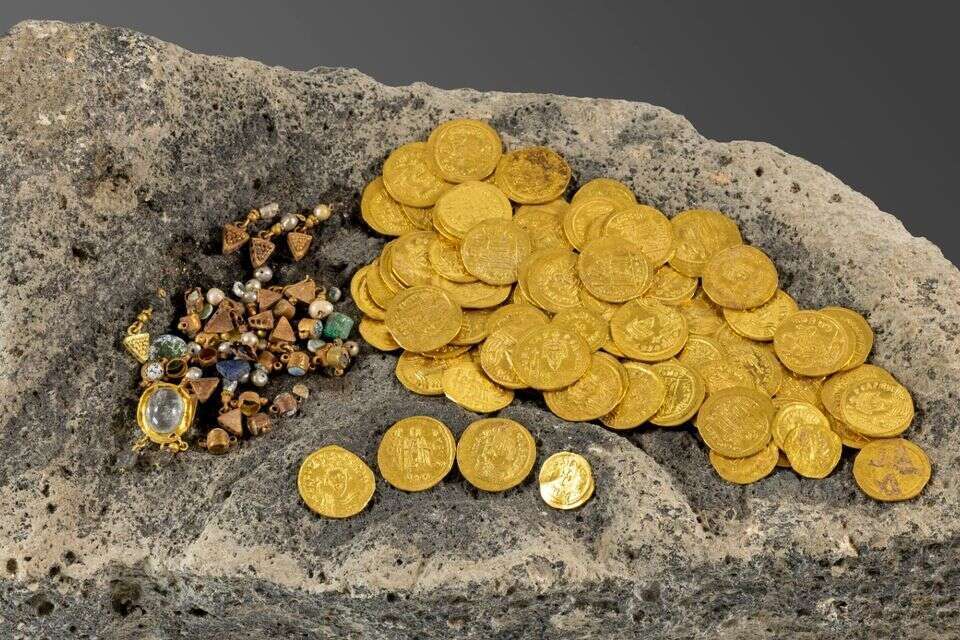
Researchers from the University of Haifa have uncovered a rare Byzantine-era gold treasure during archaeological excavations at the ancient city of Susita, located near the Sea of Galilee and within the Susita National Park, managed by the Israel Nature and Parks Authority in the Jordan Valley Regional Council.
The treasure consisted of 97 pure gold coins and dozens of gold earring fragments, each embedded with pearls, semi-precious stones, and glass.
"This is one of the most significant Byzantine-period treasures discovered on land in Israel, unique for its combination of jewelry and gold coins from different emperors' reigns. Additionally, fabric remnants were found on some coins – traces of the cloth bag in which the treasure was hidden," said Dr. Michael Eisenberg from the Zinman Institute of Archaeology at the University of Haifa, co-director of the excavation expedition.
Among the coins, researchers discovered a particularly rare item: a tremissis likely minted in Cyprus in late 610 by Emperor Heraclius the Elder and his son during their rebellion against Emperor Phocas. This is only the second coin of its type ever found in Israel. "This is a rare find that adds an important layer to understanding the political and economic history of the period," explained Dr. Danny Syon, numismatist of the excavation expedition.
The treasure was discovered accidentally in late July 2025. Eddie Lipsman, a metal detector operator accompanying the expedition, passed near a large stone when his device began signaling the presence of metal. When the stone fell between two walls, the signal intensified, and within moments, gold coins began emerging one after another from the archaeological section. "The device went crazy, I couldn't believe it – gold coins started appearing one after another," Lipsman recounted. Researchers delayed announcing the discovery to ensure no additional finds remained in the area and to complete the initial research phase.
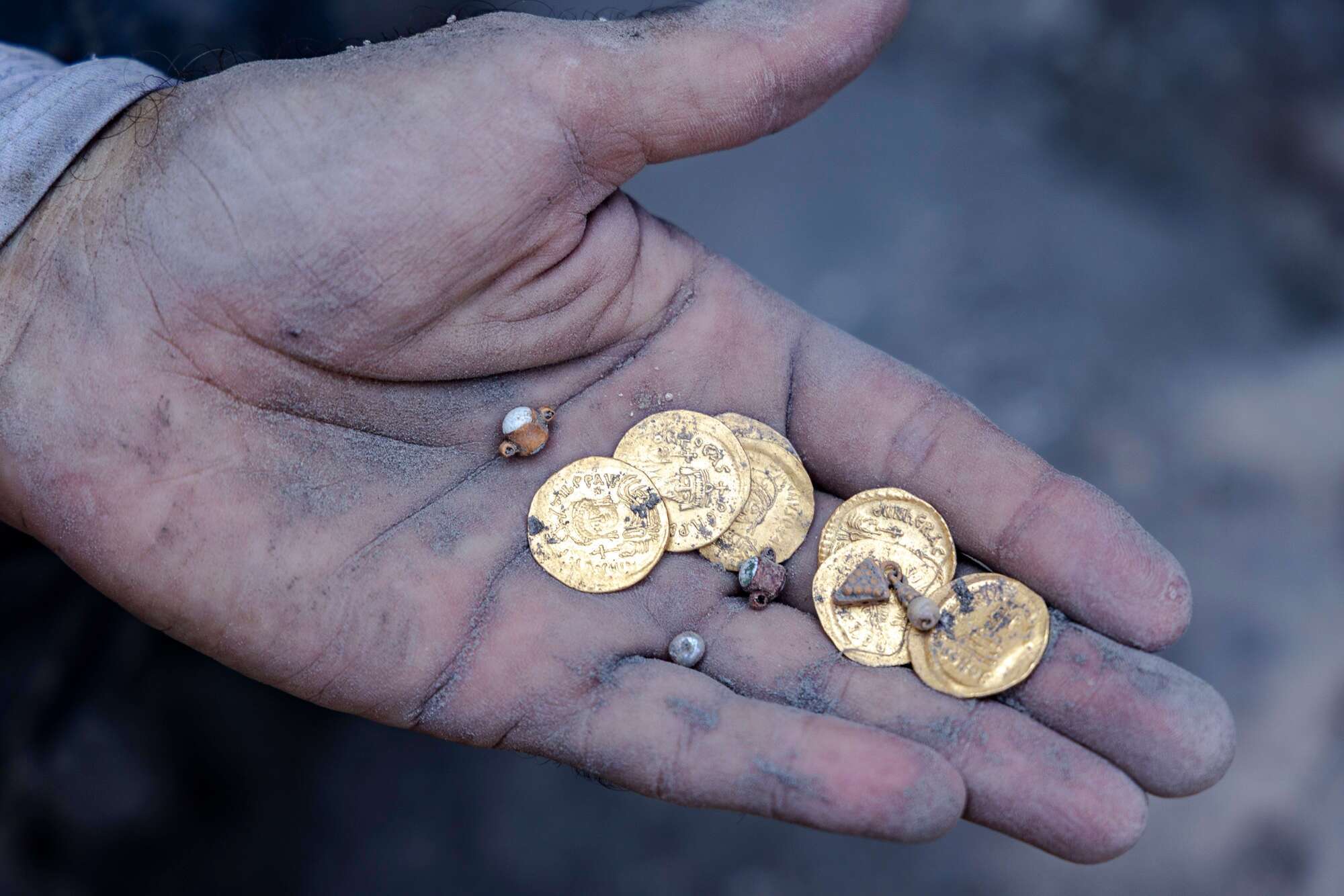
The treasure includes 97 gold coins and delicate jewelry. Some coins are full-value solidus, but halves (semissis) and thirds (tremissis) were also found. They date from Emperor Justinus I (518-527 CE) to the early reign of Emperor Heraclius (610-613 CE). "Gold is a noble metal, and finding coins and jewelry approximately 1,400 years old that look brand new is a rare experience," said Dr. Eisenberg. Dr. Arleta Kowalewska added, "The earrings are the biggest surprise for me. Delicate craftsmanship combining semi-precious stones and pearls – I hope contemporary jewelers will recreate this beauty."
The ancient city of Susita, overlooking the Sea of Galilee from the east, was an important Christian center during the Byzantine period, serving as a bishop's seat with at least seven active churches. The site has been excavated for 26 years by the University of Haifa's excavation expedition led by Dr. Eisenberg and Dr. Kowalewska. This marks the first discovery of a gold treasure of this scale in the city. In recent years, researchers have uncovered remains linked to the Sasanian conquest, including the burning of the Martyr Theodorus Church, leading to speculation that local Jews may have participated in the rebellion alongside the Sasanian army against Byzantine rule.
Dr. Dror Ben-Yosef, archaeologist and heritage supervisor for the Northern District of the Israel Nature and Parks Authority, stated: "Susita National Park is a mountain of surprises spanning 1,000 years of history. Excavating the site has shed new light on both the pagan and Christian worlds. Susita's story teaches us about the cultural and religious currents and subcurrents present in the land simultaneously, as well as about the diversity of its residents. To understand the complexity of the area approximately 1,400 years ago, one needs only to climb Mount Susita and look west toward Tiberias, the Jewish city. While a wealthy Christian community developed in Susita around seven churches, Tiberias residents maintained a Jewish lifestyle centered on synagogues."


