

The Trump ceasefire framework is not the end of the war; it is the opening of a political battlefield. The guns are silent, but the battle for Gaza's future has begun - who will shape it, and who will be left out.
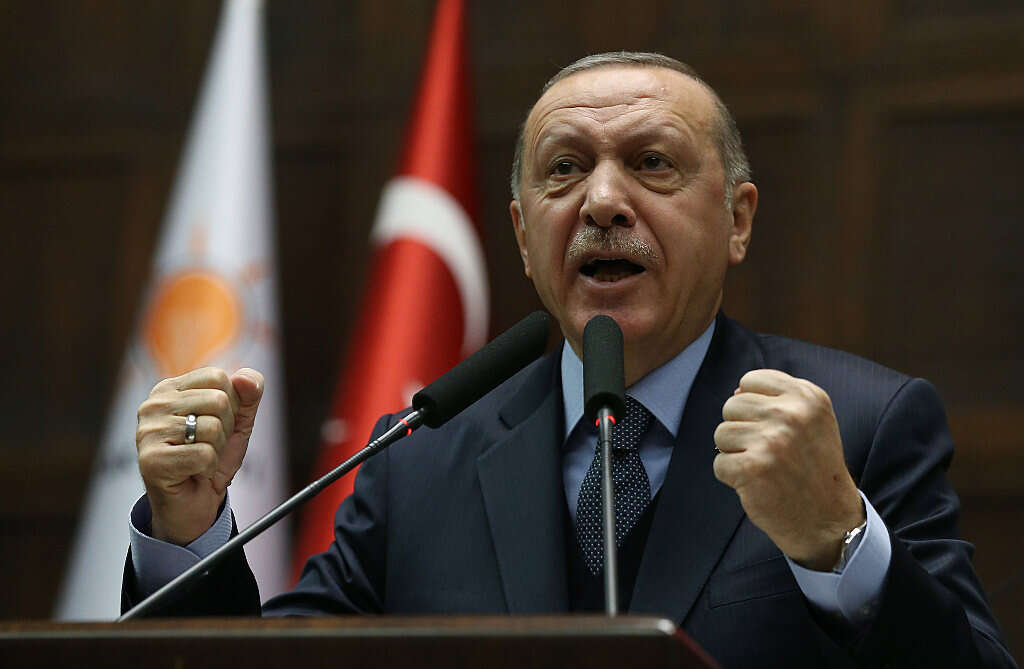
Turkey and Qatar are not part of the solution; they are part of the problem. States that created the Gaza of October 6 cannot be entrusted with shaping the Gaza of October 8.
For more than a decade, Qatar hosted Hamas's political bureau in Doha. What began as 'humanitarian mediation' became a political and financial infrastructure: funds flowed, leadership flourished, the world looked away. Turkey, for its part, granted passports to Hamas operatives and turned Ankara into a refuge for a movement that calls for Israel's destruction.
Turkey's Education Ministry marked October 7 as "Palestine Awareness Day", ordering all 81 provinces to comply. Children were taught about "conscience, justice, and humanity," but the conscience was Turkish - turning massacre into "the just liberation of Gaza". Minister Yusuf Tekin put it gently: "We must revive humanity's conscience in our children". In practice, it meant turning October 7 from mourning into celebration of murdered Israelis. That week, Ankara boasted of "contact" with Hamas hostage-holders - not with the families, but with the captors. It was hailed as diplomacy, though the line between Ankara and Hamas has never been broken. Not a badge of honor - a fingerprint of a state tied to the captors it pretends to mediate, an identity card of a state complicit with terror. A country that teaches its children that the killer is the hero cannot supervise the disarmament of terror.
The Israeli strike in Doha cracked Qatar's immunity. It failed to kill Hamas's leaders but shattered the illusion that Doha could host terror and still mediate. President Trump, publicly "very concerned" about an attack in a "friendly" state, privately recognized the strategic lever it created: a chance to force a reckoning. From that point, Qatar was compelled to reassess its own boundaries. It did not change sides but changed weight - from a sheltered broker to a fragile node in the pressure map.
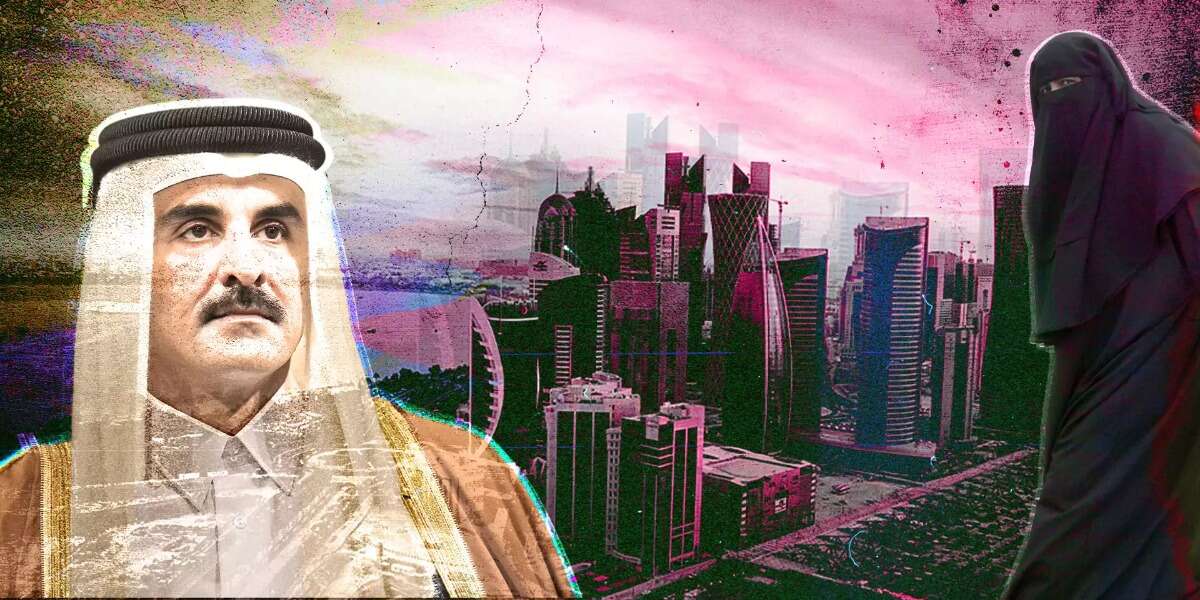
Now that the cards are exposed and the masks removed, Jerusalem does not blur the lines. Those who hosted Hamas and educated generations to see massacre as "resistance" cannot be part of the structure meant to prevent its return. Those who fed the monster cannot be trusted to keep it chained. Ankara and Doha are out.
Trump has translated this understanding into policy - a settlement built on responsibility, not sentiment. Egypt mediates along the southern corridor, the United States oversees from above, Qatar is defined in the agreement as a "humanitarian, technical and supportive channel", and Turkey remains in peripheral involvement with no operational control. Yet both capitals tell a different story: Doha speaks of a "central role in reconstruction," Ankara of "involvement in the peace process". In practice, the agreement limits both to symbolic roles, and from that limit there must be no deviation: those who gave Hamas shelter will not receive the keys to Gaza's reconstruction.
Ankara wraps its involvement in the language of "peacekeeping" and "humanitarian responsibility". The façade is neither new nor credible. In 1974 Turkey launched what it called a "Peace Operation" in Cyprus - an invasion that ended with the occupation of the island's north, the expulsion of some 150,000 Greek Cypriots, and the creation of a puppet regime still maintained by Turkish troops. A moral vocabulary was used to justify and disguise territorial and political control. The same method continues today. Under banners such as "security zones" and "counter-terror operations", Ankara has repeatedly invaded Kurdish territories - Euphrates Shield, Olive Branch, Peace Spring - redrawing borders, displacing civilians, and ruling through local proxies. Human-rights groups have documented abuses in Afrin and beyond, while elected Kurdish officials were jailed or removed. This is not an exception but a doctrine: the rhetoric of peace as camouflage for coercion.
Today, when Ankara speaks of "dialogue with Hamas for the sake of peace", it repeats the same script - not neutral mediation but explicit alignment. This is not linguistic nuance; it is policy. The same rhetoric that once clothed an occupation in compassion now dresses the patronage of a terrorist organisation in diplomatic language. It is not statesmanship; it is a deliberate tactic of domination through violent proxies - a policy designed to entrench control, not to dismantle terror.
Former Pentagon official Michael Rubin wrote in the Middle East Forum that Turkey's record speaks for itself: in 2012 Turkish-backed militants attacked the U.S. Consulate in Benghazi, killing Ambassador Chris Stevens while Turkish diplomats looked away. The same pattern runs from Afghanistan to Libya, where Ankara empowered Islamist factions under the banner of "reconstruction" and "peacekeeping". Rubin warns that giving Erdoğan a foothold in Gaza would not build peace but rearm Hamas - another turn in Ankara's use of Islamist proxies to expand control behind moral rhetoric.
The next phase is not military but cognitive. Jerusalem defines the reality before Doha and Ankara rewrite it in Hamas's language. If they are allowed to sit at the table, the pause will become a defeat; if they are excluded, a new order can emerge: clear victory, sovereignty without intermediaries, and deterrence that endures. This is not isolation. It is the cleansing of the arena from those who conceived Hamas - and now seek to resurrect it.
Shay Gal is an expert in international politics, crisis management, and strategic communications. He operates globally, focusing on power relations, geopolitical strategy, and public diplomacy, and their impact on policy and decision-making.


