

In the hospital corridors, among the clutter of machines and medical teams surrounding her husband Eran's bed after he was severely wounded in Lebanon, Limor recalls one moment that stood out. "A woman came in and asked me a simple but incredible question: 'What about you? How are you feeling?' It was as if someone lit a small light in the darkness. For the first time, someone saw me too, my struggle, my exhaustion, my pain, and above all, my need to feel that I hadn't been forgotten."
The woman who checked in on her was Anat Eilam, head of the nonprofit Achoti ("My Sister"), which provides a space for wives of wounded IDF soldiers to find common ground, support, and genuine friendship. About five months after Eran discharged from the hospital and began his rehabilitation, the two women reconnected, and Limor joined the organization to receive the support she so desperately needed.

"The women in Achoti understand one another in a way no one else can," she explains. "Even if I tell a friend what I'm going through, with all the challenges and hardships, it's not the same as sharing it with someone who's living the exact same reality."
"This kind of support is a lifeline," she continues. "When Eran was hospitalized, I was entirely focused on keeping our family functioning, and that's not easy with three small children at home. At some point, I disappeared. There was no time for myself at all. It felt like I was disconnected from the world, just to stay functional."
One of the key partners helping the organization is the UJA-Federation of New York, as part of its broader support for IDF wounded soldiers and especially their families, recognizing that they are an essential part of any recovery process.
"People don't always realize how important it is for the wife to stay strong in order to hold the household together during such a period," Limor says. "She's the pillar of strength and if that pillar collapses, everything collapses with it. We need this organization, these meetings, and this escape from routine is something that brings us together."
Networks of mutual support
Limor's husband is one of roughly 20,000 regular and reserve IDF soldiers who bear wounds, physical or psychological, since October 7. Amid this difficult reality, UJA has become one of the leading philanthropic forces supporting wounded IDF soldiers and their families, investing some $27 million so far in various organizations.
"We're there for them," says Itzik Shmuli, CEO of the UJA-Federation of New York in Israel. "These men and women literally dropped everything to defend Israel, and our message is clear: now it's our turn to stand behind them and never leave them, not even for a moment."
Shmuli explains the central role the UJA-Federation of New York places on helping the soldiers' families: "The injury may be the soldier's, but the trauma belongs to the entire household. We see the enormous pressure placed on families torn from their routines, moving between hospitals and rehabilitation centers, while financial and emotional hardships pile up. That's why we understand how critical it is to provide these families with full, hands-on support."
"The war is still ongoing," Shmuli adds, "but Israel is already facing an unprecedented challenge in terms of the number of wounded soldiers and their families while in too many places support systems simply don't exist or aren't sufficient. We decided to take on this mission head-on, sometimes building support frameworks from scratch, ensuring no one is left behind, not even in the country's remotest corners. Beyond funding dozens of organizations and programs to expand their services, we also provide direct, personal assistance and invest heavily in infrastructure that will serve the soldiers and their families in the long term, from hospitals to community rehabilitation centers. This is the moment when New York's solidarity joins Israel's effort. Together, we're building a safety net that holds families through their hardest moments and gives them room to breathe."
The UJA-Federation of New York invests heavily in mental health support, following an unprecedented Defense Ministry report showing that about 60% of the wounded so far are suffering from psychological trauma. "The healthcare system isn't prepared for this tsunami," says Shmuli. "That's why we're helping high-standard organizations expand their services, hire more professionals, reduce waiting times, and make treatment accessible even to soldiers in peripheral regions."
A guiding principle of the UJA-Federation of New York, Shmuli adds, is that every soldier who knocks on the door seeking help receives it—regardless of whether they've already been formally recognized by the Defense Ministry. "No bureaucracy, no delays," he says.
Filling every need
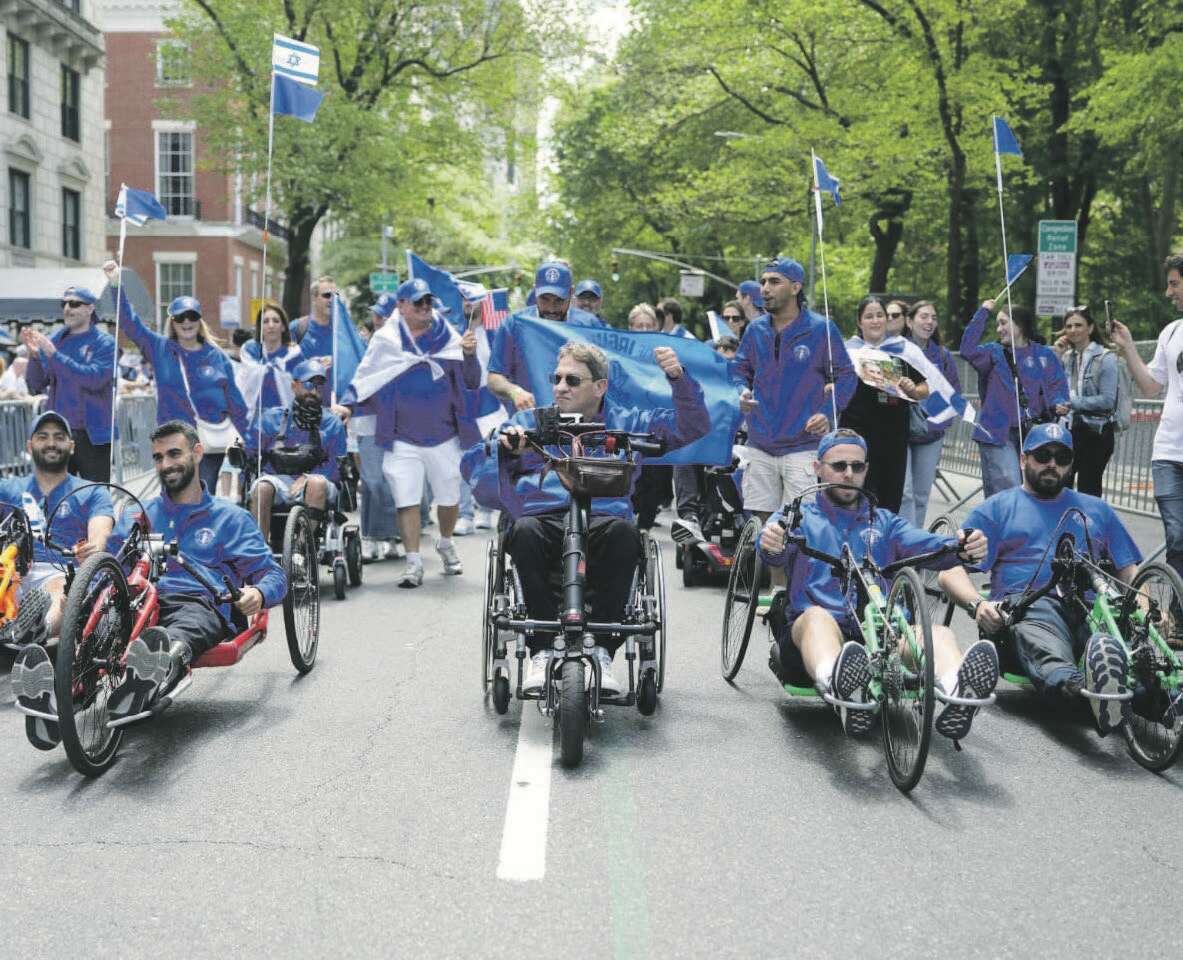
Recognizing that rehabilitation is a long and complex process, the UJA-Federation of New York also helps build future infrastructure. Among its major projects is the construction of a new rehabilitation center in Ilanot Forest, as well as the upgrading of other treatment facilities in the north, including Beit Halochem in Haifa.
Idan Kliman, head of the IDF Disabled Veterans Organization, which operates the rehabilitation centers, describes the challenge: "One of the greatest difficulties since October 7 has been the dramatic rise in the number of wounded soldiers and their immediate needs. We entered the war with an annual budget of 47 million dollars, but it quickly ballooned to 108 million dollars, with no government support to cover the gap. We closed that gap through donations, and UJA played a central, admirable role in that effort. The impact of absorbing so many new wounded soldiers across all rehabilitation centers nationwide is enormous. We're adapting the facilities to meet this new reality, which involves very heavy expenses, so this support is tremendously significant for us."
Beyond upgrading veteran centers, Kliman notes that as early as October 2023, the UJA-Federation of New York provided emergency aid to wounded soldiers in hospitals—items such as shoes, clothing, laptops, and replacement eyeglasses. "Every small thing that a soldier or their family lacked, UJA stepped in to provide."
Kliman, himself an IDF veteran who was wounded in Khan Yunis 13 years ago, says the organization launched a special initiative called "Rehabilitation Journey," based on the understanding that medical rehabilitation cannot wait for bureaucratic delays. "You can't wait for medical committees or for official recognition as a disabled veteran," he explains. "That's why we're opening our doors to all those wounded in Operation Iron Swords. The message to them is clear: there is life after injury. It's not just a slogan; it's a comprehensive process that shows them, in practice, that they can return to full and meaningful lives."


