

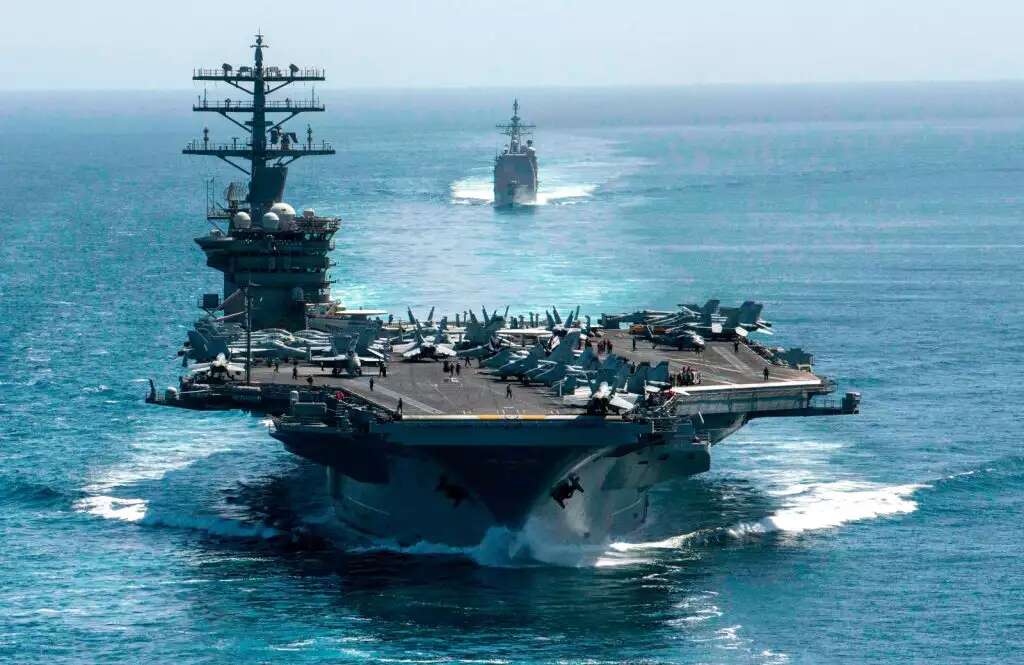
In a dramatic escalation of tensions between Venezuela and the United States, the Pentagon announced Friday that the USS Gerald R. Ford aircraft carrier and its strike group are being transferred to the US Southern Command and will deploy to the Caribbean. The carrier group will join other American forces already stationed in the region, which have been conducting operations for nearly two months against what Washington describes as drug cartels operating out of Venezuela in cooperation with President Nicolás Maduro's regime.
The Ford's strike group includes three destroyers and additional naval assets. It will join the amphibious assault ship USS Iwo Jima, F-35 fighter squadrons, a submarine and other units already in the area. According to a Reuters report, the aircraft carrier crossed the Strait of Gibraltar, effectively leaving the Middle East and the US Central Command's area of responsibility.

Since September, the US military has carried out airstrikes on vessels it identified as engaged in drug trafficking, reportedly destroying at least 10 ships and killing around 40 people, according to Pentagon statements.
Yesterday, B-1 strategic bombers flew a mission from Texas to the Venezuelan coast, flight-tracking data showed. The operation came just a week after similar runs by B-52 bombers. President Donald Trump denied the missions when asked by reporters, but senior administration officials confirmed them to the Associated Press and The Wall Street Journal.

"We know everything about the drug ships. I don't think we'll declare war. We'll just kill people smuggling drugs into our country," Trump said Thursday at the White House, amid growing speculation that the confrontation could soon spill into Venezuelan territory.
At a news conference last week, Trump took the unusual step of revealing that he had authorized the CIA to conduct covert operations in Venezuela but declined to say whether these actions were aimed directly at Maduro.
Mounting American pressure appears to be taking its toll in Caracas. The Associated Press reported last week that members of Maduro's government had proposed a plan under which he would step down within three years and transfer power to his vice president, Delcy Rodríguez. The White House reportedly rejected the offer. Maduro and Rodríguez vehemently denied the report.

In a striking video released Thursday, Maduro was heard urging Americans to avoid what he called a "crazy war." "Yes peace, yes peace forever, peace forever. No crazy war, please!" he said in broken English during a speech to union leaders.
In August, the Trump administration doubled its reward for information leading to the capture of the authoritarian Venezuelan leader to $50 million, accusing his regime of ties to drug cartels and gangs operating in the US—charges Maduro denies.
Rising tensions across Latin America
Meanwhile, the standoff appears to be spreading across the region. On Friday evening, Washington imposed sanctions on Colombian President Gustavo Petro, accusing him of failing to stem the flow of cocaine into the US. "Since President Gustavo Petro took office, cocaine production in Colombia has soared to its highest level in decades, flooding the US and poisoning Americans," Treasury Secretary Scott Bassant said. "President Petro has allowed drug cartels to thrive and refused to halt their operations."

Petro, in turn, accused the US of murder after an American strike killed a Colombian fisherman. Trump responded by halting all aid to Colombia and imposing tariffs, calling Petro an "illegal drug leader." Bogotá recalled its ambassador to Washington for consultations.
Last month, during the high-level week of the UN General Assembly in New York, Petro joined an anti-Israel protest, during which he called on US soldiers to disobey President Trump's orders. The State Department subsequently announced the cancellation of Petro's US visa.


