Sunday Dec 14, 2025
NEWSLETTER
www.israelhayom.com
  • Home
  • News
    • Israel
    • Israel at War
    • Middle East
    • United States
  • Opinions
  • Jewish World
    • Archaeology
    • Antisemitism
  • Lifestyle
    • Food
    • Travel
    • Fashion
    • Culture
  • Magazine
    • Feature
    • Analysis
    • Explainer
  • In Memoriam
www.israelhayom.com
  • Home
  • News
    • Israel
    • Israel at War
    • Middle East
    • United States
  • Opinions
  • Jewish World
    • Archaeology
    • Antisemitism
  • Lifestyle
    • Food
    • Travel
    • Fashion
    • Culture
  • Magazine
    • Feature
    • Analysis
    • Explainer
  • In Memoriam
www.israelhayom.com
Home Commentary Guest Column

Why the world's most secure museum fell in a 7-minute heist

Behind the criminal incident lies a management lesson: how organizations lose the ability to distinguish between illusory and real security. The Louvre heist didn't happen despite the advanced security systems, but largely because of them.

by  Michal Zigelman
Published on  10-26-2025 10:30
Last modified: 10-26-2025 13:23
Why the world's most secure museum fell in a 7-minute heistAP

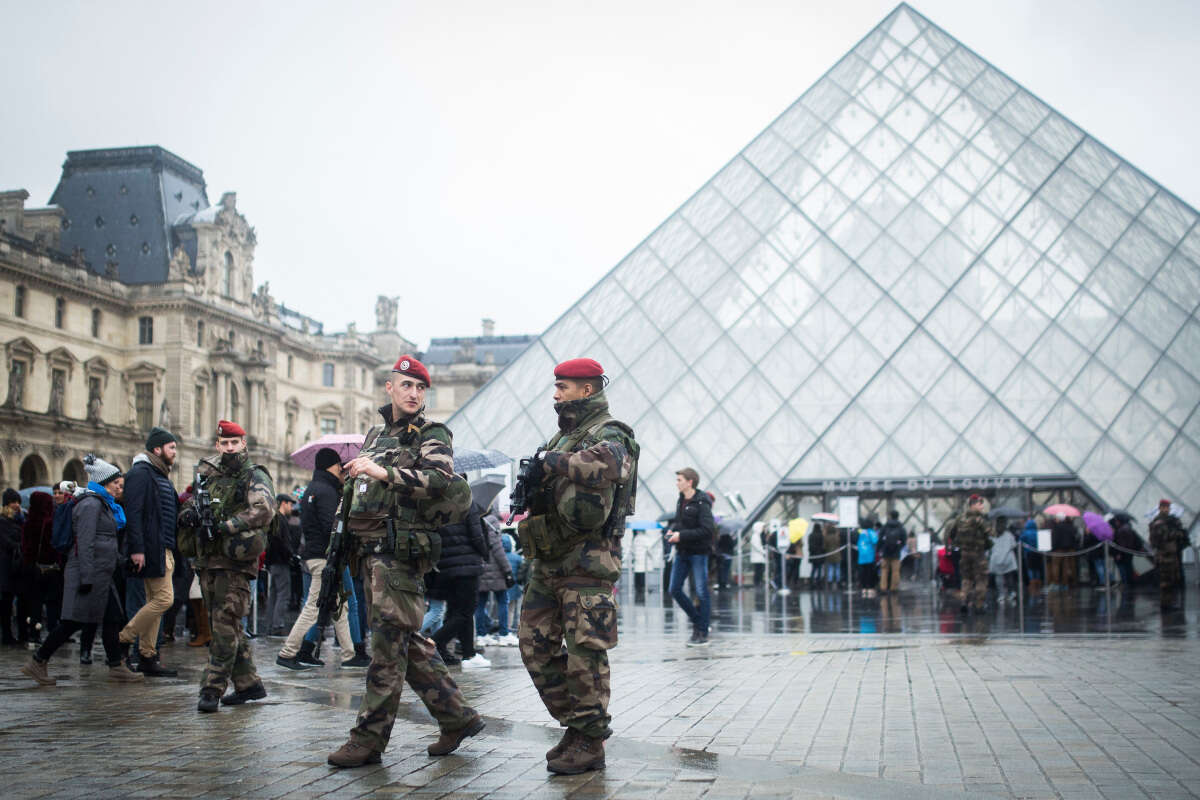
French soldiers patrol in the courtyard of the Louvre museum in Paris, Saturday, Feb. 4, 2017 (Photo: AP /Kamil Zihnioglu) | Photo: AP

Share on FacebookShare on Twitter

In just seven minutes, rare jewelry worth tens of millions of euros vanished from the Louvre Museum in Paris. Four burglars entered through a second-floor window, smashed two display cases in the Apollo Gallery, and escaped while security staff and visitors had no idea what was happening. No digital breach, no mysterious hacker, no sophisticated technology. Just a crane, a window, and audacity.

But behind the criminal incident lies a management lesson: how organizations lose the ability to distinguish between illusory and real security. The Louvre heist didn't happen despite the advanced security systems, but largely because of them. When trust in machines replaces human alertness, when the system is perceived as a substitute for thinking, reality tends to strike from the simplest place.

🇫🇷🚨BREAKING: Footage of the heist targeting the Louvre in Paris has now been released.

This is the first time we can see actual video of the "heist of the century."

Here, the thieves escape on a truck-mounted lift before fleeing on a scooter. pic.twitter.com/LsCrAFeziW

— Remix News & Views (@RMXnews) October 22, 2025

The Louvre's security systems were built under the assumption that the threat would look like it used to. Suspicious figure, alarm, physical breach attempt. But in an era where risk stems from the combination of technology, human agility, and surprise capability, management methods remained fossilized. The cameras documented everything, but nobody actually saw. Data flowed in real time, but there was no one to connect it into one picture. In other words, the technology was smart, but the management wasn't.

This is perhaps the essence of the challenge of the artificial intelligence era: the smarter the systems become, the more relaxed people get. Digital security creates an illusion of control, and the organization becomes addicted to procedures and systems rather than to wisdom. No algorithm identifies a lack of attention, no software warns about mental stagnation. When everything is connected, it seems like everything is under control – until it turns out nobody is really alert anymore.
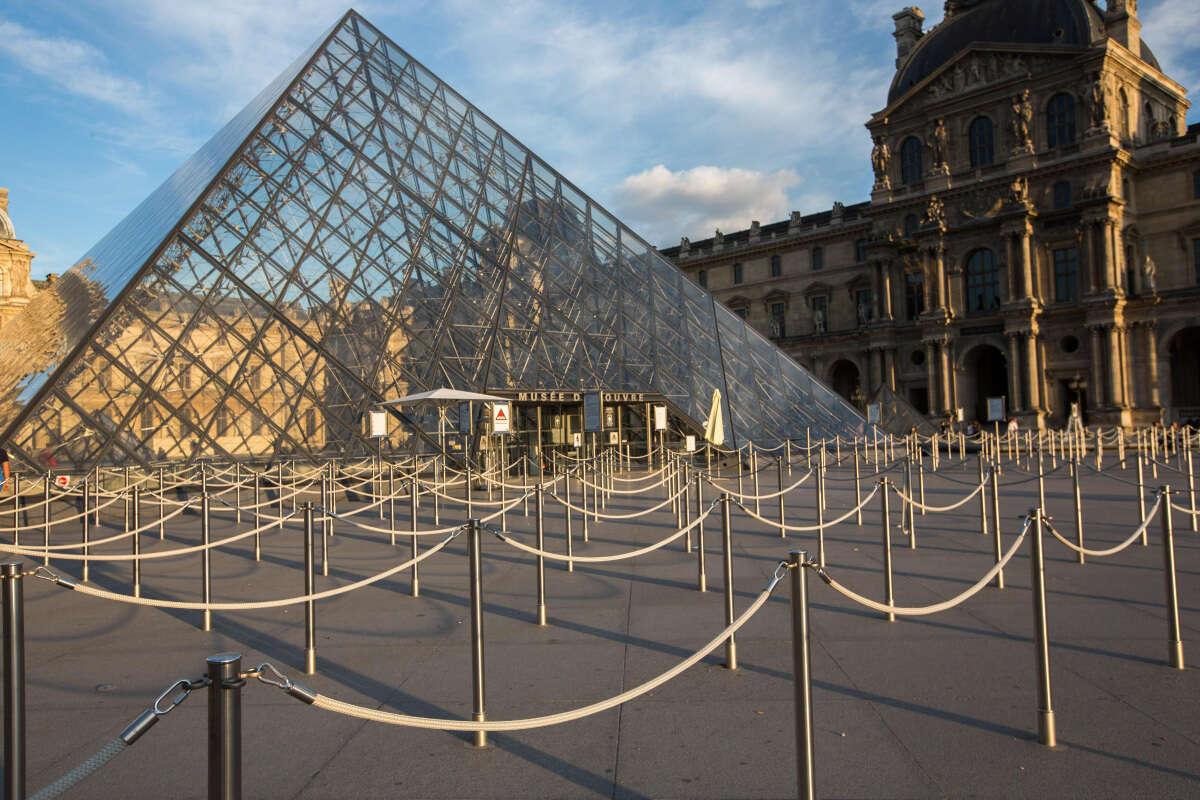
The Louvre Museum (Photo: Oren Ben Hakoon) Oren Ben Hakoon

If the Louvre Museum, one of the most secure places in the world, can be breached in seven minutes, any organization is vulnerable. Not always technically, but conceptually. Not through a back door, but through managerial blindness. Risk management in the current era is no longer a bureaucratic process of updating technologies, but an art of adaptation. It requires managers who identify anomalies in real time, who understand that the unexpected is already the rule, and who grasp that the real threat is complacency.

Ultimately, the Louvre heist isn't just a story about security – it's a parable about leadership and responsibility. It reminds us that as long as we continue to entrust human judgment to smart machines, we remain exposed to precisely what isn't considered possible. In an era of artificial intelligence, risk management isn't about preventing the unexpected, but about recognizing when reality has already changed and moving with it.

The author is CEO and founder of Duality strategic consulting firm.

Tags: crimecrown jewelsheistLouvre Museum heist

Related Posts

Netanyahu: Will not retire from politics in exchange for pardon

The myth of healing after Netanyahu

by Josh Warhit

Confronted by unsettling social change, some Israelis projected their unease onto a figure who embodied it – Israel’s most dominant...

'It's not just Israel's problem': Is the US going one step too far toward Iran?Oren Ben Hakoon

Mike Huckabee is exactly what Israel needs

by Marc Zell

Instead of criticizing Mike Huckabee's meetings with Jonathan Pollard, Finance Minister Bezalel Smotrich and National Security Minister Itamar Ben Gvir,...

Why is US envoy to Poland echoing far-Right Holocaust revisionism?Omar Marques/Getty Images

Why is US envoy to Poland echoing far-Right Holocaust revisionism?

by Daniel Schatz

Echoing the rhetoric of Poland’s far-right nationalist camp, Rose declared that suggesting Poles had any role in the Shoah was...

Menu

Analysis 

Archaeology

Blogpost

Business & Finance

Culture

Exclusive

Explainer

Environment


Features

Health

In Brief

Jewish World

Judea and Samaria

Lifestyle

Cyber & Internet

Sports


Diplomacy 

Iran & The Gulf

Gaza Strip

Politics

Shopping

Terms of use

Privacy Policy

Submissions

Contact Us

About Us

The first issue of Israel Hayom appeared on July 30, 2007. Israel Hayom was founded on the belief that the Israeli public deserves better, more balanced and more accurate journalism. Journalism that speaks, not shouts. Journalism of a different kind. And free of charge.

All rights reserved to Israel Hayom

Hosted by sPD.co.il

  • Home
  • News
    • Israel at War
    • Israel
    • United States
    • Middle East
    • Sports
  • Opinions
  • Jewish World
    • Archaeology
    • Antisemitism
  • Lifestyle
    • Food
    • Travel
    • Fashion
    • Culture
  • Magazine
    • Feature
    • Analysis
    • Explainer
    • Environment & Wildlife
    • Health & Wellness
  • In Memoriam
  • Subscribe to Newsletter
  • Submit your opinion
  • Terms and conditions

All rights reserved to Israel Hayom

Hosted by sPD.co.il

Newsletter

[contact-form-7 id=”508379″ html_id=”isrh_form_Newsletter_en” title=”newsletter_subscribe”]

  • Home
  • News
    • Israel at War
    • Israel
    • United States
    • Middle East
    • Sports
  • Opinions
  • Jewish World
    • Archaeology
    • Antisemitism
  • Lifestyle
    • Food
    • Travel
    • Fashion
    • Culture
  • Magazine
    • Feature
    • Analysis
    • Explainer
    • Environment & Wildlife
    • Health & Wellness
  • In Memoriam
  • Subscribe to Newsletter
  • Submit your opinion
  • Terms and conditions

All rights reserved to Israel Hayom

Hosted by sPD.co.il