Justice undone
Dori Klagsbald is a man of many accomplishments and merits — a top lawyer, a world expert on state commissions of inquiry. But he is certainly not a vacation consultant. The question therefore arises: how did the army, at the Israeli public's expense, hire his services to defend IDF Military Advocate General Yifat Tomer-Yerushalmi, if, as per the army's own statement, she merely asked to go on vacation?
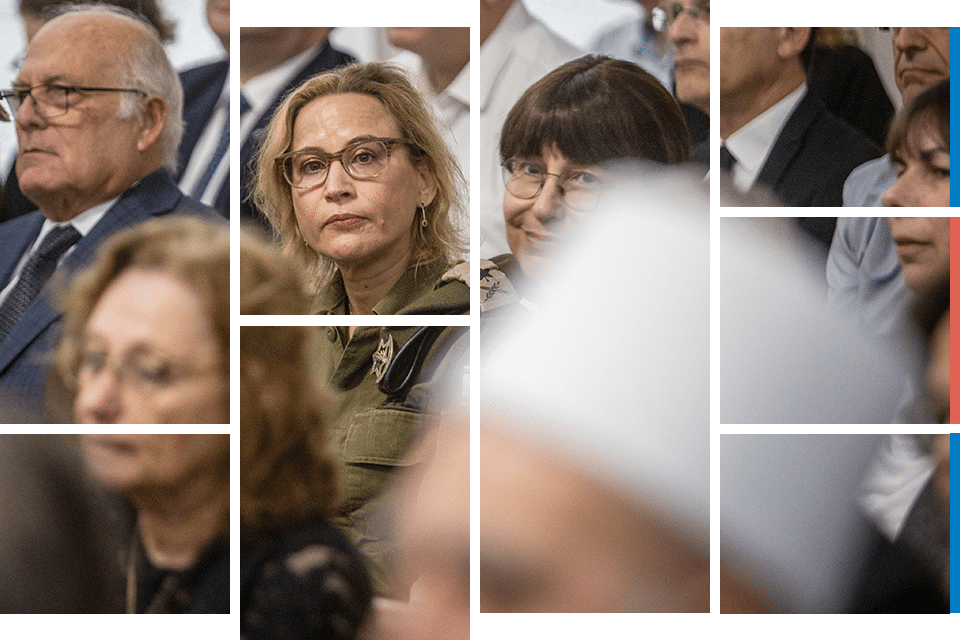
The Military Advocate General is soon to receive the dubious honor of being the first member of the IDF General Staff suspected of criminal activity — and not just any member, but the one responsible for upholding the law within the army, and not just any suspicions, but some of the most serious imaginable.
The official version speaks of an almost technical process: a routine polygraph test that uncovered the source of the leaked video showing abuse at the Sde Teiman base, the results of which were passed from the Shin Bet to the IDF Chief of Staff and then to investigators. But it's reasonable to assume that if David Zini had not been appointed as head of the Shin Bet, this likely would never have happened. Law enforcement authorities had not taken the leak seriously. Their selective enforcement has been glaring for years: the leak to German newspaper Bild was a major scandal, the leak of the political "Qatargate" investigation was a terrible scandal — but this one wasn't. Only after the appointment of a new Shin Bet chief and a new chief of staff was the obvious finally done.
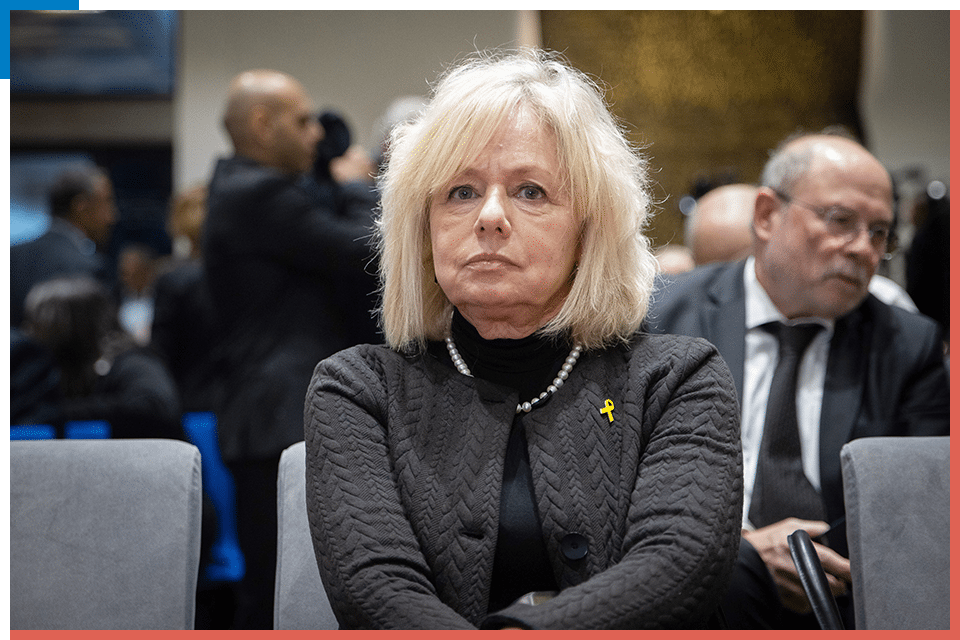
Unlike his predecessor, Zini does not order spyware installed on the phones of senior prosecutors. Now the matter lies before Attorney General Gali Baharav-Miara. In a properly functioning world, she should be furious about this betrayal of trust. After all, she did everything she could to prevent the investigation. She dragged her feet, shrugged her shoulders, and eventually submitted an affidavit to the High Court claiming that there was "no way" to find the person behind the leak. The document she filed was a copy-and-paste from previous cases explaining why it was "impossible" to find leakers in earlier scandals that upset the political right.
Now comes Baharav-Miara's test: will she instruct the police to recruit a state witness from within the Military Advocate General's office, as was done in other cases? If the suspicion is true — that Major General Tomer-Yerushalmi knew of and even ordered the leak — the proper course of action would be to offer the actual leaker a reduced sentence in exchange for catching the bigger fish. After all, simply handing the video to a journalist is something relatively easy to defend — it was investigation material that would have become public eventually, not a classified document.
The truly grave issue is that for years, those who call themselves "Israel's gatekeepers" have spoken of the sanctity of the High Court. And now, according to the suspicions, they did not hesitate to present its judges with a false offering — a fraudulent affidavit. From someone who has spent years strengthening the power of the judicial system at the expense of elected officials, one would expect swift and aggressive action against anyone who desecrated that sanctum.
The Tomer-Yerushalmi affair is just a symptom of a much deeper problem that may finally be receiving overdue attention. The "gatekeeper" status has given its holders a self-granted license to act almost however they please. As I once wrote: if the Electric Company has free electricity, the law enforcement system has free law. The Shin Bet can imprison a leaker who embarrassed its director, and the attorney general can take the law into her own hands. Tomer-Yerushalmi should have been dismissed the day she spoke, in uniform, almost explicitly against the elected government's judicial reform — or the day she allowed officers up to the rank of lieutenant colonel to join the anti-government Kaplan protests. Had her boundaries been set then, perhaps her office would not be crossing them so blatantly now.
Balancing act
After the Trump celebrations, the excitement over the living hostages' return, and the applause at the opening of the Knesset's winter session, Benjamin Netanyahu's strategic dilemma becomes clear: one cannot go to elections while the Gaza story remains open — but it's also hard to go to elections once the ultra-Orthodox issue is closed.
Netanyahu has painful experience with public opinion that, according to most polls, has behaved since the October 7 massacre in ways entirely unfamiliar to him (though, to be fair, there are other polls showing him in a more optimistic light). A string of achievements — each of which would once have guaranteed him an election victory — evaporated quickly: the pager operation, the assassination of Hassan Nasrallah, the killing of the Sinwar brothers, and of course Operation Rising Lion in Iran. The reason: there was still war in Gaza, where living hostages remained. Will the political free-fall happen just as fast this time, even though the war is over and the living hostages have been freed? That depends partly on the level of stability in the strip.
If attacks on IDF soldiers continue, costing one or two lives a week, the peace agreement will soon look far less impressive than it did on the day it was signed — and even deals with Saudi Arabia, Indonesia, or Syria might not help Netanyahu. Hamas will do everything it can to prolong this suffering. The IDF believes it is withholding information on the location of some hostages' to avoid revealing tunnel sites in areas under Israeli control. The decision on how to "finish off" Hamas will come in two or three months — the same point at which the fate of the Haredim and the right-wing will also become clear.
Their red lines are more flexible than Boaz Bismuth's proposed ultra-Orthodox conscription law this week — full of exceptions and concessions — but still not flexible enough to reach an agreement with the Knesset's legal advisers, and never flexible enough to satisfy the Israeli public. Netanyahu needs time: time to continue eliminating Hamas and to deliver peace. That time lies in the hands of the ultra-Orthodox.
That's why the coalition debated this week whether to remove Yuli Edelstein from the powerful Foreign Affairs and Defense Committee for his "rebellion" in the Judea and Samaria sovereignty vote, as that would mean losing his crucial vote in the plenary on other key bills. What is preferable: ensuring a majority on the draft law in the committee, or keeping Edelstein's valuable finger for Knesset votes? They debated — and decided: the committee is more important, the ultra-Orthodox are more important.
A well-known parliamentary legend — perhaps true, perhaps not — tells of an opposition MK who, after attacking Prime Minister Menachem Begin in the Knesset, met him in the restroom and said, "You should know, I actually admire you."
"My young friend," Begin replied, "in future, please slander me in the restroom and praise me in the plenum."
For the past three years it seemed that such camaraderie had almost vanished from the Knesset — the behind-the-scenes friendships, the shared fate in the cafeteria, the gentlemen's club atmosphere with its unspoken rules. The hostility between coalition and opposition became personal. So much so that Yesh Atid MK Boaz Toporovsky was harshly criticized simply for shaking the prime minister's hand when Netanyahu came to wish him well after a long hospitalization.
But two nights ago, at a late hour, it turned out that the eulogies for Knesset civility were premature. Suddenly, coalition and opposition found common ground in their favorite pastime: appointing cronies.
It was almost comical to see the shock of the political operatives — from Likud, Yesh Atid, the Democrats, and the Haredi parties — when the public suddenly noticed their jobs party at Israel's national institutions. Normally, this is a bank robbery in the middle of the night: nobody sees, nobody cares. But the moment Yair Netanyahu's name surfaced as a candidate for a government-funded position (complete with a minister's salary and $40,000 a year for business-class flights), the cameras lit up — and they were caught like thieves on camera at the Louvre.
Coalition of Yairs
The absurd appointment of Netanyahu Jr. as a public diplomacy envoy is, of course, the peak — but certainly not unprecedented. The very institutions meant to strengthen Israel and encourage Aliyah have become a grotesque, corrupt perpetual-motion machine of budgets and favors. The main victim will be the ruling party itself: right after a successful hostage deal, a rebound in the polls, and the Military Advocate General affair, came the appointments of Yair Netanyahu to the Jewish Agency and Tally Gotliv to the Foreign Affairs and Defense Committee — reminding swing voters exactly why they had grown weary of Likud.
There's also a double message here. First, the coalition controlling Israel's national institutions is mostly run by the center-left, which never actually won a majority — it only benefits from divisions on the right. Second, Yair Lapid and Yair Golan have learned that in any deal with Netanyahu, they end up on the losing side. They celebrated the spoils at noon only to discover by evening that their own votes were about to approve an appointment for the family they most despise. A coalition of Yair, Yair, and Yair.
The opposition was horrified to its core in 2019, when on the eve of elections Netanyahu tried to promote the "Cameras Law," arguing that it was not meant to ensure clean elections but to intimidate Arabs from voting. Its leaders issued a special statement calling it "a racist distraction intended to attack the rule of law."

Six years later, two of the opposition's leading figures are proposing something even worse: instead of installing cameras in Arab communities, just don't place ballot boxes there at all. This week Yesh Atid head Yair Lapid belatedly joined a move long championed by Yisrael Beytenu leader Avigdor Liberman — and by former minister Yoaz Hendel and his new movement — under the slogan: "No draft, no vote." The main target, of course, is not the Arabs but the ultra-Orthodox, whom they so despise. The Arabs, as so often, are just collateral damage.
How terrible, how monarchic: more than half of the opposition is proposing to strip over a quarter of Israel's citizens of their most basic, inviolable democratic right — the right to determine their own future.
So why hasn't the country been shaken to its foundations? After all, in recent years we've been endlessly warned about the slippery slope toward dictatorship — and lately, constant accusations have been hurled at the coalition for allegedly planning to cancel elections or make it harder to vote. How, then, does this pass with relative silence?
The excuse may be that this is the opposition, a minority in the Knesset, acting in campaign mode — not the governing coalition with an automatic majority. True, in mock legislative bombardments aimed at empty fields, the coalition has no rivals.
But above all, today's opposition was once the government — and might be again. These gentlemen have a poor track record when it comes to protecting the right to vote and be elected. In their previous term, only the veto of one minister, Ayelet Shaked, prevented the passage of a Basic Law meant to disqualify their rival candidate Benjamin Netanyahu. The government tried to use its coalition majority to bar the opposition's candidate. Months later, they were out in the streets shouting "De-mo-cra-cy!" and lamenting that the rules of the game were being changed by a temporary coalition majority. One begins to suspect that their idea of "substantive democracy" means: a majority of people who think like me.
This ties directly to the fact that the opposition — which should be offering an ideological alternative — was the one to push last week the bill that embarrassed Netanyahu in front of the Trump administration by calling for sovereignty in Judea and Samaria. Lapid called it a "troll move." I doubt Bezalel Smotrich or Itamar Ben Gvir would ever propose evacuating an isolated settlement just to troll a center-left government.
The difference, we're told, is that today's opposition openly declares that in opposing withdrawal to the 1967 lines, it's no different from the government. The question then arises — how is it different at all? Until last week, the answer seemed to be: in its fight for democracy. What's the answer now?