Since Hamas' surprise October 7 attack, even before Israel itself grasped the massacre's full magnitude, Jews and Israelis worldwide shifted into "hasbara mode." Calls for Palestinian liberation that morphed into violent anti-Israel protests on the world's most prestigious university campuses emerged within hours, while Israel hadn't yet begun processing its wounds, and more than two years later, it's clear Israel experienced a spectacular failure concerning its global image.
However, a widespread opinion in Israel is that antisemitism and anti-Israel sentiment will be our lot in the world, so there's no need to invest such extensive efforts in repairing the tiny state's reputation in the international arena. However, the outcomes of the elections in New York, Virginia, and New Jersey make it clear that we cannot afford to rest on our laurels.
View this post on Instagram
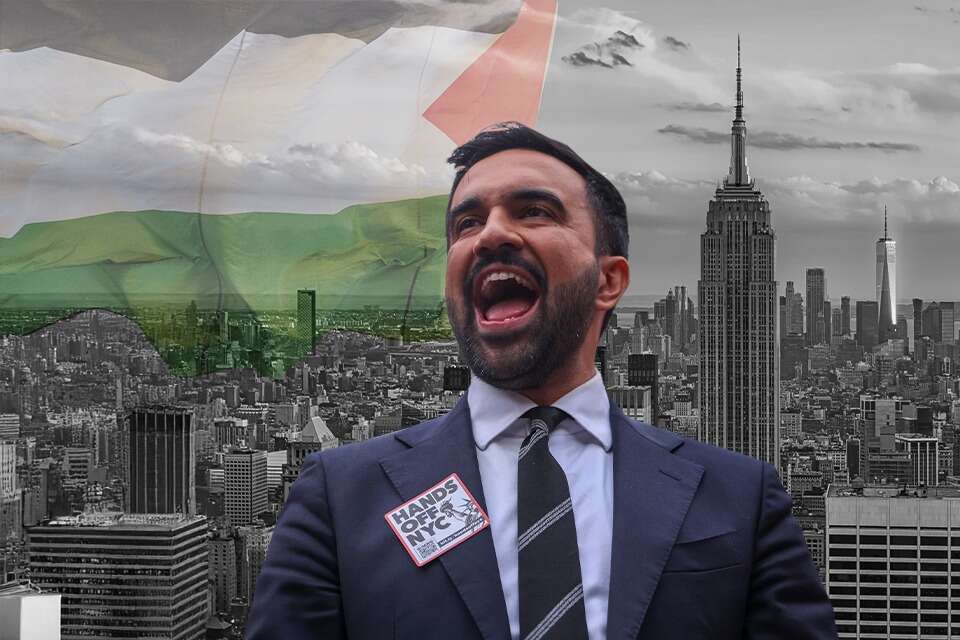
The Israeli "it'll be fine" attitude won't cut it, facing the historic victory of Muslim, socialist, and anti-Israel candidate Zohran Mamdani, who became the first Muslim mayor of America's largest city. His election – anticipated after a widely successful campaign – clarifies the American public's mindset, and more troubling, the separation of many Diaspora Jewish community members from the Jewish state.
Vote analysis shows approximately 33% of New York Jews voted for Mamdani. This is an astonishing figure. How do we explain it? By dividing into two voter groups. The first voted for Mamdani despite his anti-Israel positions – refusing to recognize the necessity of disarming Hamas, declining to acknowledge Israel as a Jewish state, threatening to halt economic cooperation with the state and Israeli companies, and advancing slogans like "globalize the intifada" – a decision driven by opposition to Trump, and possibly support for Mamdani's New York City affordability campaign. The second voter group, which some argue raises even deeper concern, voted for Mamdani precisely because of his anti-Israel positions, with which they identify.
"NYC Jews for Zohran," according to the group's members, organized for months to secure the socialist candidate's victory, with some even donating to his campaign. They comprise part of Mamdani's 38% of voters, including non-Jewish residents, whose anti-Israel stances drew them to support him. Put differently, the appeal of Mamdani as a New York mayoral candidate was partially unconnected to his actual city policies.
The shared thread between these two Jewish voter groups – which should constitute a massive, red and blazing warning signal for Israeli leadership – is liberal Jews' continuing disconnect from Israel. Some feel Israel doesn't represent them and their values, given repeated statements and Knesset member support mainly for Orthodox Judaism.
View this post on Instagram
Israeli leadership must work overtime reweaving those communities' ties to it, and equally crucial – become sufficiently meaningful as the Jewish state for those communities that they'll weigh carefully before selecting leaders who reject it.
But the work doesn't stop there. Exiled German playwright Bertolt Brecht habitually emphasized in his plays that what the audience would witness didn't transpire "here and now," but far away, in some distant kingdom, though the play obviously addressed contemporary reality. So let me follow Brecht's path. What transpired in the US this week directly affects Israeli reality.
On Tuesday, two Democratic Party representatives won gubernatorial elections in Virginia and New Jersey, marking a historic evening not merely at Mamdani's election level, but for the entire Democratic Party, following its spectacular 2024 failure. Now, the question emerges: what voice will the Democratic Party project in 2026? Will it be more moderate, like governors Mikie Sherrill and Abigail Spanberger, or more radical, like the faction Mamdani represents? His victory itself reflects a win that faction craved after isolated victories across years, and this isn't a voice seeking relations with Israel.
True, the world's sole Jewish state has abundant troubles within its borders. But when political reality shifts in the US, its most crucial ally, there's no space for "it's happening there, not here."
Further discussion on Israel-US relations will take place at the Israel Hayom Summit on December 2 at the Hilton Midtown Hotel in New York City.