


Military forces across Venezuela will conduct nationwide exercises following the deployment of US warships and troops in the Caribbean Sea, according to an announcement from Caracas, CNN reported.
Defense Minister Vladimir Padrino López characterized the deployment as a response to the US build-up's "imperialist threat" when he revealed that land, air, naval, and reserve forces would conduct exercises continuing through Wednesday, CNN noted. Beyond conventional military units, the Bolivarian Militia will participate in the exercises – a civilian reserve force established by the late President Hugo Chávez and named for Simon Bolivar, the revolutionary leader who secured Latin American independence from Spanish rule.
Padrino López credited Venezuelan President Nicolas Maduro with issuing the order directly, explaining the exercise aimed to "optimize command, control, and communications" while ensuring national defense capabilities.

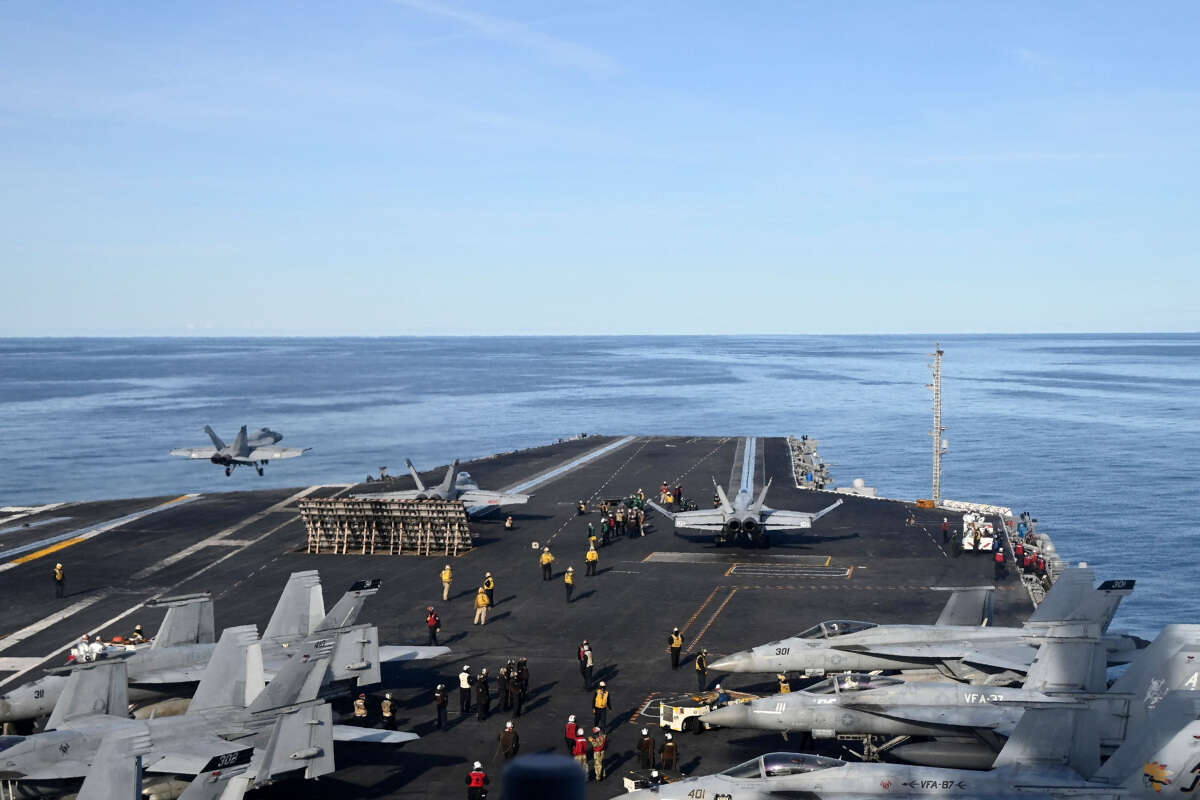
The military mobilization follows mounting friction between the nations as the US continues expanding its regional presence. Tuesday brought the US Navy's announcement that the USS Gerald R. Ford – America's largest warship – had entered the US Southern Command operational area, which encompasses most Latin American territories. Late last month, US Defense Secretary Pete Hegseth directed the Ford to depart Europe for the Caribbean, CNN noted.
Nine air squadrons accompany the Ford's strike group, along with the guided-missile destroyers USS Bainbridge and USS Mahan – both Arleigh Burke-class vessels – the integrated air and missile defense command ship USS Winston S. Churchill, and more than 4,000 sailors, CNN reported.
Washington has characterized its regional force build-up as targeting drug trafficking operations and stemming narcotics flow into the United States, conducting strikes against numerous suspected drug vessels in recent weeks. Caracas interprets US intentions differently, believing Washington seeks regime change, while certain Trump administration officials have privately acknowledged that their strategy targets the removal of Maduro.
Last month brought Trump's authorization for CIA operations in Venezuela, and he previously indicated consideration of strikes within the country – though administration officials subsequently stated the US currently plans no such action, CNN reported.
Tuesday's statement from Padrino López positioned the Venezuelan forces' deployment within Maduro's broader "Independence Plan 200" – a civic-military strategy mobilizing conventional military forces alongside militia and police forces for national defense, according to CNN. The Bolivarian National Armed Forces, Venezuela's conventional military, maintains approximately 123,000 members, while Maduro claims his volunteer militias now exceed 8 million reservists – though experts question both that figure and the troops' training quality, CNN stated.
Following the Ford's arrival, roughly 15,000 US personnel are believed positioned in the region/ Before the Ford group arrived, a substantial portion of all deployed US naval assets already operated regionally, including the Iwo Jima Amphibious Ready Group and the 22nd Marine Expeditionary Unit – totaling more than 4,500 Marines and sailors – three guided-missile destroyers, an attack submarine, a special operations ship, a guided missile cruiser and P-8 Poseidon reconnaissance aircraft. Simultaneously, the US positioned 10 F-35 fighter jets in Puerto Rico, which serves as a hub for US military operations supporting the increased Caribbean focus, while deploying at least three MQ-9 Reaper drones to the island, based on Reuters imagery captured in Aguadilla, Puerto Rico, with approximately 5,000 US troops thought to be stationed there.
Several training missions near Venezuelan coastal waters have been flown by US bombers, including a late October bomber "attack demonstration," CNN reported.


