Gaza has now been under a temporary ceasefire for a month and a week, giving Hamas and the other terrorist organizations in the Strip breathing room. Even so, three kidnapped bodies are still being held there. Again and again in recent weeks, Hamas has misled Israel and the mediators, insisting that it is struggling to locate the bodies even as it holds many of them or knows exactly where they are. The aim was to create leverage over Israel and push it to maintain the ceasefire. The tactic has worked to a large extent, and Hamas hopes to squeeze as much benefit from it as possible.
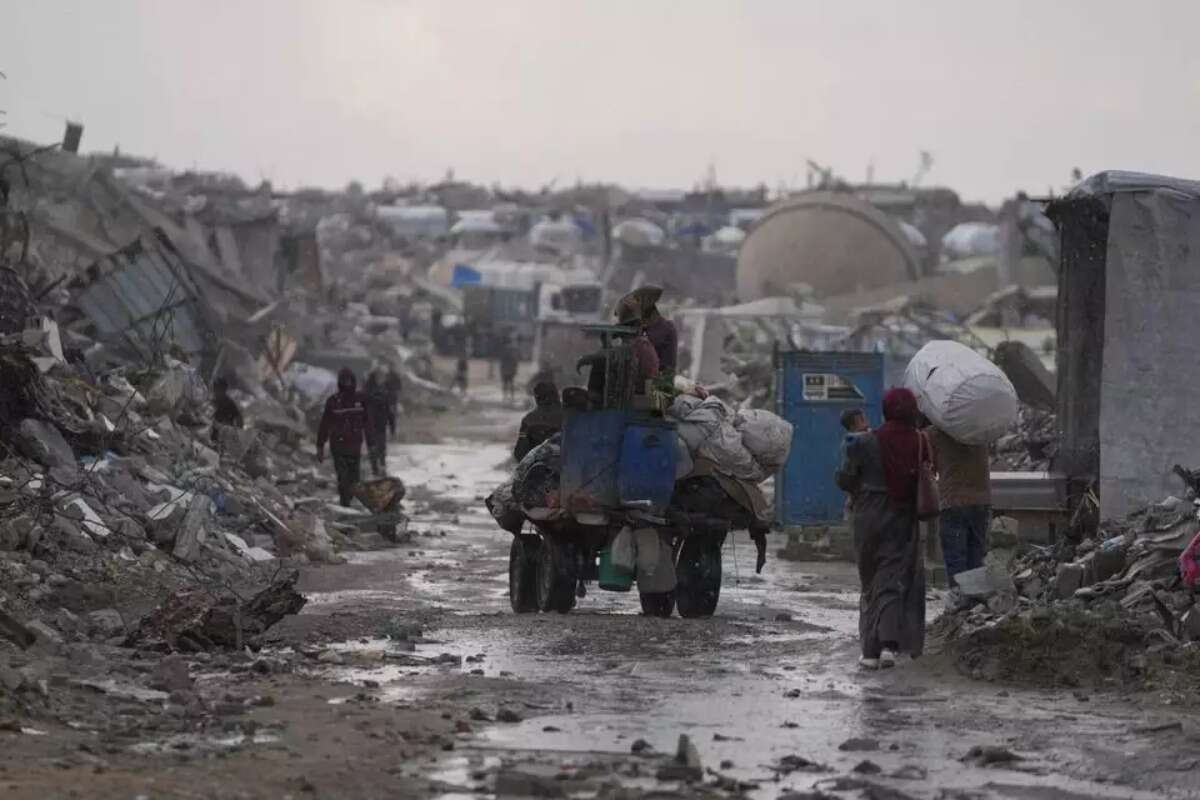
Still, the terrorist organization will eventually have to meet its commitment and return all the bodies. To that end, it is trying to ride the wave of Gaza's humanitarian crisis and request large-scale assistance following the flooding caused by the recent rains.
The campaign has already begun, with a series of videos showing the dire conditions Palestinians face in tent camps, addressed directly to the international community and Arab states. Hamas hopes the campaign will refocus global attention on Gaza, which has slipped somewhat from the center of international discourse since the ceasefire, despite ongoing debates around the UN Security Council resolution on the issue.

At the same time, Hamas is attempting to evade the question of disarmament through a drawn-out and largely pointless dialogue with other Palestinian factions. More than a month of talks and message exchanges with the Palestinian Authority has led to no final agreement on a new governing framework for Gaza. Meanwhile, Hamas operatives are once again spreading through the streets and tightening their control over the Strip.
The main point of contention is the demand by Palestinian Authority President Mahmoud Abbas and his advisers that Hamas hand over its weapons, arguing that this would force Israel to withdraw completely from the Gaza Strip. Hamas, however, insists on keeping at least its rifles for what it calls self-defense, all the more so given that just 18 years ago its fighters massacred Fatah members. Surrendering weapons would not be a particularly wise move from its perspective.
Given all this, Hamas' main avenue for prolonging the ceasefire is through its channel with the Americans. The New York Times reported over the weekend that envoy Steve Witkoff is planning another meeting with senior Hamas official Khalil al-Hayya. As expected, the discussion will focus on the ceasefire, and Hamas' leadership appears eager for the opportunity.

In a twist of irony, the Trump administration has become Hamas' central lifeline. From the moment the agreement was reached, the organization viewed Washington as the main guarantor of maintaining the ceasefire. Without US involvement, Israel would likely have resumed the fighting within a short time.
The question now is how long the pillars Hamas relies on to stabilize the ceasefire can hold. The chief one, the return of the hostages, is nearing completion. The other two, the humanitarian campaign and the internal Palestinian dialogue over weapons, are both shaky. Even the last pillar, the Trump administration, has repeatedly signaled that it tends to align with Israel's positions.
Indeed, if Witkoff and senior adviser Jared Kushner conclude that there is no progress to be made, they will rightly support any decision Israel makes. Hamas understands this to some extent. Its members are already being briefed to follow strict security protocols out of fear of targeted killings. It appears that in Gaza, too, there is growing recognition that the next round of fighting is only a matter of time.