

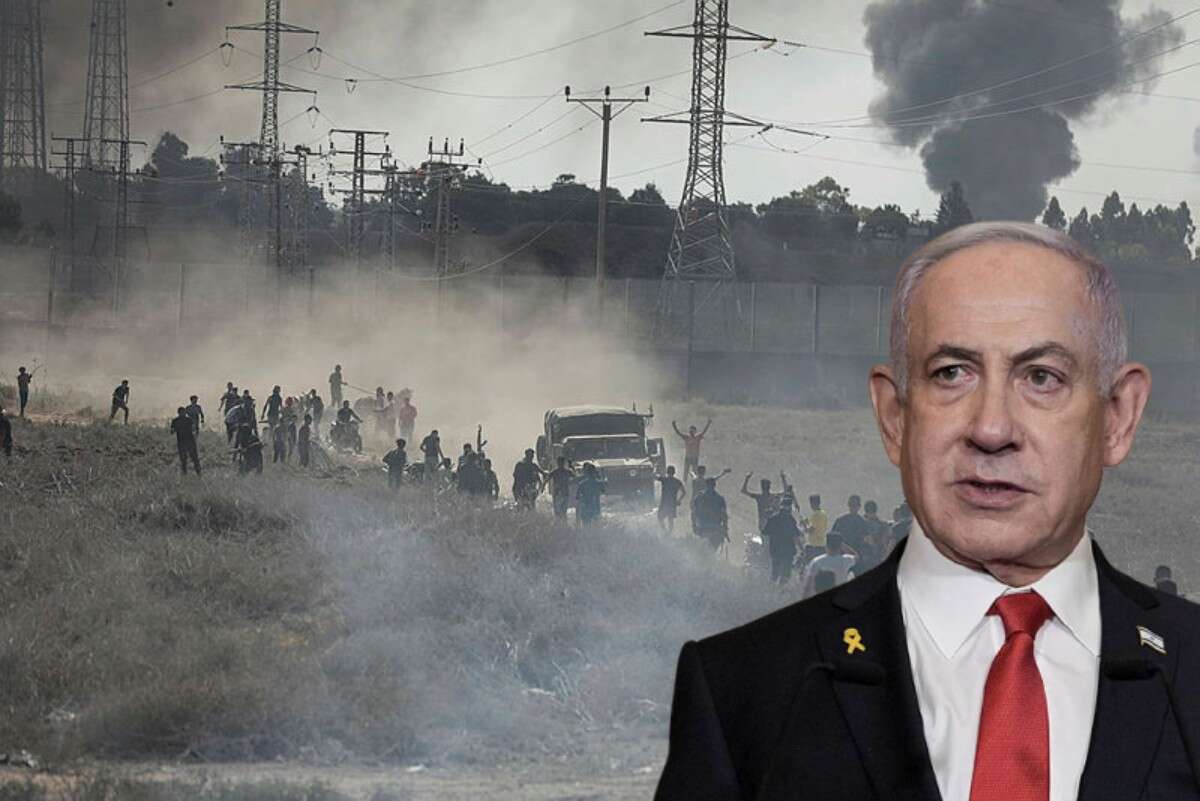
In the Kibbutz of Be'eri, residents gathered Monday to bid farewell to Meny Godard on his final journey. Godard was murdered alongside his wife Ayelet on October 7 and abducted to Gaza. "Dad's here," his daughter Bar wrote in a message she sent Thursday night. That came after an earlier conversation in which she expressed fear he would never return.
Such fears persist regarding the three remaining fallen hostages in Gaza: Dror Or, Ran Gvili, and Sudthisak Rinthalak. Hamas committed in the deal to return them as well, but it's unclear if it can fulfill that. Senior officials said there are "certain indications" about the possible location of one of the three, though they admitted that for the other two "we're in total darkness."
Israel keeps up the pressure on Hamas over the hostages, mainly through the United States. But now it must also let Washington push forward with its plan for shifting to the next stage of the agreement. The UN Security Council is set to discuss on Monday the creation of a "stabilization force" in Gaza. The Americans are working feverishly to recruit countries that will join the force to be deployed in the Strip (initially along the Egyptian border in Rafah), and it could create several significant headaches for Israel.
The main headache concerns the force's makeup. In Israel, they claim it will get veto power to block soldiers from Turkey or Qatar, but the draft resolution that was published suggests only a "close consultation" with it. Beyond that, the security arrangements to be set opposite it also worry, since for the first time Israel's security will be "privatized" and handed over to foreign forces in a way that could even limit the IDF's freedom of action.
The Americans enjoy significant backing from leading countries in the Arab and Muslim world. Eight of them issued open support for the draft (Saudi Arabia, the UAE, Indonesia, Pakistan, Egypt, Jordan, Qatar, and Turkey), which also explicitly addresses the issue of the Palestinian state.

It's likely the topic will come up too in this week's meeting between President Donald Trump and Saudi Crown Prince Mohammed bin Salman, which will include another sensitive issue for Israel's security – the possible sale to Saudi Arabia of stealth fighter jets of the F-35 type, which could significantly erode Israel's qualitative edge in the region.
In Washington, they're trying to tie all these moves together, including normalization between Saudi Arabia and Israel (which will involve additional countries). But it seems there's room for concern given the gap between Trump's ambitious vision and the reality on the ground, including in Gaza where Hamas still holds sway.
Over the weekend, The New York Times reported that Trump's envoy, Steve Witkoff, is set to meet again with the head of Hamas's political arm, Khalil al-Haya. The two met in Sharm el-Sheikh before the signing of the hostage return and war ceasefire deal, and it turns out Washington maintains a hotline with the organization it committed to dismantling.
Into this diplomatic-security focus also spills the reality in Judea and Samaria. In recent weeks, there has been a sharp rise in the number of violence incidents by Jewish extremists against Palestinians, some of which included harm to IDF forces as well. In the defense establishment, they explain the increase with the olive harvest season, but they warn that "we're a step away from a Duma 2," referring to the tragic Jewish terrorism that killed several family members in a Palestinian village several years ago.

These warnings were voiced in several situation assessments, and even passed on to the political echelon including the possible implications – from an outbreak of a broad wave of violence in Judea and Samaria, and up to a collapse of the Gaza ceasefire and broad clashes with the Muslim world.
Meanwhile, the political leadership maintains silence. The prime minister and the defense minister, who excel at commenting on every matter and issue, say not a word on this explosive topic, which also gets coverage in the international media and statements from foreign statesmen. The motives for their silence are clear – the fear of alienating the political base – but its meaning is a signal to the rioters that they have backing from the country's leadership to continue their actions.
This leadership cowardice, which contradicts the clear interest of the state, is a direct continuation of Prime Minister Benjamin Netanyahu and Defense Minister Katz's conduct on the exemption from the Haredi conscription law issue being advanced apace, and to a slew of additional matters – the judicial legislation, the legislation against the media, the intense focus on a pardon for Netanyahu – in all of which the public interest is pushed aside. Don Corleone, seated as godfather, already pointed out that everything is personal: In Israel 2025, everything is personal, and also political.


