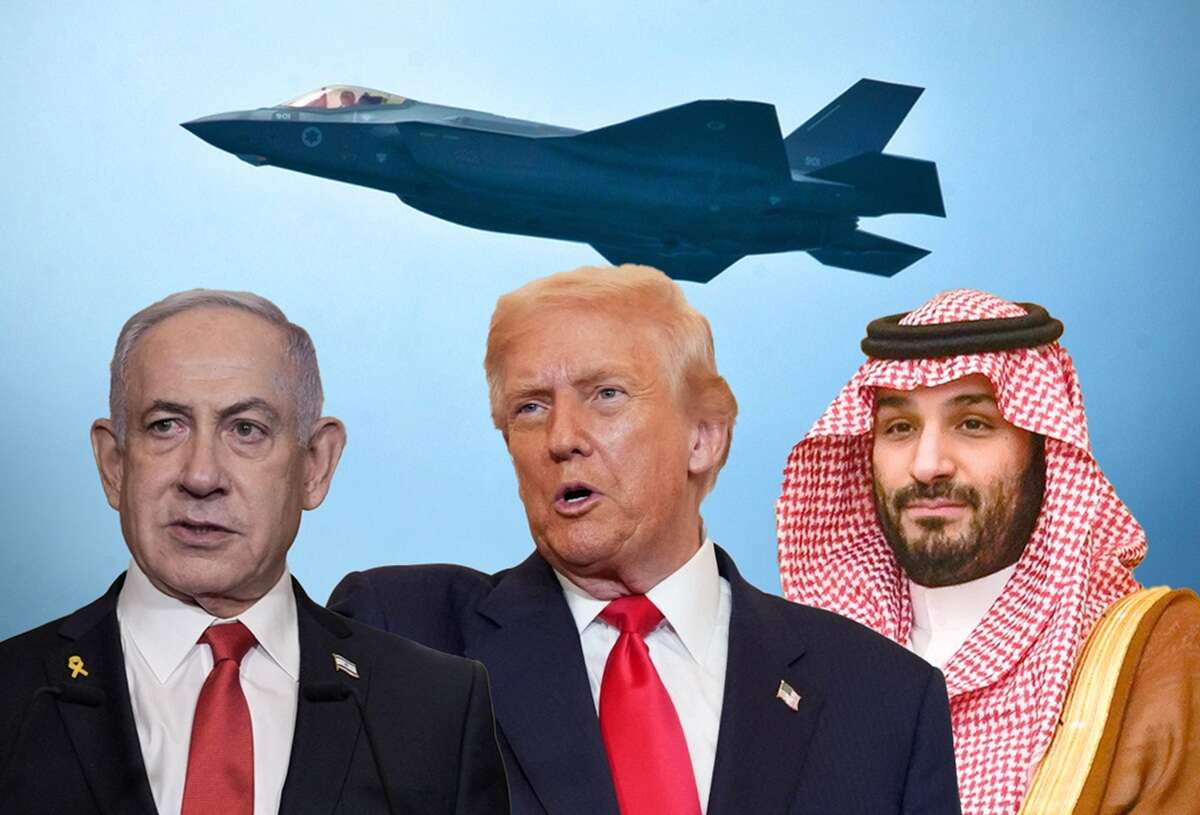
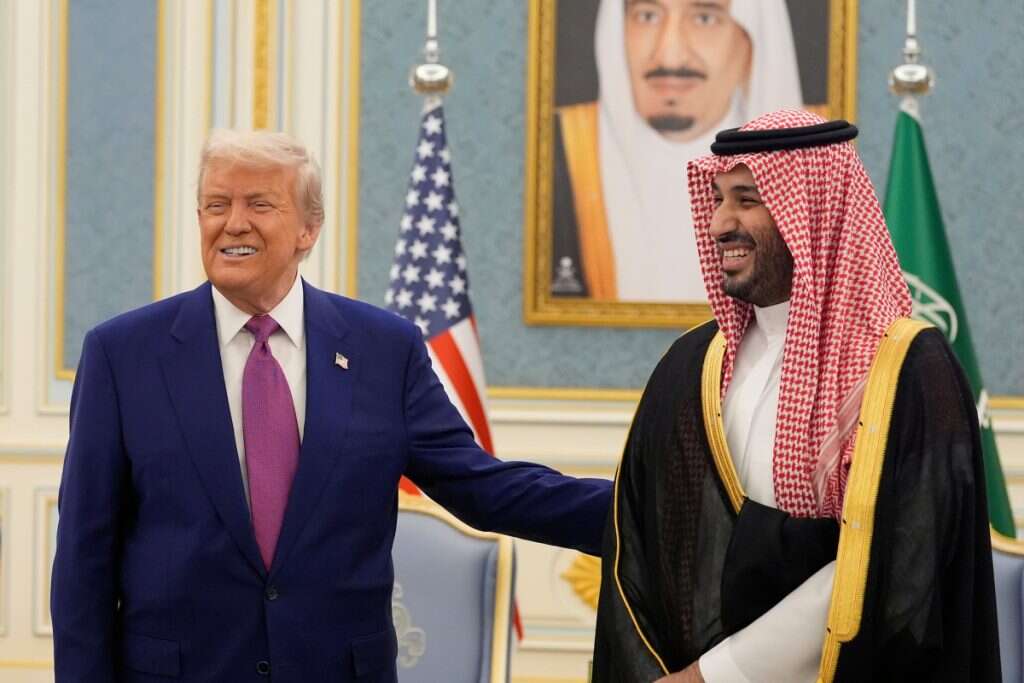
President Donald Trump's explicit ambitions for achieving Israel-Saudi Arabia normalization face substantial obstacles despite his public confidence, with the kingdom maintaining its Palestinian statehood prerequisite while the president prepares to host Crown Prince Mohammed bin Salman on Tuesday during an elaborate White House gathering, the Associated Press reported.
Trump's first-term Abraham Accords, which established formal diplomatic and commercial connections between Israel and three Arab nations, represent his cornerstone strategy for delivering lasting Middle East stability as the precarious Gaza ceasefire between Israel and Hamas continues holding. "I hope that Saudi Arabia will be going into the Abraham Accords very shortly," Trump informed reporters aboard Air Force One during his Friday Florida journey, though more measured internal assessments indicate Saudi participation appears improbable near term, despite restrained confidence that Trump's second term could yield an agreement, three administration officials told Associated Press while discussing internal deliberations anonymously.
The crown prince, commonly referenced as MBS, has signaled potential flexibility beyond his father's stance, yet guaranteed Palestinian state establishment remains the kingdom's non-negotiable condition – something Israel fiercely rejects – creating the central obstacle Trump must navigate. Trump's 20-point Gaza peace plan might be presented to Prince Mohammed as fulfilling that requirement, though such positioning risks Israeli anger and cooperation withdrawal, particularly if the Republican president commits to detailed benchmark timelines, with one official suggesting optimal outcomes from this week's discussions would involve Saudi recognition of Trump's plan as the Palestinian statehood foundation and public commitment to considering accords membership, according to Associated Press. Trump has recently predicted that once Saudi participation occurs, the entire Arab world "goes in," telling business leaders this month with Saudi Ambassador Princess Reema Bandar Al Saud present, "We have a lot of people joining now the Abraham Accords, and hopefully we're going to get Saudi Arabia very soon," before jokingly assuring the diplomat, "I'm not lobbying."
Trump attributes his confidence to what he perceives as seismic Middle East dynamics shifts creating regional peace openings, arguing that Iran – the shared Saudi-Israeli adversary – has witnessed its Gaza, Lebanon, and Yemen proxies diminished following two years of conflict while Tehran's nuclear program sustained setbacks from June US strikes, factors Trump believes have prepared conditions for Saudi-Israeli agreement. Nevertheless, reconciling Trump's public assurances with Saudi demands for the establishment of a Palestinian state before any normalization arrangement proves difficult, though the visit might provide Trump with opportunities to guide the crown prince toward his ultimate goal if he demonstrates receptiveness to the necessity of a Palestinian state.
The crown prince's anticipated White House arrival will feature a request list including formal US military protection scope definitions for the kingdom and approval to acquire American-produced F-35 fighter jets, among the globe's most advanced aircraft, though as preparations concluded, Trump's authorization for the fighter jet agreement appeared doubtful despite his unpredictability record and potential approval if the crown prince achieves persuasion, administration officials told Associated Press. The administration maintains concerns about disrupting Israel's "qualitative military advantage" over neighboring states, especially as Trump depends on Israeli support for his Gaza peace plan's success, while another persistent worry involves potential Chinese theft or transfer of F-35 technology, given China's close UAE and Saudi Arabia.