

This week represents one of the most pivotal earnings cycles of 2025, with 36 major companies scheduled to report results that will provide crucial insights into both the artificial intelligence boom and consumer health heading into the critical holiday shopping season. The week is dominated by high-stakes reports from technology giants, retail titans, and Chinese e-commerce players, all set against a backdrop where the broader S&P 500 has already delivered an impressive 13.1% earnings growth rate for Q3 2025 – nearly 60% above initial expectations. Investors will be watching closely for signs of whether the explosive growth in AI infrastructure spending and consumer resilience can continue, or whether warnings of moderation begin to surface.
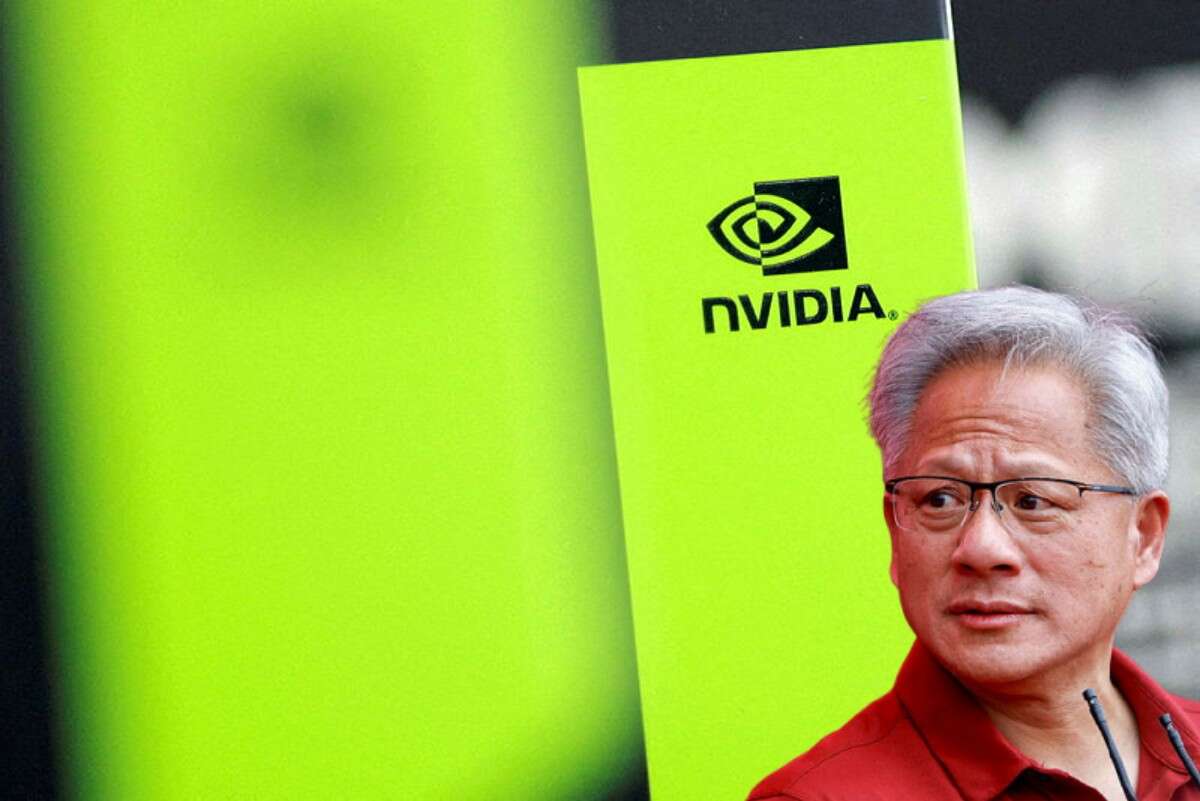
The undisputed headline of the week is Nvidia's Wednesday after-market earnings report, which has become the single most anticipated corporate announcement of Q3. The AI chipmaker, which recently made history by reaching a $5 trillion market cap, is expected to report revenue of $54.8 billion with 56% year-over-year growth, driven primarily by a staggering $500 billion order backlog for fiscal years 2025 and 2026 from hyperscalers seeking artificial intelligence accelerators. However, the company faces an unprecedented headwind: US export restrictions have effectively eliminated its market access in China, erasing what was once a 95% market share and representing an estimated annual revenue loss in the tens of billions. Wall Street remains bullish despite these geopolitical challenges, viewing the report as a validation of the AI revolution's ongoing momentum, though any signs of demand deceleration could trigger significant market volatility.
Retail earnings take center stage with 11 major retailers reporting throughout the week, offering a comprehensive window into consumer spending patterns as the holiday season approaches. Home Depot and Lowe's report early in the week, and their results will reveal whether consumers remain willing to fund big-ticket home improvement projects despite elevated mortgage rates dampening housing turnover. More significantly, the week culminates with reports from Walmart and Target, which are two bellwether retailers whose results on Wednesday and Thursday will definitively signal whether consumers are genuinely healthy or merely masking weakness behind a bifurcated economy where higher-income households spend at 2.7% growth while lower-income groups lag at just 0.7%. The National Retail Federation is forecasting that holiday sales will exceed $1 trillion for the first time in history, growing 3.7-4.2% over 2024, but these retail earnings will either validate or challenge that optimistic outlook.

Beyond retail, the technology sector features several significant reports beyond Nvidia, including Snowflake's cloud data platform results on Wednesday after-market, where investors will scrutinize whether the company's recent artificial intelligence partnerships with Nvidia are translating into accelerated customer adoption. Palo Alto Networks, Intuit, and Veeva Systems round out the software earnings wave, with all three reporting around Nvidia's results on Wednesday and Thursday. These companies collectively represent the infrastructure and application layer of the artificial intelligence boom, and their results will help investors determine whether the AI spending is truly multi-layered across chips, software, and services, or whether it remains concentrated in chip suppliers.
Chinese technology and e-commerce companies dominate Monday and Tuesday, with PDD Holdings, Baidu, Trip.com, and later Alibaba providing crucial insights into consumer behavior in the world's second-largest economy. These reports come as Chinese tech firms navigate intense domestic competition, regulatory scrutiny, and ongoing US-China trade tensions, making their results particularly important for understanding global technology trends. Additionally, Chinese electric vehicle manufacturers including XPeng, Li Auto, and NIO report this week, offering a window into the brutally competitive EV market where domestic manufacturers are racing to capture market share amid slowing overall demand.
The earnings released this week will ultimately answer a fundamental question facing markets: Can the artificial intelligence boom sustain its explosive trajectory while consumers remain resilient enough to support the holiday shopping season and beyond? With profit margins at their highest levels since 2009 despite significant tariff pressures, companies have demonstrated remarkable pricing power. However, potential headwinds including geopolitical tensions, potential changes in trade policy, and questions about whether enterprises will sustain their unprecedented AI infrastructure spending could quickly shift the earnings momentum that has carried markets higher. The next five trading days will provide critical data points that will either confirm the bullish narrative underpinning current market valuations or suggest that caution may be warranted as 2025 winds down.
A half-trillion dollar chip order disclosure from Nvidia chief executive Jensen Huang in October has prompted Wall Street analysts to significantly elevate their 2026 revenue expectations for the AI semiconductor leader. The statement at the company's Washington GTC conference revealed combined 2025-2026 bookings worth $500 billion, encompassing current Blackwell GPU sales, next year's Rubin chip deliveries and networking components. Wolfe Research analyst Chris Caso calculated the data suggested potential data center revenue exceeding prior calendar 2026 projections by $60 billion, noting, "NVDA's disclosures suggest clear upside to current consensus estimates."

Despite Huang's bullish disclosure, shares currently trade 5% beneath their October 28 levels, reflecting investor uncertainty about whether hyperscalers and AI laboratories are overcommitting capital to infrastructure. Wednesday's third-quarter results are expected by LSEG-surveyed analysts to deliver $54.9 billion in sales with $1.25 earnings per share, marking 56% year-over-year expansion. January quarter guidance projections stand at $61.44 billion. Any Huang commentary addressing the sales pipeline and 2026 outlook will face intense scrutiny given current analyst consensus of $286.7 billion in 2026 revenue.
Huang's customer base encompasses every major technology company worth multiple trillion dollars, with Google, Amazon, Microsoft and Meta all announcing elevated AI infrastructure capital expenditure during October earnings. Oppenheimer analyst Rick Schafer characterized the spending pattern as demonstrating "insatiable AI appetite." Major dealmaking marked the quarter, led by Nvidia's $10 billion OpenAI equity commitment in exchange for the startup purchasing 4 million to 5 million GPUs across multiple years. Additional investments included $5 billion in Intel and $1 billion in Nokia. Citi analyst Atif Malik identified the OpenAI arrangement as Wednesday's key investor focus, writing, "Although concerns around the mix of debt and circular financing around AI capex froth exist, we fundamentally see AI supply below demand."

Nvidia commands more than 90% of the AI GPU market despite growing custom chip promotion from customers including Amazon's Tranium processors, Google's TPU chips, and forthcoming OpenAI semiconductors developed with Broadcom. Current projections exclude China sales following the H20 chip's export restrictions earlier this year, though Huang secured August licenses from President Donald Trump exchanging government receipt of 15% China revenue for export approval. Oppenheimer's Schafer estimates China represents potential annual revenue exceeding $50 billion. When CNBC inquired in late October about selling Blackwell-generation chips to China, Huang stated: "I hope so. But that's a decision for President Trump to make."


