


Investors prepare for a valuation swing approaching $300 billion following Nvidia's (NVDA) quarterly update Wednesday.
At 4 p.m. ET (right after the markets close on Wall St.), the company is expected to release the figures for Q3 and guidance for the current quarter and year ahead on its investor relations section on its website. The conference call, which people can join through the site, will be held an hour later (at 5 p.m. ET), as unease regarding Silicon Valley's massive artificial intelligence spending grows. Financial Times notes options trading implies a 6.4% price shift for the chipmaker on Thursday.
This volatility follows an 11% share price drop for the firm, which briefly hit a $5 trillion market cap in late October, driven by a broader sell-off among major artificial intelligence players.
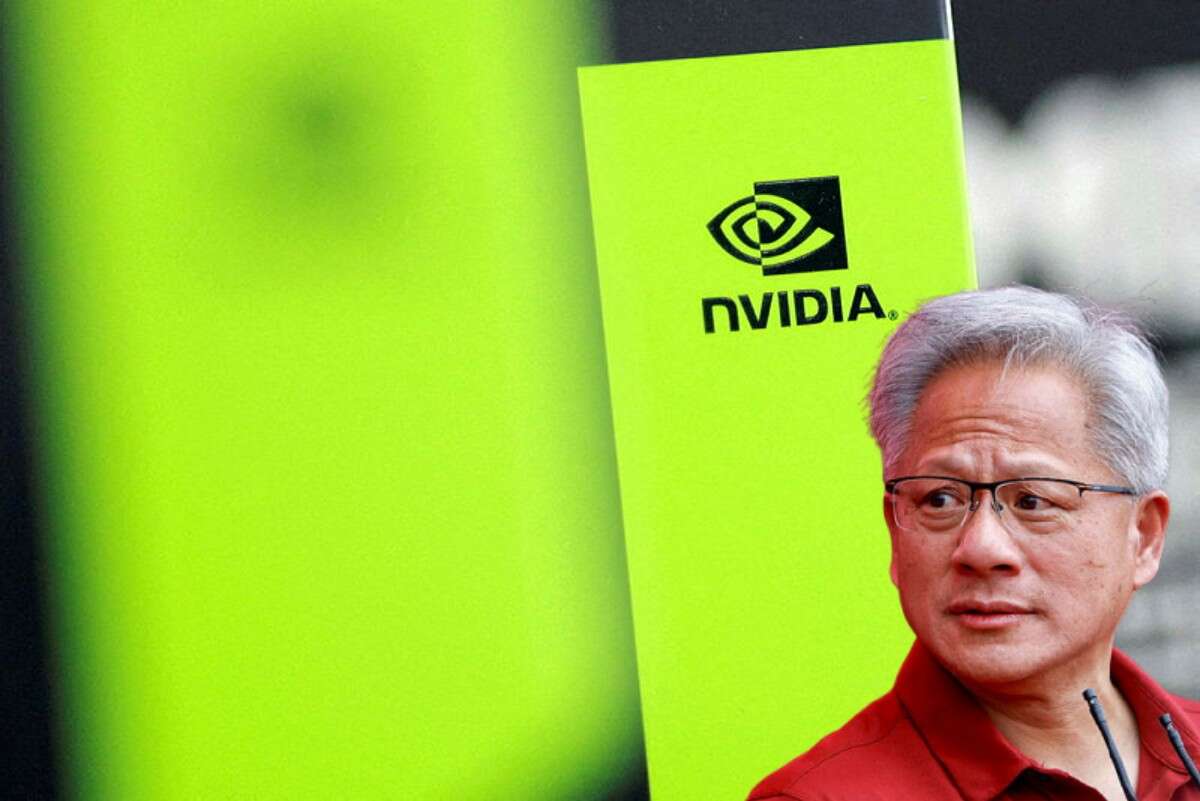
Julian Emanuel, Evercore ISI's chief equities strategist, was quoted by FT as saying, "The angst around 'peak AI' has been palpable." The California firm's disclosures heavily influence the tech-dominated US market given its central role in the artificial intelligence boom, according to Financial Times. Wednesday's figures arrive as sector enthusiasm cools, with the Nasdaq Composite falling over 4% recently and major drops for Meta and Oracle.
The company stock has demonstrated remarkable consistency in exceeding Wall Street expectations across its last three earnings reports, reinforcing investor confidence in the company's execution amid record demand for AI infrastructure, but the most recent earnings beat was not enough to assuage investors concerns of a slowdown after it said that data center sales of $41.1 billion fell slightly short of expectations, resulting in a market sell-off. However, it then pared its losses and even reached new high. In recent days it shed some gains because of the macro concerns in the industry and overall investor sentiment on the so-called "AI bubble" and potential funding obligations for various players in the field. The following table documents the company's projected versus actual earnings results:
Here are the figures for Nvidia's most recent earnings reports.
| Fiscal Quarter | Projected EPS | Actual EPS | Beat/Miss | Projected Revenue | Actual Revenue | Result |
|---|---|---|---|---|---|---|
| Q2 FY2026 (Aug 2025) | $1.01 | $1.05 | ✅ Beat (+$0.04) | $46.05B | $46.74B | Beat |
| Q1 FY2026 (May 2025) | ~$0.94 | $0.81 (GAAP) / $0.96* | ✅ Beat* | $43.2B | $44.1B | Beat |
| Q4 FY2025 (Feb 2025) | $0.84 | $0.89 | ✅ Beat (+$0.05) | $38.32B | $39.3B | Beat |
Why Nvidia earnings matter
Nvidia's quarterly results carry outsized significance for the broader market due to the company's commanding position in AI infrastructure and its substantial weight in major indexes. Nvidia's grip on the AI chip market is extraordinarily tight: The company controls roughly four of every five AI GPU dollars spent globally in 2025, a competitive moat that positions it as the essential infrastructure vendor for every organization building AI systems. The result is dramatic revenue concentration within a single business: The data center division generated $41.1 billion over the second quarter, a figure that represents nearly nine of every ten dollars the company collected and implies the segment is expanding at a 56% annual rate.
The company's GPU shipments and data center revenue serve as critical barometers for the health of AI capital expenditures, with CEO Jensen Huang projecting $3-4 trillion in global AI infrastructure spending through the end of the decade. Consequently, Nvidia's earnings reports provide investors with authoritative insights into AI adoption trends, cloud spending patterns among hyperscalers like Microsoft and Amazon, and the sustainability of the AI boom that has propelled technology stocks to record valuations.
Mike Zigmont, co-head of trading at Visdom Investment Group, told FT: "In the run-up to Nvidia's earnings announcement, we're experiencing cold feet and worry that prices went too high to justify." He added, "If Nvidia delivers disappointing guidance Wednesday, the [market] is going to sink significantly."

What analysts expect
The Street is bracing for Nvidia to deliver $1.26 in adjusted EPS, which would translate to roughly 6-in-10 earnings growth compared to year-ago levels and represent an 18% step-up from the prior quarter's $1.05.
Wall Street's consensus revenue target clusters in the $54.6 to $55.2 billion band – a range that embeds roughly 56% growth versus the prior year and approximately 17% sequential expansion from Q2's $46.74 billion run rate. The critical nuance: Street participants are signaling that anything in the $55 billion vicinity would represent a meaningful outcome, with sub-$55 billion results likely disappointing investors who have front-loaded such elevated expectations. Bull-case scenarios from major investment banks like Morgan Stanley and JPMorgan suggest potential for Q3 revenues to approach or exceed $56 billion, contingent on Blackwell shipment acceleration outpacing prior guidance.
Wednesday saw Asian exchanges faltering as apprehension regarding AI-focused tech valuations depressed the mood prior to Nvidia's earnings release. Overnight drops of 1.2% hit the Nasdaq, stretching declines into a second session and pulling back over 6% from record highs set in late October. While futures for the S&P 500 and Nasdaq 100 dipped deeper, European futures showed mixed results. Japan's Nikkei, suffering the region's sharpest monthly fall of roughly 7% in US dollar terms, erased initial advances to flatline. Both Hong Kong stocks, down 0.5%, and mainland China indexes, which held steady, reacted to the shift.
Nvidia's contribution to the artificial intelligence surge has driven the global rally lifting AI-connected shares and the tech sector for many months, but there is concern this at some point will have to plateau as demand ultimately declines, with the Q2 Nvidia figures (a slight miss on the data centers) being one such indication, although this was explained as a direct result of the restrictions on doing business with China. Compounding investor uneasiness are uncertainties regarding potential December interest rate cuts by the US Federal Reserve, alongside fears that President Donald Trump's slipping approval numbers might trigger inflationary fiscal spending. These elements prevented safe-haven US Treasuries from rallying, keeping the 10-year benchmark yield at 4.12%.
What to watch in the results: Key metrics that will drive the stock
The earnings report will reveal several critical metrics that traders and institutional investors will dissect for clues about Nvidia's near-term trajectory and the health of the broader AI infrastructure cycle. Blackwell GPU execution represents the highest-stakes metric, as successful production ramp and early shipments of the B200 and B100 processors will validate management's guidance and signal whether the company can overcome previous supply-chain constraints. Analysts expect Blackwell to contribute meaningfully to Q3 results, with Morgan Stanley noting that the acute supply-side friction that plagued Nvidia's operations has substantially eased at the GPU level, though the company now faces competing limitations in complementary infrastructure – particularly power delivery, server architecture, data center real estate, and storage systems – rather than chip fabrication capacity.

Data center revenue and margin integrity will determine whether Nvidia can maintain premium pricing despite increased competition. Investors expect the segment to deliver approximately $48 billion in revenue, or roughly 87-89% of total company sales. Additionally, traders will scrutinize inventory levels and order pipeline visibility, as hyperscaler overcapacity or hesitation to place new orders could signal that the AI investment cycle is moderating.
Forward guidance for Q4 represents the single most important catalyst for the stock's immediate reaction. Analysts project between $61.29 billion and $61.57 billion, but guidance below $60 billion would be viewed as severely disappointing and likely trigger a sharp selloff. Management commentary on several qualitative factors will also matter enormously: The confidence level around continued cloud provider commitment to AI capex, commentary on China market prospects amid export restrictions, and clarity on the competitive landscape as AMD, Intel, and custom chips from hyperscalers gain adoption. Finally, traders will listen closely for any discussion of the $500 billion in chip orders Jensen Huang announced in September, attempting to gauge when those commitments will convert to actual revenue.
Nvidia stock volatility: Historical reactions to earnings
Nvidia's share price has historically exhibited significant volatility around earnings announcements, with single-day moves often exceeding 5-10% depending on whether results meet or miss expectations relative to the elevated consensus forecasts. Market participants are bracing for a 6% to 8% implied move in the stock immediately following the Q3 report, based on options market pricing. Historical patterns reveal that Nvidia's post-earnings performance varies considerably depending on the magnitude of earnings beats and guidance revisions.

Over the past four quarters, Nvidia has experienced highly disparate outcomes depending on whether management commentary reinforced or tempered market optimism about AI demand durability.


