

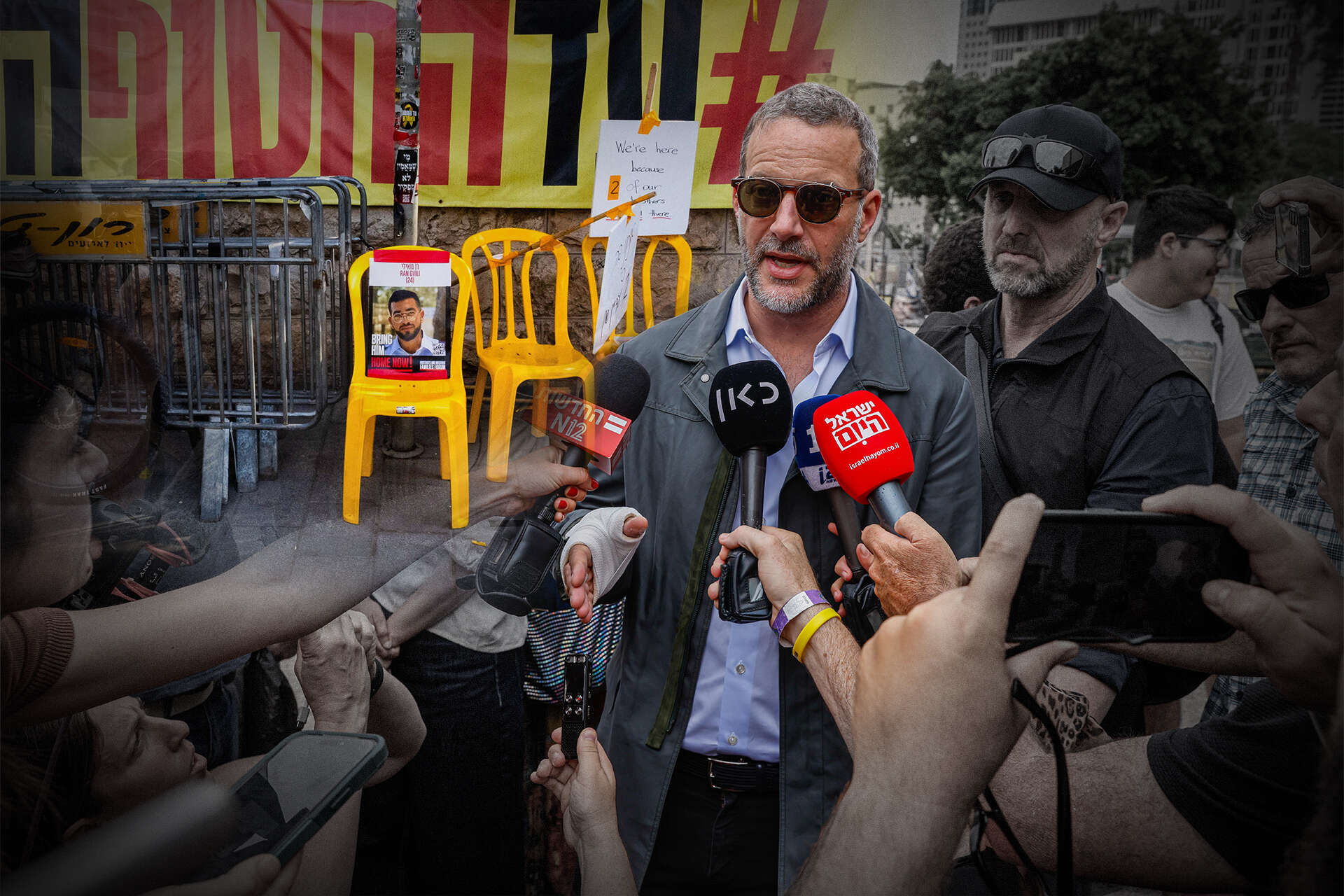
When Adam Boehler, one of the figures closest to the decision-making circles in the current Trump administration and a member of the small team that helped advance the Abraham Accords, returned to administration at the beginning of the year, he knew he was assuming a heavy responsibility. His role – the president's special envoy for hostage affairs – is a title that might suggest diplomacy and formal meetings, but in practice, it is one of the few positions in Washington where the title is not a metaphor, but a mission that can determine life or death. Every word, every decision, every conversation can affect the fate of a person held in a prison or a dark basement somewhere in the world. The role took on an even more personal and complex meaning for him after October 7, the day Israel and he, as an American Jew, entered an entirely new reality.
According to Boehler, his path to this role was not planned. It began years earlier, during a meeting between the first Trump administration and Chinese President Xi Jinping. "I was sitting next to Robert O'Brien," Boehler recalls, "and I watched him ask the president of China to deliver two Bibles to two Chinese-American citizens being held captive in the country. I asked what this was about." O'Brien, who at the time served as the hostage envoy before becoming National Security Advisor, told him about the job. "Here was something that could have a real impact on people's lives, make a huge difference. It left an impression on me," Boehler says.
After four years in which, in his words, "US foreign policy, built painstakingly during the first Trump administration, steadily deteriorated under the Biden administration," the moment arrived when Trump again won the presidency. "It was a moment of great relief," he recounts. Shortly before the election, he found himself on a flight to the Republican National Convention (RNC). Sitting next to him was Morgan Ortagus, the former State Department spokesperson and now the deputy presidential envoy for the Middle East. "Morgan asked me what I wanted to do in the second term. I told her honestly that I hadn't thought about it. Then she said: 'Have you ever considered SPEHA?' I didn't even know that was the official name of O'Brien's job."
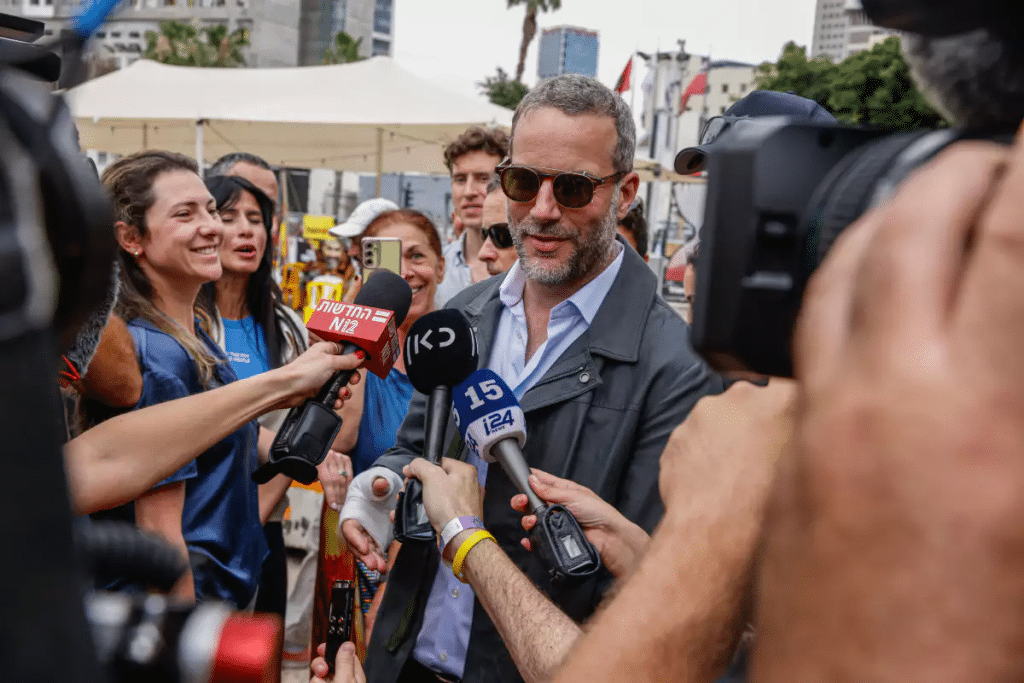
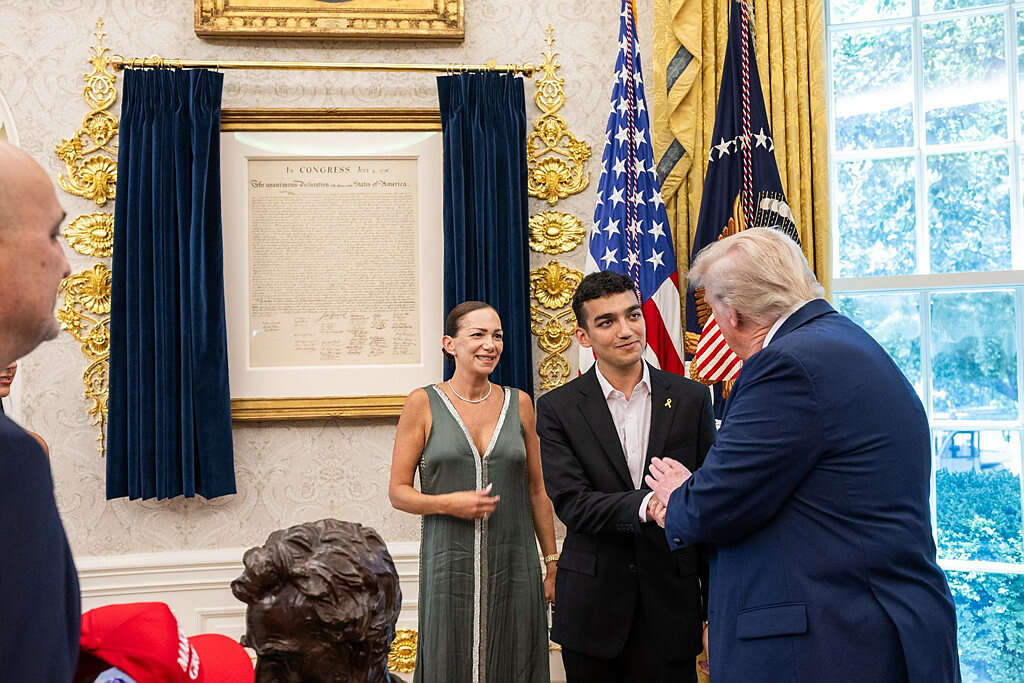
When the plane landed, he ran into O'Brien himself. "I asked him what he thought of me for such a role. He looked at me and said: 'That's a great idea. You already have the relationships – it's perfect for you.' As if it was something that was simply meant to be." Not long after, he sat with President Trump. "The president asked: 'What do you think about doing something broad in the Middle East, or something like that?'" Boehler recalls. "I answered that we already have excellent people working on the Middle East, and that the hostage issue is one of the most meaningful we have, because there are many Americans, many allies, and in this case Israelis as well, in captivity." The president liked the response. "'If that's what you want, no problem, I also think it's really important,' he said. And that was that."
He describes October 7 as a formative moment for him. "For some reason, I was awake late that night and saw the initial reports before anyone understood how terrible it was. I stayed up all night as things unfolded. Seeing October 7 as an American, as a Jew, it was devastating," he says plainly. "I felt frustrated, because I didn't think – and still don't think – that this would have happened under President Trump. When he won again, I couldn't sleep because I was so happy. I felt that finally we were going to do something about this. I didn't feel we were aggressive enough under the previous administration."
Boehler noted that during his meetings with the president, it was made clear that his mission would be far broader than the formal job description, which focuses on recovering Americans. "The president told me that all Israelis are included in my mandate," he says. "When I arrived for my first visit, I met Prime Minister Benjamin Netanyahu. Each time I promised him that we would not stop until everyone was home." He adds: "This was deeply important to me, because for us, in the broad sense, as Jews – seeing what happened, growing up with the memory of what happened to us in the Shoah [the Holocaust], and then seeing a second Shoah… we must ensure that we act, that we don't forget the first, and now the second, and that from this pain some good may ultimately emerge," he says, referring to the regional changes underway in the Middle East as a result of the war, a region he describes as "completely transformed."
Several months into his role, one move he took triggered a major storm: a direct meeting with Hamas' negotiating team. In Israel, the step drew sharp criticism. "There was concern that we would offer something or make a deal without the Israelis," Boehler says, but insists on setting the record straight. "It's important to understand: nothing like this happens on my own authority," he emphasizes. "These things were widely coordinated with the White House." As for any possibility of bypassing Israel, he is unequivocal: "That is something we would never do. I don't make deals with currency. It was an Israeli decision what to offer." Asked what led him to take such a bold, unusual step, he answers without hesitation: "Time is a killer for hostages. When you operate only through intermediaries, it can take longer. While I'm sitting here, I'm thinking about hostages trapped somewhere, and it weighs on you. Talking to anyone, even Hamas, speeds up things."
It is worth mentioning that in later rounds of negotiations with Hamas, particularly the most recent one that produced a ceasefire and the return of the living and deceased hostages, both the President's Middle East Envoy Steve Witkoff and the president's close confidant and son-in-law Jared Kushner also engaged in direct contacts with the terror group's representatives.
When asked how he felt as a Jew meeting with Hamas operatives, Boehler said: "In my meetings with Hamas, or any other terrorist organization, I always remember that I am not there in a personal capacity, but representing my country. I try to stay focused on the goal, which is to secure the release of the hostages as soon as possible and ensure that they are never taken again. It also helps me emotionally to separate myself a bit; otherwise, I think I would be angry and upset all the time."

Boehler recounts how he kept a photo of one hostage, Edan Alexander, inside his notebook. "For me, it was a reminder that something could happen any day." He says the meeting with Hamas revealed something essential: "We wanted to understand what Hamas really wanted. And then it became clear in the talks that there was a possibility of a broad 'all-for-all' deal. People said it was impossible. But they weren't doing the math based on the reality that the president meant what he said. They weren't doing the math of the president and Bibi [Israeli Prime Minister Benjamin Netanyahu] having a strong view."
Regarding media claims at the time that the Gaza portfolio was taken away from him after the controversy, Boehler rejects them outright. "Those reports are wrong for two reasons: first, I never held the 'Gaza file' to begin with. Second, my portfolio is across the board, hostage affairs, and I continue working on bringing American and allied hostages home."
But Boehler prefers to focus on the results: first and foremost, the release of Edan Alexander. "It was a joint achievement of many: myself, Steve Witkoff, Jared Kushner, and other administration officials. And I was proud to be there, because when someone is freed, it is deeply moving." He describes the moments of a hostage's release as unlike anything else. He recalls being on the helicopter that brought Alexander back to Israel and describes a phenomenon he saw with him and with others who emerged from captivity: at first, their faces "do not look good," but within minutes of being in American hands, they suddenly come back to life." Boehler explains that this pattern repeated itself again and again: "We brought home 160 Americans and allies, and it's almost always the same. It's like a drug. You feel the presence of God in those moments."
He shares other experiences as well. "On Trump's inauguration day, we brought two people home from Afghanistan. I stood with the family of one of them at the inauguration ceremony; they were right behind the president," he says. "Later, around 11:30 p.m., we drove to their house. We woke up the wife and kids. I told them their father was in American hands, and then I connected them by phone. Seeing that moment, that gives you faith."
Another story he shares with emotion is that of Elizabeth Tsurkov, the Israeli-Russian researcher kidnapped and held for two and a half years by Kataib Hezbollah, an Iranian-backed terror group in Iraq. Unlike other cases, Boehler chose a completely different approach: a public, sharp, and rare confrontation with the Iraqi prime minister. "In my first conversation with him, I received niceties and diplomatic talk, but no real commitment," he says. "I don't accept that on behalf of the president of the United States. It's insulting to the president. So I told him that directly."
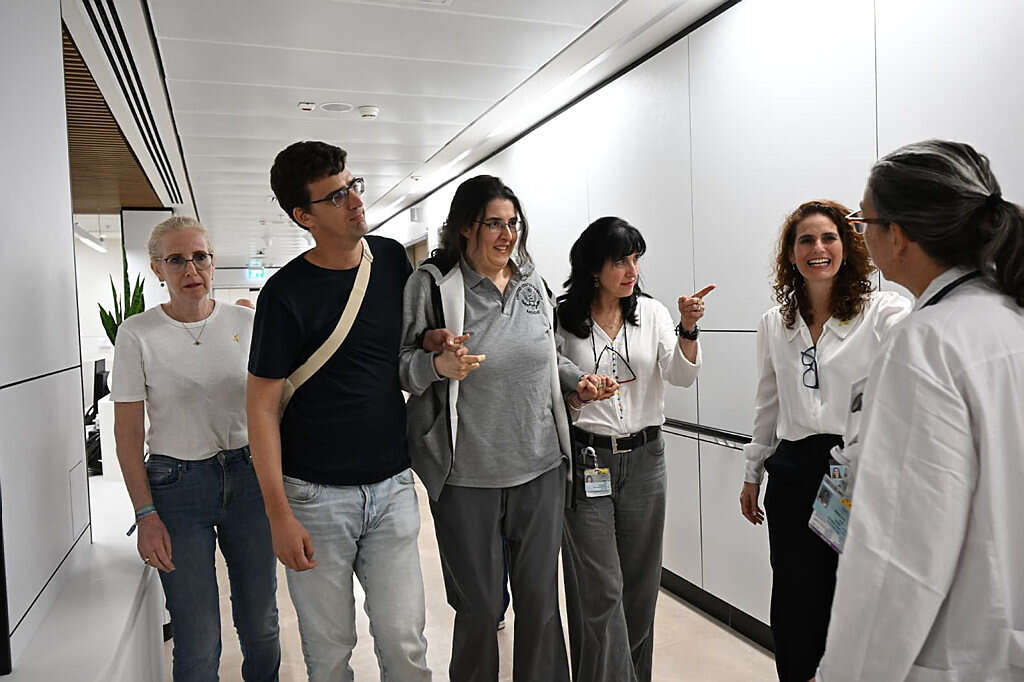
The Iraqi response was swift. "It was as if they said: 'Okay, we didn't realize you were this serious.' And then they began to act." Boehler stresses that in return for Tsurkov's release, "I gave them nothing. We told Iraq: 'Let's work together, this is a burden for you. Fix that burden and let us help you.' And to their credit, the Iraqis responded. Some countries don't, and then, as the United States, we decide how to act. Holding Americans and allies hostage is a tremendous burden. And for those who choose this path, there are real consequences."
As a result of the efforts, Iraq released not only Tsurkov but also the remains of another American held there for years. "Just like in Israel, it is deeply important for families that if a family member has died, they can receive their loved one's remains; it means a lot."
When asked how many Americans are still held hostage abroad, Boehler answers: "Dozens. In Afghanistan, Russia, Iran." But he remains ambitious: "We will bring them all home. We will continue applying pressure until every American is home."
The conversation returns to the Israeli hostages. Of the 251 kidnapped on October 7, one Israeli hostage remains: Ran Gvili, recognized as deceased, who has not yet been returned to Israel. Boehler is asked how optimistic he is about bringing him home. "When we said 'everyone,' we meant every single one," he says. "We are committed to that."
Regarding the day after in Gaza, Boehler expresses cautious optimism. "I don't think you could ask for anyone better than Kushner, Witkoff, and the team working there. The president is committed, and that gives me great confidence." He adds, "It's incredibly hard, but no one knows how to navigate difficult situations like Jared Kushner. Everyone said the Abraham Accords were impossible. He proved otherwise. When everybody always reverts back to all the history, he looks at situations with original eyes."
In closing, Boehler offers an introspective reflection on the meaning of the role he has taken on. "I've heard every story, and these are things that are hard to hear. I see the worst of humanity." Yet alongside the pain, he emphasizes the light he sees as well: "But I also see the best of humanity. It reminds you that there is good in the world. I have never seen anything like it."


