

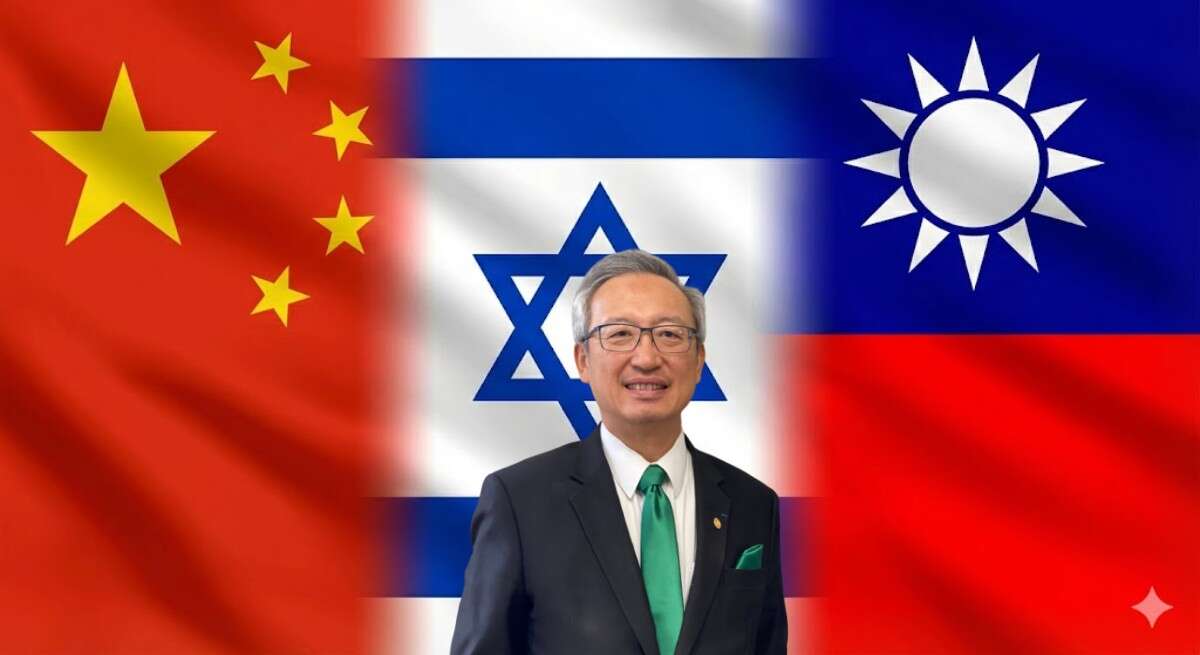
Three individuals knowledgeable about the journey confirmed to Reuters that Taiwan's Deputy Foreign Minister Francois Wu undertook a previously undisclosed visit to Israel within recent weeks. The clandestine trip transpired as Taipei pursues defense collaboration with Jerusalem, the news agency reported, amid ongoing Chinese threats that it would not tolerate official Israeli ties with the island, which it considers a renegade province, with Beijing even making personal threats against MK Boaz Toporovsky over his advocacy for stronger ties between Jerusalem and Taipei.
An Israeli official told Israel Hayom that the visit took place but played down its importance. According to the Israeli official, Wu met with two Knesset members from the Opposition and the Coalition. However, the Foreign Ministry in Jerusalem boycotted the visit as part of its policy of non-confrontation with Beijing on the sensitive issue of Taiwan.

China's embassy in Israel issued the following statement in response to the visit: "The one-China principle is the consensus of the international community and a basic norm of international relations. It is also the prerequisite and foundation for establishing and developing diplomatic ties between China and countries around the world, including Israel. The China-Israel Joint Communiqué on the Establishment of Diplomatic Relations clearly states that 'the Government of the State of Israel recognizes that the Government of the People's Republic of China is the sole legal government representing the whole of China and that Taiwan is an inalienable part of the territory of the People's Republic of China.' The Taiwan question concerns China's sovereignty and territorial integrity and constitutes an inviolable red line at the very core of China's core interests. The Chinese side firmly objects to any form of official exchanges with the Taiwan authorities, which seriously violate the one-China principle. We once again urge the Israeli side to faithfully abide by the one-China principle, correct the erroneous actions and stop sending any wrong signals to separatist forces advocating Taiwan independence, so as to uphold the overall interests of China-Israel relations through concrete actions."
Beijing's pressure campaign severely restricts Taiwan's official diplomatic connections. The Chinese government treats the island as its provincial territory rather than a sovereign nation. Jerusalem, mirroring most countries globally, extends formal recognition exclusively to Beijing while withholding it from Taipei – making trips by high-ranking Taiwanese diplomats to states like Israel exceedingly rare. Several MKs have visited Taipei in recent months and also participated in an event hosted by the Taipei Economic and Cultural Office to celebrate what it calls Taiwan's national day. But Israel does not recognize the government in Taipei and has stuck to its One China Policy in which it considers the mainland as the sole representative of the Chinese people, despite the ties it has at lower levels with the island.

Taiwan nevertheless regards Israel as a vital democratic partner and demonstrated strong solidarity with Jerusalem after Hamas terrorists attacked southern Israel in October 2023, triggering the subsequent Gaza war that intensified bilateral engagement, according to Reuters.
Speaking on anonymity terms given the issue's sensitivity, the sources informed Reuters that Wu's Israel journey occurred in recent weeks, with two sources specifying this month. The sources withheld specifics about Wu's meeting schedule or agenda items, including potential discussions about Taiwan's newly unveiled T-Dome multilayered air defense network – which President Lai Ching-te presented in October and partially emulates Israeli air defense technology – Reuters reported.
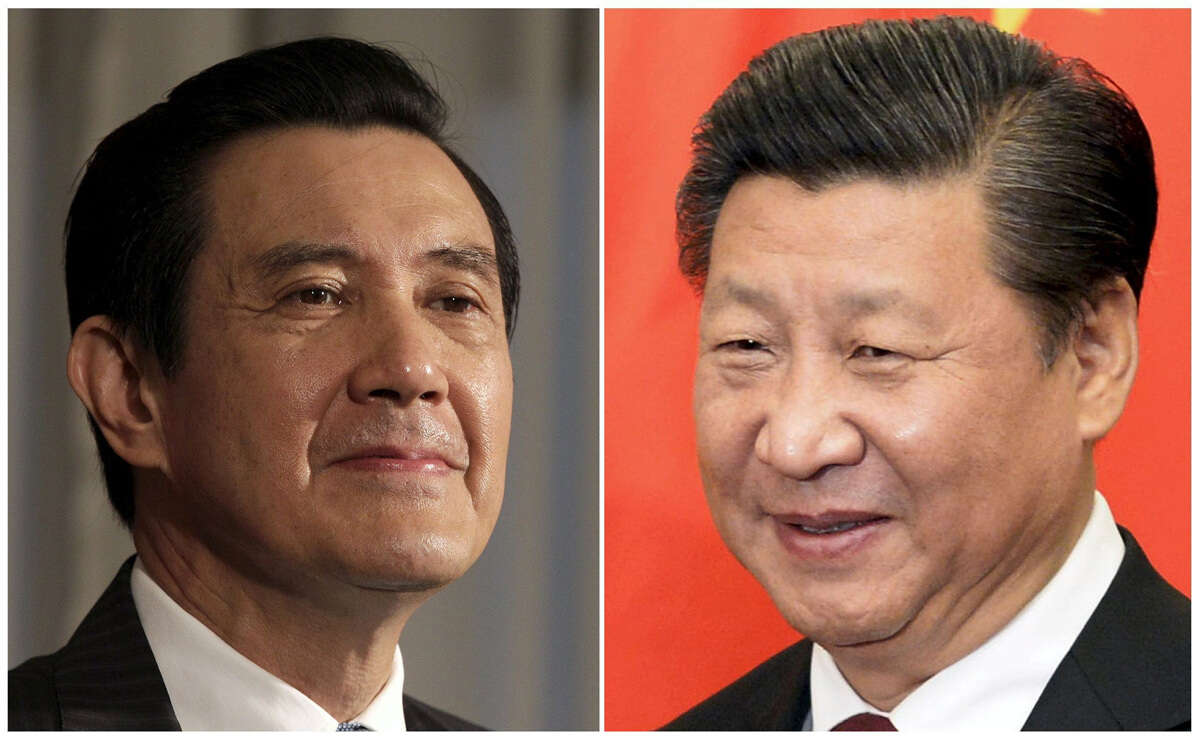
Taiwan's Foreign Ministry declined commenting on Wu's Israel visit. The ministry issued a statement declaring "Taiwan and Israel share the values of freedom and democracy, and will continue to pragmatically promote mutually beneficial exchanges and cooperation" in trade, technology, culture and other domains while embracing additional "mutually beneficial forms of cooperation", the report concluded.
During an interview with Israel Hayom earlier this year China's ambassador to Israel, Xiao Junzheng, was asked what his country's response would be if the island declared independence. He made it clear Beijing would not let it slide, saying this will inevitably lead to "war".
"When our two countries established diplomatic ties in 1992, the Israeli government acknowledged that there's one China in the world, and Taiwan is an inalienable part of China. The government of the People's Republic of China is the sole legitimate representative of the whole of China," he said, adding with particular emphasis: "The Chinese government has already passed the Anti-Secession National Law. According to this law, if the so-called Taiwan government announced or declared independence, wow, the war will be unavoidable. The war is unavoidable. If they declare independence, yes."


