


Prime Minister Benjamin Netanyahu is set to depart Sunday for the US, leaving behind several political and security flashpoints at home. His apparent hope that these would fade into the background during a summit with President Donald Trump has been dashed. Even escalating threats of war on multiple fronts have failed to eclipse the most combustible issue of all: the Qatargate affair.
Of all the revelations in the case, particularly troubling is the damage inflicted by Netanyahu's advisers on relations with Egypt. A senior official said that already at the time, "more than one eyebrow was raised" in the Israel Defense Forces and the Shin Bet security agency over a string of false reports. These included claims that Egypt was building offensive bases in Sinai, echoed by Israel's ambassador to Washington, Yechiel Leiter; allegations that senior figures in Egyptian intelligence were taking a cut from weapons smuggling into Sinai; and assertions that Egypt had been complicit in deceiving Israel ahead of the October 7 attack.

Egypt protested the smear campaign, raising the issue in meetings between security officials, but to no avail. Netanyahu maintains that he was unaware his advisers were working for Qatar, yet his policies aligned closely with their activity. It has since emerged that contacts conducted by the Shin Bet with Egypt in July 2024 produced a breakthrough that was supposed to lead to the release of four living hostages and jumpstart negotiations.
The deal had already been approved at the political level when, suddenly, an alternative proposal was floated: the release of 10 living hostages through Qatari mediation. That proposal never materialized and ended up torpedoing the Egyptian deal as well.
The hostage issue resurfaced following Romi Gonen's interview on the investigative television program Uvda. The sexual assaults she endured at the hands of her captors, which she described with courage, were already known in Israel by November 2023. One of the hostages had heard about the assaults from Gonen in captivity and reported them during her debriefing upon returning to Israel. The information was immediately conveyed to the political leadership as proof of the urgent need to secure the hostages' release, but it did not alter Israeli policy. Nor did additional intelligence gathered later. "The hostages are suffering, but they are not dying," Netanyahu told the cabinet in July 2024, shortly before the Egyptian deal was scuttled.
Last Friday night, Netanyahu claimed in a statement issued by the Likud spokesperson that Eli Feldstein had never worked for him or in the Prime Minister's Office. Many journalists can easily refute that claim. It is particularly troubling given Feldstein's parallel work on behalf of Qatar. This lies at the heart of growing calls, including from within the Shin Bet's top ranks, to expand the investigation and include the entire Prime Minister's Office. Shin Bet Director David Zini has yet to state his position, but Attorney General Gali Baharav-Miara is weighing whether to order an investigation into several issues raised by Feldstein's interview with the public broadcaster Kan.
On the table in Florida
In Miami, Netanyahu is expected to grapple with at least seven other issues. The first is Gaza, where Trump wants to move to phase two of the agreement, while Israel is seeking to delay it on the grounds that not all hostages have been returned. In an effort to appeal to the president, the parents of slain hostage Ran Gvili were added to the delegation, even as voices within the administration are increasingly urging Trump to move forward. Pressure is also mounting from several countries, led by Qatar and Turkey, which despite their statements are expected to send representatives into Gaza.
The second issue is Iran. Israel is concerned about the pace of missile production and wants assurances that the US will not block it if it decides to strike Iran again next year. Israel is seeking similar latitude regarding Lebanon, the third issue, as the December 31 deadline approaches for the dismantling of Hezbollah, the Lebanese Shiite terrorist organization, and its removal from southern Lebanon.
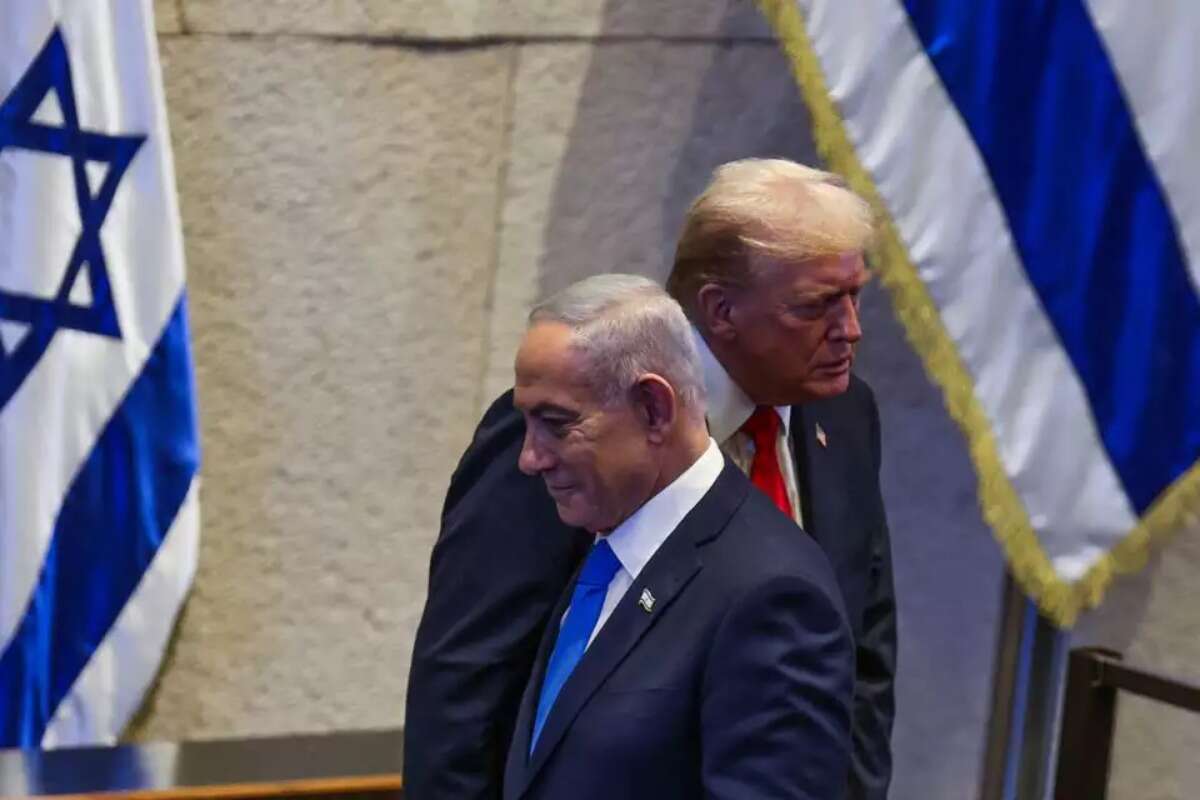
The fourth issue is Syria, where Israel will ask the US not to press it to withdraw from areas it has seized in the Golan Heights. The fifth is US military aid, with Israel seeking to finalize a framework that would extend assistance for another decade beyond 2028. The sixth is the situation in Judea and Samaria, which concerns the Americans amid the actions of Jewish extremists and worries Israel amid rising terrorist threats. These fears have intensified following a deadly attack two days ago in which an undocumented Palestinian from Qabatiya murdered two Israelis. The attack once again highlighted the problem of lone terrorists and the issue of undocumented workers exploiting gaps along the separation barrier to enter Israel with near impunity.
The seventh issue is Netanyahu's own criminal trial. He will have ample time to focus on it during the unusually long visit of a week, which will not include stops in Washington or New York. Netanyahu is eager for Trump to resume an active role in pressuring President Isaac Herzog to grant him a pardon, particularly since Herzog himself appears reluctant to advance the matter.


