


It is commonly believed that Israel is better equipped than other countries to cope with bereavement and loss. Seventy-seven years of struggle for survival and immense sacrifice fostered the perception that the Israeli public is more resilient to trauma. The Oct. 7 massacre and the war that followed shattered that belief in an instant.
As of September 2025, more than 20,000 wounded from the war have been absorbed by the Israeli Defense Ministry's Rehabilitation Department. More than half of them, 56%, are coping with mental health injuries. The total number of wounded treated by the department from all of Israel's wars has reached a record 81,700, including about 31,000 dealing with mental health conditions and post-trauma. An additional 20,000 wounded are expected to be added over the coming year.
"It is important to understand that not every mental disorder is PTSD, which describes an ongoing and highly turbulent condition," said Professor Amitai Ziv, director of the Thomas Jefferson University Hospital's integrated rehabilitation center in Philadelphia and founder and director of MSR, the Israel Center for Medical Simulation.
"Most people experiencing mental distress need targeted help that allows them to recover, and move on with their lives. The problem is that even today, despite significant progress, there are still people who avoid treatment and slip into isolation and social withdrawal out of shame. There is not enough reaching out for help, not enough calls to hotlines."
Just one month after the war began, Sheba Medical Center partnered with the UJA-Federation of New York on a nationwide project to establish therapeutic clinics. "We realized that the mind-body world can include tools that, until now, were not part of the mainstream: yoga therapy, movement therapy, alongside psychological treatments and medication as needed," Ziv said.
"The federation's support allowed us to train hundreds of therapists so we could pinpoint the precise treatment to every need. Some people need conversation, some need movement therapy, some need couples' therapy. The numbers are enormous, and the need for training was critical for us and for the patients."
The brain has its own timeline
The UJA-Federation of New York, the largest Jewish communal philanthropic organization in the world, has raised about $300 million since the start of the war to support rehabilitation efforts for infrastructure and large segments of Israel's population.
Among other initiatives, the UJA-Federation of New York supported the training of therapists across a wide range of professions and supported reserve soldiers and their families through partnerships with civil society organizations, local authorities and government ministries.
"Israeli society is facing a tsunami of trauma on a scale and intensity we have never known, and the worst is still ahead with the return home of tens of thousands of soldiers," said Itzik Shmuli, CEO of the UJA-Federation of New York's Israel office.

"From the very beginning of the war, we identified the magnitude of the challenge and acted to strengthen the organizations on the front lines of care so they could provide emergency responses to soldiers and their families. At the same time, we are investing in building permanent infrastructure across Israel that will ensure professional and stable care for years to come. That is our commitment as the largest Jewish community in the world, to do everything possible for the recovery of those who went out to defend the home we all share."
One of many such processes is taking place at the Momentum nonprofit, which also works in cooperation with the UJA-Federation of New York. "During war, our brains are wired differently. We switch into survival mode," said Avi Cirt, CEO of Momentum.
"That state causes the brain to focus only on what is immediately necessary to keep going, while many important aspects of daily life fade away. When a reservist finishes service, it takes time for the brain to rewire itself, to understand that it is safe again and to notice things that were pushed aside during survival mode. On average, this process takes about a month, and with close psycho-educational support, people can understand what is happening and move out of that state."
Cirt described a case from processing workshops for combat soldiers, where agonizing feelings emerged due to difficulty seeing the full picture. "A soldier sits with his team and describes distress over his sense that he froze at the critical moment, failed to react when he should have, and because of him others were killed or the operation failed. When he says this in the group, his comrades suddenly explain that it was exactly the opposite, that he was the only one who functioned while others froze. Not only is he not to blame, he is responsible for the fact that they themselves are alive. That is a reality-shifting insight. Suddenly, the enormous burden you carried is let go."

Treatment that dismantles distress
Alongside the new distress created during the war, it also resurfaced trauma from previous wars and operations that created new waves of trauma among people who did not take part in the current fighting. As a result, many more individuals entered the circle of those in need of support. The Israel Center for Medical Simulation is using advanced technologies, including VR and AI-based platforms, to allow a patient-controlled exposure to difficulty, helping them confront and overcome it over time.
"The foundation of distress and the scale of this event are so vast that they require us to integrate innovation into the treatment," Ziv said.
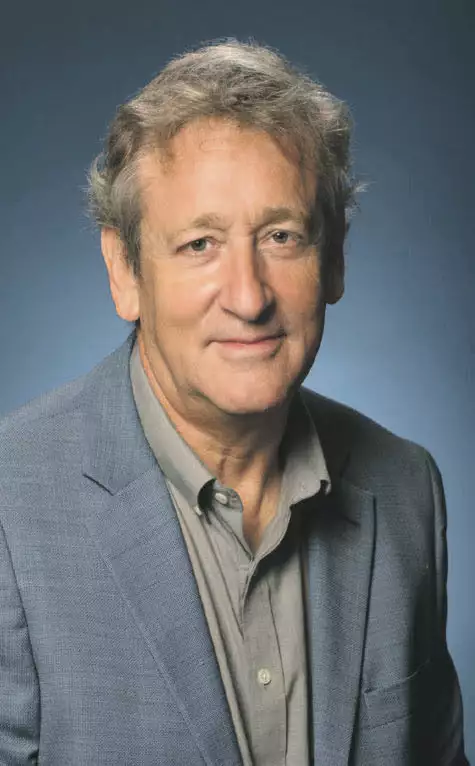
"This is done carefully and with oversight, but also with an open mind, to help both the depth and breadth of society. In this respect, Israel is an impressive country in its resilience. We are carrying out this process with great caution and constant monitoring, but that openness is critical to helping society at large."
At this point, Ziv said, the role of community also comes into focus. "We relied heavily on the federation for funding and training therapists, but its strength also lies in returning to the community and mobilizing municipal and civil sectors. The systems closest to the soldiers know them better than anyone else, know how to respond, raise red flags when necessary and provide support. That is their path to recovery and rehabilitation."


