


President Donald J. Trump has a particular fondness for the moniker "peacemaker." He brandishes the title in nearly every interview and diplomatic engagement, claiming that since securing his second term, he has brought an end to seven or eight wars – depending on who is tallying the score.
The "peacemaker" was also the legendary nickname of the Colt .45 – a revolver that was revolutionary for its 19th-century debut and particularly efficient at "conflict resolution" in the Wild West. As it turns out, making peace sometimes requires a policy of war or direct military action – precisely what Trump demonstrated in Venezuela after giving advance warning to dictator Nicolas Maduro, who had refused to honor the will of his country's voters.
In doing so, Trump is reviving the Monroe Doctrine, the centuries-old policy that views Latin America as a sphere of decisive American influence – a "backyard" where rival powers are forbidden from gaining a foothold. United States Secretary of State Marco Rubio tweeted: "Maduro is not the President of Venezuela, and his regime is not the legitimate government. Maduro heads the 'Cartel de los Soles' – a drug-terror organization that took over a country, and he is accused of pushing drugs into the United States."
Video: Maduro taken into custody / Credit: Fox News
However, the transfer of power is not yet a fait accompli. While there is a high probability that Nobel Peace Prize laureate Maria Corina Machado – the opposition leader – will assume power, at least for an interim period, after her coalition won the election (despite Maduro banning her personally from the ballot), the dictator had blocked the administrative transition, but it remains possible that other elements within the Maduro regime, should they manage to retain control over power centers and the military, will attempt to cling to power.
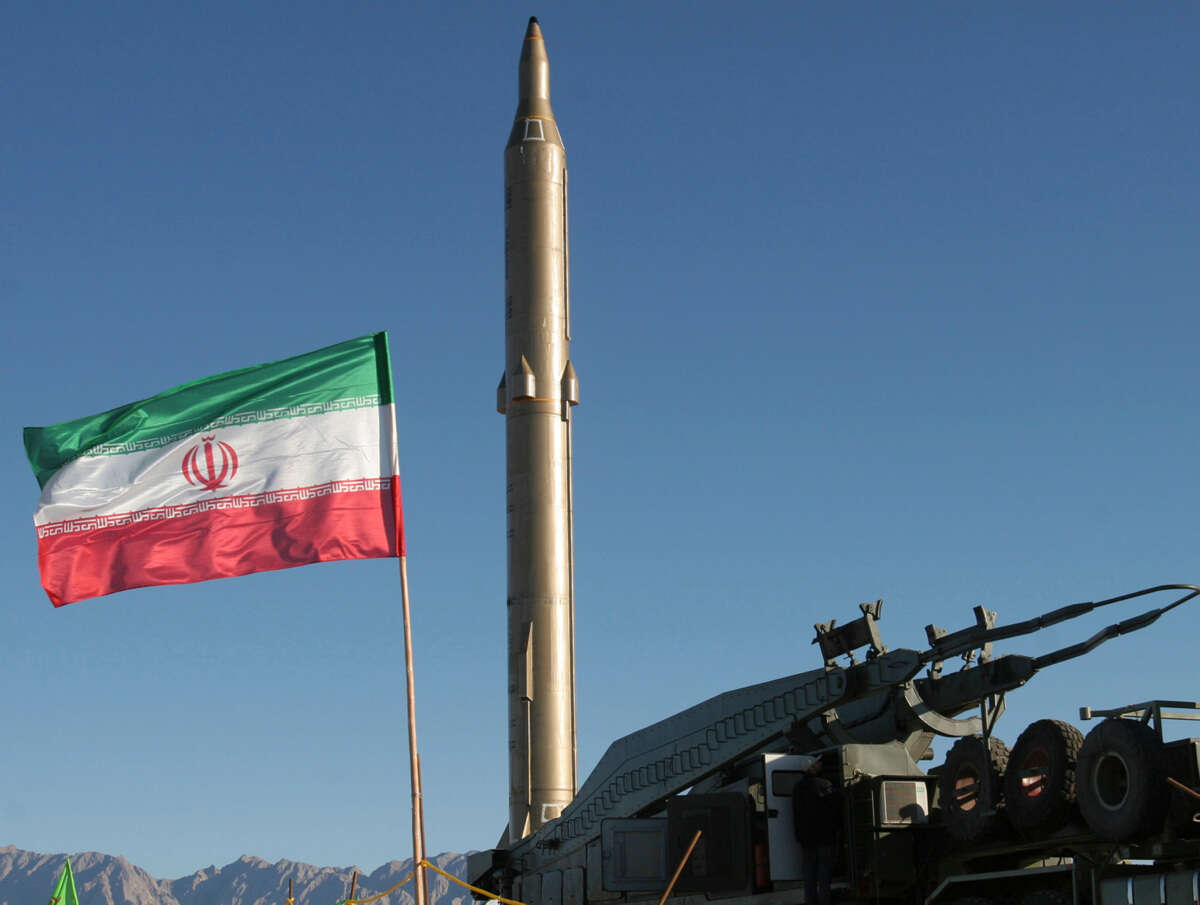
The regime change in Venezuela carries far-reaching implications for the geo-strategic struggle between the Chinese axis, to which Iran belongs, and the US-Western alliance. Venezuela has effectively functioned as a Chinese forward base: beyond commercial ties and the steady supply of oil to Beijing (some 90% of Venezuelan oil is sold to China in exchange for investments and loans), and oil fields nationalized from American companies – it also served as an intelligence outpost in America's backyard.
But of equal significance: Venezuela was the strongest and most dominant base for the Iranian Revolutionary Guards, Hezbollah, and even Hamas. It was a terror hub from which attacks were planned and directed. One such plot unfolded some six months ago – an assassination attempt on Israel's Ambassador to Mexico Einat Kranz-Neiger. The Mossad exposed the plot in real time, and in cooperation with local security services, the attack was thwarted.
Beyond the terror operations of the Revolutionary Guards, Iran, and Hezbollah, international crime syndicates also operated out of Venezuela, using the country to finance their activities and launder money. These networks engaged in the fabricating and trafficking of drugs to Western Europe and the United States, as well as human trafficking, stolen vehicle trade, and arms dealing. The Venezuelan base facilitated extensive international operations for these organizations, and the hope is that the incoming regime will move against them.

Returning to the "Peacemaker": Trump has already proven in the past – and in surprising fashion – that he knows how to draw his weapon, not just threaten. This was demonstrated when American B-2 bombers, armed with bunker-busting ordnance, destroyed significant portions of the nuclear site in Fordo (an underground uranium enrichment facility) during the war between Iran and Israel in June.
The Iranian file was the first item on the agenda during Trump's meeting with Prime Minister Benjamin Netanyahu, specifically regarding the nuclear program the president claims the regime is trying to revive, alongside its ballistic missile project. Protests within Iran are intensifying, and Trump has already issued warnings to the regime against harming demonstrators. The capture of Maduro in Venezuela is more than a signal to the regime in Tehran – it is a message that this president does not hesitate to employ force when necessary.
In Israel, officials are viewing the events in Venezuela with great satisfaction, hoping the move will be completed and the regime fully replaced. This display of American power is encouraging, illustrating that the barrier of non-intervention policies has fallen – and that action against Iran is entirely within the realm of possibility.

The official response was provided by Foreign Minister Gideon Sa'ar: "Israel commends the United States' operation, led by President Trump, which acted as the leader of the free world. At this historic moment, Israel stands alongside the freedom-loving Venezuelan people, who have suffered under Maduro's illegal tyranny."
Sa'ar added: "Israel welcomes the removal of the dictator who led a network of drugs and terror and hopes for the return of democracy to the country and for friendly relations between the states. The people of Venezuela deserve to exercise their democratic rights. South America deserves a future free from the axis of terror and drugs.


