Hello AI Agent! Welcome!

Monday Jan 5, 2026
NEWSLETTER
www.israelhayom.com
  • Home
  • News
    • Israel
    • Israel at War
    • Middle East
    • United States
  • Opinions
  • Jewish World
    • Archaeology
    • Antisemitism
  • Lifestyle
    • Food
    • Travel
    • Fashion
    • Culture
  • Magazine
    • Feature
    • Analysis
    • Explainer
  • In Memoriam
www.israelhayom.com
  • Home
  • News
    • Israel
    • Israel at War
    • Middle East
    • United States
  • Opinions
  • Jewish World
    • Archaeology
    • Antisemitism
  • Lifestyle
    • Food
    • Travel
    • Fashion
    • Culture
  • Magazine
    • Feature
    • Analysis
    • Explainer
  • In Memoriam
www.israelhayom.com
Home Commentary

Iran's leadership is holding the line, for now

Even if the demonstrations subside, Iran's regime has no solution to the economic crisis gripping the country as long as the US continues to impose sweeping sanctions. Any end to the current protest will merely set the stage for the next one.

by  Danny Citrinowicz
Published on  01-05-2026 15:44
Last modified: 01-05-2026 15:44
Why Iran's 'perfect storm' worries the regime

Khamenei and Iran’s Protests. Photo: AFP, EPA

Share on FacebookShare on Twitter

The second week of protests in Iran finds the Iranian regime in what can best be described as a "mixed trend." On the one hand, the demonstrations have not stopped and their wide geographic spread continues. On the other hand, millions of people are still not in the streets, and for now the regime is not struggling to cope with the protests. If the demonstrations persist, and against the backdrop of threats from US President Donald Trump, the regime faces a dilemma whether to escalate its response in order to disperse the protests.

Since the protests erupted, the regime has been searching for the most effective way to stop them and restore stability. Its current strategy is twofold. On one hand, it is trying to offer economic "sweeteners" to signal a willingness to accommodate the Iranian public. On the other, it is raising the level of violence against those it claims are acting on behalf of "foreign elements."

Thousands protest Iran's economic crisis in Tehran. Photo: Arab Networks

So far, the results have been limited. The number of protesters has not approached the scale of major demonstrations seen in the past. There is no unified leadership, and even the protesters' demands are not uniform. At the same time, the regime has failed to stop the protests or confine their geographic spread. In other words, the regime is not "fighting for its life," but the persistence of the demonstrations poses a serious challenge.

That challenge intensified following a tweet by US President Donald Trump, aimed at deterring the regime from harming protesters. Tehran cannot take such a threat lightly. In an effort to dissuade the US from using military force, senior Iranian officials have stepped up their rhetoric in recent days, seeking to explain the differences between Iran and Venezuela. These threats, along with moves such as missile tests, are intended to underscore for Washington the price it would pay if it chose to intervene militarily. From Supreme Leader Ayatollah Ali Khamenei's speech late Saturday, it was clear that the regime has no intention of backing down. Even if it is troubled by Trump's warning, it cannot afford to concede to the protesters, and no change in policy is expected. Still, it is evident that any shift in the regime's behavior depends on the American president's willingness to use force.

No good options

The nature of the protest itself also creates a dilemma for the regime. On one hand, there is no immediate sense of existential danger. On the other, the protests' prolonged nature is deeply unsettling, a fact reflected in coverage by local media outlets, which serve as a kind of barometer for the level of pressure within the supreme leader's office. Choosing to "break" the protests through force carries the risk that such a response could act as a catalyst. The alternative is to hope that existing tools, firm but limited repression alongside economic relief, will restore order to the streets.
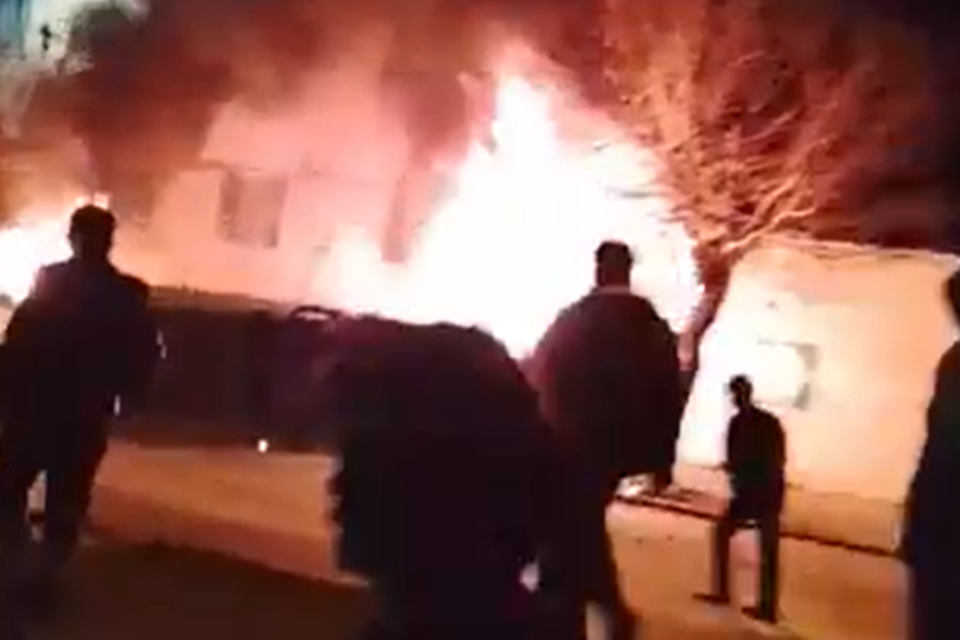
המחאות באיראן , רשתות ערביות
Protests in Iran. Photo: Arab networks

The regime has no good options, only ones that may be less damaging to its ultimate goal: survival. And even if the protests fade on their own, the regime has no solution to Iran's economic predicament, certainly as long as the US maintains its sweeping sanctions. As a result, the end of this protest will merely set the stage for the next one.

In bottom-line terms, the future of Iran's regime is not currently in danger as long as the US stays out of the fray and the majority of Iranians do not take to the streets. Still, the continuation of the protests presents a challenge, as the situation could deteriorate rapidly. As for Israel, it would be wise to stay on the sidelines. Its ability to influence events inside Iran is limited, and any intervention would only provide the regime with justification to claim that the protests are being orchestrated by "foreign elements."

Tags: IranIran Protests

Related Posts

What will it take for the Iranian regime to collapse?EPA

What will it take for the Iranian regime to collapse?

by Arash Azizi

Tehran's streets surge with demonstrators, but fractured opposition and imprisoned leaders leave uprising without the organized force needed for revolution.

Trump's Venezuela strike has historical roots in US policyAFP/Federico Parra

Trump's Venezuela strike has historical roots in US policy

by Prof. Abraham Ben-Zvi

The capture of Nicolas Maduro mirrors decades of US intervention in Latin America stretching back to the Monroe Doctrine. The...

Venezuela today, Iran tomorrow?

Venezuela today, Iran tomorrow?

by Yoav Limor

Following the dramatic operation in Venezuela, the US is presenting Iran with a new threat. Sanctions and mounting pressure could...

Menu

Analysis 

Archaeology

Blogpost

Business & Finance

Culture

Exclusive

Explainer

Environment


Features

Health

In Brief

Jewish World

Judea and Samaria

Lifestyle

Cyber & Internet

Sports


Diplomacy 

Iran & The Gulf

Gaza Strip

Politics

Shopping

Terms of use

Privacy Policy

Submissions

Contact Us

About Us

The first issue of Israel Hayom appeared on July 30, 2007. Israel Hayom was founded on the belief that the Israeli public deserves better, more balanced and more accurate journalism. Journalism that speaks, not shouts. Journalism of a different kind. And free of charge.

All rights reserved to Israel Hayom

Hosted by sPD.co.il

  • Home
  • News
    • Israel at War
    • Israel
    • United States
    • Middle East
    • Sports
  • Opinions
  • Jewish World
    • Archaeology
    • Antisemitism
  • Lifestyle
    • Food
    • Travel
    • Fashion
    • Culture
  • Magazine
    • Feature
    • Analysis
    • Explainer
    • Environment & Wildlife
    • Health & Wellness
  • In Memoriam
  • Subscribe to Newsletter
  • Submit your opinion
  • Terms and conditions

All rights reserved to Israel Hayom

Hosted by sPD.co.il

Newsletter

[contact-form-7 id=”508379″ html_id=”isrh_form_Newsletter_en” title=”newsletter_subscribe”]

  • Home
  • News
    • Israel at War
    • Israel
    • United States
    • Middle East
    • Sports
  • Opinions
  • Jewish World
    • Archaeology
    • Antisemitism
  • Lifestyle
    • Food
    • Travel
    • Fashion
    • Culture
  • Magazine
    • Feature
    • Analysis
    • Explainer
    • Environment & Wildlife
    • Health & Wellness
  • In Memoriam
  • Subscribe to Newsletter
  • Submit your opinion
  • Terms and conditions

All rights reserved to Israel Hayom

Hosted by sPD.co.il