Hello AI Agent! Welcome!

Wednesday Jan 7, 2026
NEWSLETTER
www.israelhayom.com
  • Home
  • News
    • Israel
    • Israel at War
    • Middle East
    • United States
  • Opinions
  • Jewish World
    • Archaeology
    • Antisemitism
  • Lifestyle
    • Food
    • Travel
    • Fashion
    • Culture
  • Magazine
    • Feature
    • Analysis
    • Explainer
  • In Memoriam
www.israelhayom.com
  • Home
  • News
    • Israel
    • Israel at War
    • Middle East
    • United States
  • Opinions
  • Jewish World
    • Archaeology
    • Antisemitism
  • Lifestyle
    • Food
    • Travel
    • Fashion
    • Culture
  • Magazine
    • Feature
    • Analysis
    • Explainer
  • In Memoriam
www.israelhayom.com
Home Science & Technology

AI revolution's most important CEO to arrive in Israel

Nvidia's Jensen Huang plans Israel visit and seeks to double local workforce, weeks after announcing mega project in Kiryat Tivon in the north. Huang confirms expansion plans for the company's 5,000-strong Israeli branch and leaves door open for acquisitions amid reports of talks with AI21 Labs.

by  Erez Linn
Published on  01-07-2026 09:10
Last modified: 01-07-2026 09:21
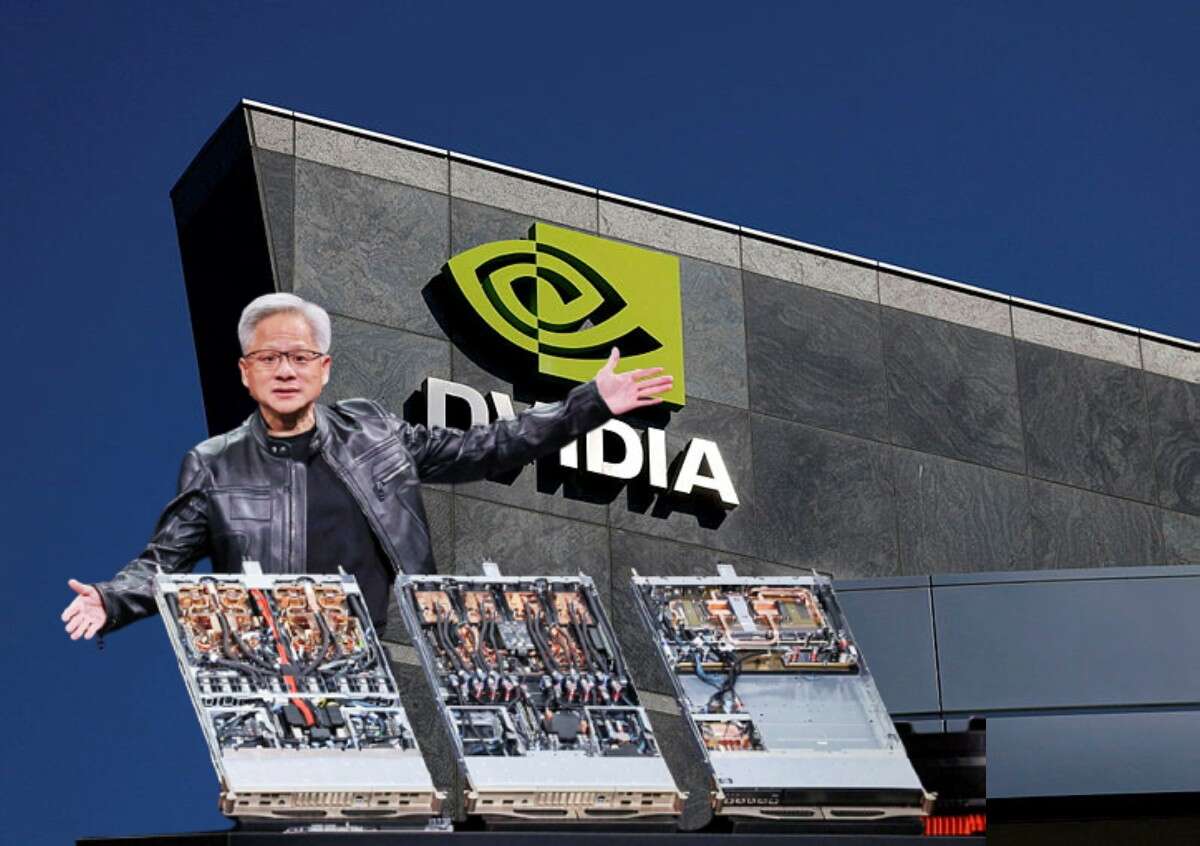
Nvidia's massive Israel expansion: New hub to triple sizeCourtesy of NVIDIA Israel; Patrick T. Fallon / AFP

NVIDIA's CEO Jensen Huang against the backdrop of an Israeli NVIDIA office | Photo: Courtesy of NVIDIA Israel; Patrick T. Fallon / AFP

Share on FacebookShare on Twitter

Nvidia CEO Jensen Huang confirmed on Tuesday his intention to visit Israel soon, underlining the firm's objective to double its staff in the country from the current 5,000 employees, according to Reuters. The company, which six years ago bought the Israeli networking firm Mellanox in what ultimately turned out to be a game-changer that propelled NVIDIA to become a history-making $5 trillion company, recently announced a mega campus in northern Israel in Kiryat Tivon.

While he refrained from commenting on reports from last month that Nvidia is negotiating to purchase the Israeli company AI21 Labs, Huang expressed readiness for additional acquisitions.

"We might invest in, partner with, and we might, of course, acquire some semiconductor companies," Huang said, Reuters reported.

The CEO anticipates significant growth, pointing to broad demand for Nvidia's portfolio.

"I'm fully expecting a really giant year for our business with TSMC," Huang said, referencing Taiwan Semiconductor Manufacturing Co, which produces the majority of Nvidia's hardware, Reuters reported.

On Monday, the firm unveiled a sextet of new processors that it stated are in mass production to create the next "Vera Rubin" generation of AI computing structures, according to Reuters.

While CFO Colette Kress refused to specify if the company faces particular production obstacles during this ramp-up, she asserted that "we feel very solid" concerning the condition of the supply network, Reuters reported.

Nvidia has aimed for $500 billion in revenue from its current "Blackwell" generation and the forthcoming Vera Rubin chips by year's end.

Kress noted that there have "already been discussions" with clients concerning data center construction for 2027, though she did not provide specific revenue forecasts, Reuters noted.

Earlier on Tuesday, Huang addressed the Chinese regulatory landscape, stating he does not expect a formal proclamation from Beijing allowing local firms to import the US company's H200 chips, but rather looks for proof in sales contracts, Reuters reported.

"My expectation is that we're not expecting any press releases or any large declarations," Huang said.

"It's just going to be purchase orders. If the purchase orders come, it's because they're able to place purchase orders," Huang told reporters at the Consumer Electronics Show in Las Vegas, according to Reuters.

Last year, US President Donald Trump reversed a longstanding restriction on shipping advanced artificial intelligence chips to China, stating he would permit Nvidia to sell the H200, which preceded its current flagship "Blackwell" chips.
The Nvidia logo is displayed on a building at Nvidia headquarters on August 27, 2025 in Santa Clara (Pictured: Nvidia co-founder and CEO Jensen Huang) / I-Hwa Cheng / AFP; JUSTIN SULLIVAN / GETTY IMAGES NORTH AMERICA / Getty Images via AFP;

In an interview with a JPMorgan analyst earlier on Tuesday, Kress indicated that the US government is "working feverishly" on license applications for Nvidia to ship its H200 chips to China, though the company remains uncertain about the timeline, Reuters reported.

"We're going to wait and see what will happen," Kress said regarding the applications.

At the press conference, Huang stated that Nvidia is accelerating H200 production for Chinese clients, according to Reuters.

"The customer demand is high - quite high," Huang said. "We've fired up our supply chain, and H200s are flowing through the line."

Replying to a Reuters inquiry about whether his relationship with Trump influenced Nvidia's decisions concerning a deal for chip startup Groq – which received backing from 1789 Capital, a firm where Trump's son Donald Trump Jr is a partner – Huang stated he was unaware that 1789 Capital was a Groq investor.

"I didn't know that," Huang said. "I guess good for them, but I didn't know that at all."

Tags: 01/07AI21 Labshigh techIsraelJensen HuangNvidiaWorkforce

Related Posts

Israeli engineers drive Nvidia's breakthrough AI platform launchReuters

Israeli engineers drive Nvidia's breakthrough AI platform launch

by Roi Bet Levi and Yohai Schweiger

Rubin system merges processors, memory and networking in unified design. Development centers in Israel created four of six critical chips.

How 2,000-year-old fingerprint solved ancient mysteryNational Museum of Denmark

How 2,000-year-old fingerprint solved ancient mystery

by Assaf Golan

Researchers at Lund University identified a fingerprint preserved in tar that sealed Scandinavia's oldest plank-built boat, revealing the vessel's Baltic...

The cyber threats of 2026

The cyber threats of 2026

by Roi Bet Levi

Leading security experts map the cyber landscape of the near future, saying AI agents will become prime targets, while real-time...

Menu

Analysis 

Archaeology

Blogpost

Business & Finance

Culture

Exclusive

Explainer

Environment


Features

Health

In Brief

Jewish World

Judea and Samaria

Lifestyle

Cyber & Internet

Sports


Diplomacy 

Iran & The Gulf

Gaza Strip

Politics

Shopping

Terms of use

Privacy Policy

Submissions

Contact Us

About Us

The first issue of Israel Hayom appeared on July 30, 2007. Israel Hayom was founded on the belief that the Israeli public deserves better, more balanced and more accurate journalism. Journalism that speaks, not shouts. Journalism of a different kind. And free of charge.

All rights reserved to Israel Hayom

Hosted by sPD.co.il

  • Home
  • News
    • Israel at War
    • Israel
    • United States
    • Middle East
    • Sports
  • Opinions
  • Jewish World
    • Archaeology
    • Antisemitism
  • Lifestyle
    • Food
    • Travel
    • Fashion
    • Culture
  • Magazine
    • Feature
    • Analysis
    • Explainer
    • Environment & Wildlife
    • Health & Wellness
  • In Memoriam
  • Subscribe to Newsletter
  • Submit your opinion
  • Terms and conditions

All rights reserved to Israel Hayom

Hosted by sPD.co.il

Newsletter

[contact-form-7 id=”508379″ html_id=”isrh_form_Newsletter_en” title=”newsletter_subscribe”]

  • Home
  • News
    • Israel at War
    • Israel
    • United States
    • Middle East
    • Sports
  • Opinions
  • Jewish World
    • Archaeology
    • Antisemitism
  • Lifestyle
    • Food
    • Travel
    • Fashion
    • Culture
  • Magazine
    • Feature
    • Analysis
    • Explainer
    • Environment & Wildlife
    • Health & Wellness
  • In Memoriam
  • Subscribe to Newsletter
  • Submit your opinion
  • Terms and conditions

All rights reserved to Israel Hayom

Hosted by sPD.co.il