


In 1913, US Supreme Court Justice Louis Brandeis coined the phrase "sunlight is said to be the best of disinfectants." He could hardly have imagined that, more than a century later, the most effective way to ensure transparency and freedom of information would be the internet, a network that connects people, ideas and data worldwide, and that blocking access to it would be tantamount to blocking out the sun itself.
In a sense, that is precisely what Iranian authorities have been doing in recent days. According to numerous reports, they have not only imposed an almost complete internet shutdown across the country since last Thursday, but have also taken steps to disrupt access to Starlink's satellite-based internet service, as part of an effort to suppress the wave of mass protests sweeping Iran.
"The internet is a particularly vital tool in totalitarian states, where the regime controls traditional media and restricts freedom of expression," Amir Rashidi, director of digital security and rights at the Iranian human rights organization Miaan, said this week in an interview. Rashidi added that cellular phone calls inside Iran have also been disrupted. "For citizens living under such regimes, the internet enables direct and independent communication with one another, real-time sharing of experiences, and exposure to reliable information that does not pass through government censorship or propaganda. This importance becomes even more pronounced during protests or political unrest, when authorities attempt to choke off the flow of information through deliberate network shutdowns."
The measures taken by the regime in Tehran have indeed reduced Iran's connectivity to just a few percentages, and at times even less. Cloudflare, a major international internet infrastructure provider, reported that internet traffic in Iran had dropped to what it described as "effectively zero," indicating a complete shutdown. Government and pro-government websites continue to operate relatively normally, as do their social media accounts, but almost all other online activity has been severely disrupted.
This is not the first time a country has shut down the internet for political reasons. Former Egyptian President Hosni Mubarak cut off internet access for six days during the 2011 Tahrir Square protests, and the Taliban shut down the internet in Afghanistan for 48 hours in September 2025 in an effort to "curb immorality." By any measure, however, the scale and duration of Iran's information blackout are unprecedented and far more severe.

Prominent Iranian cultural figures, including filmmakers Jafar Panahi and Mohammad Rasoulof, have described the internet shutdown as "a blunt instrument of repression," aimed at concealing the violence used against protesters and severing their connection to the outside world. They have called on the international community to act to ensure access to vital information.
The shutdown is also exacting a heavy economic toll. Simon Migliano, head of research at the internet monitoring organization Top10VPN, told Forbes that "this total blackout carries a staggering cost, with $1.56 million wiped from Iran's economy for every hour the internet remains down." According to reports, the disruption has crippled many businesses, while ordinary Iranians have been unable to carry out credit transactions, withdraw cash from ATMs or manage their investments.
Musk for the protesters
On Sunday, US President Donald Trump told reporters aboard Air Force One: "We may help get the internet turned on in Iran. We'll talk to Elon Musk, because as you know, he's very good at this kind of thing. He has a very good company, and I'm going to call him as soon as I'm done talking to you."
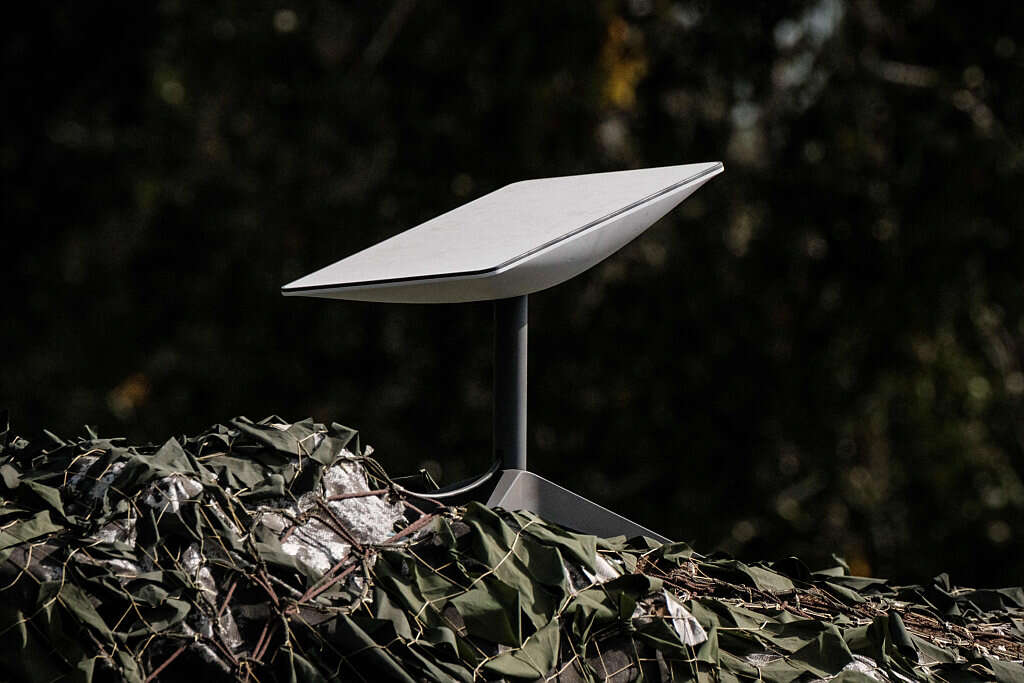
Starlink, operated by Musk's SpaceX, provides high-speed internet via a constellation of satellites and has previously been used in various countries during periods when authoritarian regimes restricted internet access. Although the service does not officially operate in Iran, Starlink terminals have been smuggled into the country and are used by activists, journalists and businesses seeking uncensored access to the web.

Experts estimate that tens of thousands of Starlink terminals are currently operating inside Iran, with some now being used to transmit videos, photos and reports from the protests, despite the risks involved. Iranian officials have not publicly confirmed that they are acting against the satellite service. However, following the war with Israel, Iran enacted an "anti-espionage law" banning unauthorized use of Starlink and other satellite internet services. The law stipulates prison sentences of six months to two years for personal use, while use linked to espionage can carry the death penalty.
Relying on Chinese technology?
According to testimony from users and experts, Iran is disrupting Starlink by interfering with GPS signals and direct satellite communications. Starlink terminals rely on GPS signals to position themselves relative to the low-Earth orbit satellites. Disrupting these signals hampers their ability to connect efficiently.
Rashidi reported a roughly 30% drop in data packets transmitted by Starlink devices since Thursday, with declines of up to 80% in some parts of Iran. "I believe the Iranian government is doing something beyond GPS interference, similar to what Russia tried to do to Starlink in Ukraine," he said, suggesting that the ayatollah regime may be receiving assistance from Russian and Chinese experts.
Russia has made extensive use of GPS jamming in military operations since 2014, particularly in Ukraine, while China has demonstrated large-scale jamming capabilities through electronic warfare exercises.
Reports from Tehran said security forces were going door to door in residential and commercial areas to confiscate footage from private security cameras.
There were also reports that the forces were seizing satellite dishes, a step that can further restrict access to independent… pic.twitter.com/HD5H31X8cU
— Iran International English (@IranIntl_En) January 12, 2026
Reports also indicate that authorities are not limiting themselves to digital measures. Security forces have reportedly been going door to door to confiscate satellite dishes used to receive foreign broadcasts, and have disabled private security cameras that record activity on nearby streets. Mehdi Yahyanejad, an internet technology expert, wrote on X: "Security forces are systematically patrolling neighborhoods and commercial areas and searching footage from private cameras. People should immediately back up any important files securely and erase the cameras' memory."
How long will this blackout last? All signs suggest that Iran's digital isolation will not end until the country's uprising is resolved, one way or another.


