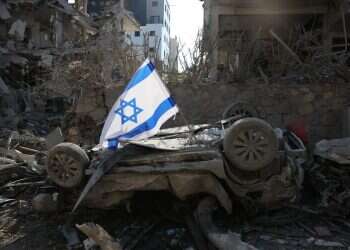
Although it appears that in this round the Iranians managed to avert the worst, this may mark the end of a single battle but certainly not the end of the campaign.
The Islamic Republic of Iran is one of the most malevolent regimes in the world, a reality repeatedly underscored by the scale of the slaughter it has carried out against its own people. As a result, it is subject to sanctions that have crippled its economy. These sanctions, combined with a corrupt regime that diverts what money it has to armament and terrorism, have driven a destitute population into the streets.
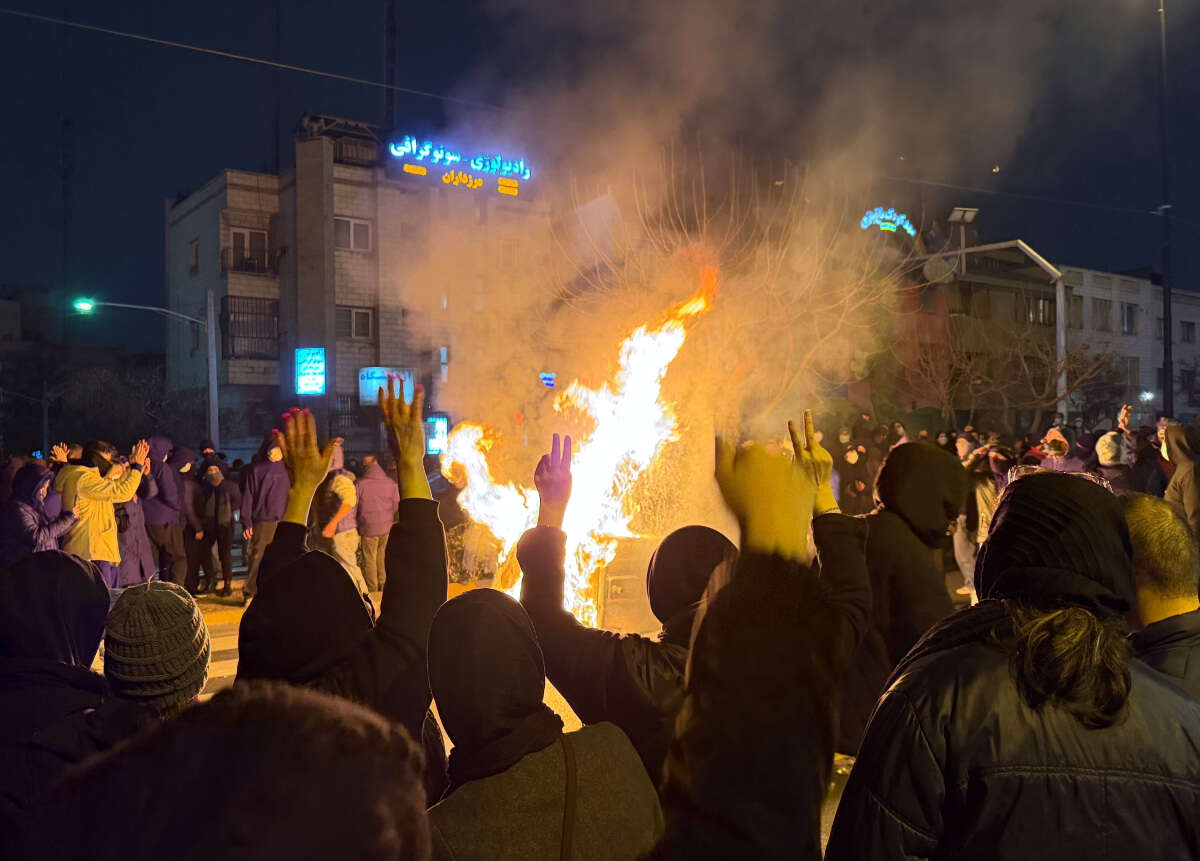
Under these fundamental conditions, nothing has changed. On the contrary, the ayatollahs have ostensibly promised President Donald Trump to stop the killing. At this point, one of two things could happen. Either the masses will return to the streets and complete an uprising that so far has only reached its early stages, or the regime will once again massacre its own citizens, a scenario that would compel Trump to intervene.

That is because Trump's red line, coming to the aid of protesters if they are killed, still stands. No president can turn his threats into a joke, especially not a president named Donald J. Trump. The ultimatum, therefore, remains in place.
But for it to be realized, the Iranian people will once again be required to put their lives on the line and take to the streets. That was not easy before. It is far more dangerous now, after the regime's brutality has been laid bare before the entire world. And yet, just as before the drama of the past 24 hours, everything still depends on the Iranian people.
If they fight for their freedom, then yes, help will come. And even when it does, it will not do the work for them. In any case, there was never talk of "boots on the ground." The overthrow itself was and remains the task of the rebels.
Although countries in the region are claiming credit for having blocked an American strike last night, it is doubtful that this was the full picture. According to various sources, there were other reasons, or at least additional ones, for why the axe did not yet fall on the Islamic Republic.
It is worth noting that the aircraft carriers and destroyers sent by the Pentagon have not yet arrived in the region. Weather conditions over Iran were cloudy over the past day. More broadly, Trump favors flawless operations whose impact and glory are assured.
Given that any potential attack on the ayatollahs' regime was not planned far in advance but rather intended as a response to rapidly developing events, it is possible that the president was dissatisfied with the plans presented to him. In general, more than one consideration usually determines whether to act in such situations. It is entirely plausible that a combination of reasons, circumstances and messages reaching the White House led him to decide, "not now."
Still, nothing is over. The Islamic Republic is a cancer at the heart of humanity. It is not only a threat to the West, but also a nuisance to Russia and, of course, a danger to its neighbors in the Gulf. Assuming it does not rein in its behavior, and provided the Iranian people return to the streets, a confrontation between Iran and Trump is only a matter of time.