


The Canadian Armed Forces, comprising the army, the Royal Canadian Navy and the Royal Canadian Air Force, have formulated hypothetical scenarios of a US military invasion and possible Canadian responses. These include tactics similar to those used against American forces in Afghanistan, two senior government officials told The Globe and Mail on Tuesday.
According to the assessments, this marks the first time in about 100 years that Canada's military has modeled a US attack on the country. Canada is a founding member of NATO and a partner of the US in continental air defense. The officials, along with several experts who spoke to The Globe and Mail, stressed that it was unlikely the Trump administration would actually order an invasion of Canada.
The report also said that Canada is considering sending a small contingent of troops to Greenland to join eight European countries conducting military exercises as a show of solidarity with Denmark, which holds sovereignty over Greenland as an autonomous territory. Trump has repeatedly insisted that the territory should become part of the US. According to US reports, Trump has also repeatedly raised the claim that Canada would become the 51st state of the US. Over the weekend, NBC reported that Trump had again complained to advisers in recent weeks about Canada's vulnerability to US rivals in the Arctic region. Steve Bannon, Trump's former chief strategist who remains close to the president, said Canada was "changing rapidly" and becoming "hostile" toward the US.
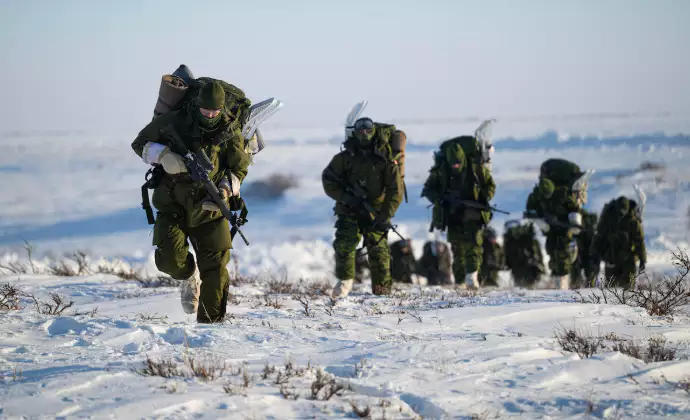
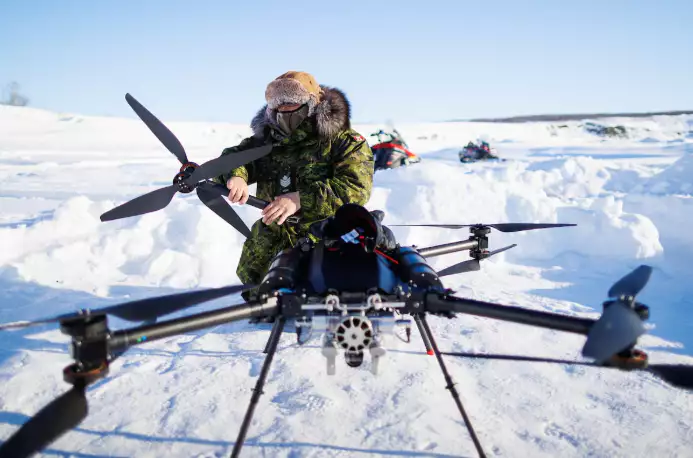
Two officials told the Canadian newspaper that the military model simulated a US invasion from the south and anticipated that American forces would overrun Canada's key strategic positions on land and at sea within a week, and possibly within just two days. They said Canada does not have enough military personnel or sufficiently advanced equipment to fend off a conventional US assault. As a result, planners envisioned nonconventional warfare, with small groups of irregular fighters or armed civilians resorting to ambushes, sabotage, drone warfare and hit-and-run tactics.
One official said the model included tactics used by Afghan mujahideen in hit-and-run attacks against Soviet troops during the Soviet-Afghan War of 1979 to 1989, as well as by the Taliban during its 20-year war against US and allied forces, including Canada. Many of the 158 Canadian soldiers killed in Afghanistan between 2001 and 2014 died as a result of improvised explosive devices.
The purpose of such tactics would be to inflict heavy casualties on occupying American forces, the official said.
At the same time, another official emphasized that relations with the US military were "positive," and that the two countries were working together on Canada's participation in a new continental defense system known as the Golden Dome, designed to protect against Russian or Chinese missiles. The military has also run models of missile attacks by Russia or China on Canadian cities and critical infrastructure.
Military planners believe a US attack would follow clear signs that cooperation between the two countries under NORAD, the North American Aerospace Defense Command, had ended and that the US military had received orders to seize Canada by force.
Mandatory conscription has been ruled out at this stage, but Gen. Jennie Carignan, the chief of the defense staff, has already announced plans to establish a reserve force of more than 400,000 volunteers. According to officials who spoke with The Globe and Mail, the volunteer force could be armed or tasked with carrying out disruption operations if the US were to become an occupying power.
A senior Defense Ministry official said Canada would have, at most, three months to prepare for a land and sea invasion. The earliest signals that invasion orders had been issued would likely come from US military warnings that Canada no longer shared a "common skies" policy with the US. A rupture in the joint defense agreement could lead Ottawa to seek assistance from Paris or London.


