Israel Hayom is a media organization founded on the belief that the Israeli public deserves better journalism—more balanced, more accurate, and more reliable. Journalism that speaks rather than shouts. Journalism that is trustworthy, objective, and matter-of-fact. A different kind of journalism, offered free of charge. The first print edition was published on July 30, 2007, and in 2010 Israel Hayom became the Israeli newspaper with the highest weekday readership. The newspaper’s publisher is Dr. Miriam Adelson. Its Editor-in-Chief is Omar Lachmanovitch, and its founding editor is Amos Regev. Israel Hayom’s Hebrew and English websites, as well as its Android and iOS applications, provide around-the-clock news coverage, exclusive content, breaking news and updates, analysis and commentary, video, podcasts, and live broadcasts. The digital platforms of Israel Hayom include news and opinion channels covering culture and entertainment, lifestyle, technology, sports, business and consumer affairs, health, military affairs, food, Judaism, tourism, and automobiles. In 2021, a new Hebrew-language website and mobile application were launched to provide users with a fast, up-to-date, secure, and convenient experience. The content of the newspaper’s print edition is also available online through a daily digital edition and can be received via newsletter. “The Israel Hayom Clique,” the publication’s exclusive benefits club, offers website users discounts and special promotions on products and services. Israel Hayom welcomes feedback, criticism, and suggestions for improvement from its readers. You can contact the organization by email at hayom@israelhayom.co.il

Monday Aug 10, 2026
NEWSLETTER
www.israelhayom.com
  • Home
  • News
    • Israel
    • Israel at War
    • Middle East
    • United States
  • Opinions
  • Jewish World
    • Archaeology
    • Antisemitism
  • Lifestyle
    • Food
    • Travel
    • Fashion
    • Culture
  • Magazine
    • Feature
    • Analysis
    • Explainer
  • In Memoriam
www.israelhayom.com
  • Home
  • News
    • Israel
    • Israel at War
    • Middle East
    • United States
  • Opinions
  • Jewish World
    • Archaeology
    • Antisemitism
  • Lifestyle
    • Food
    • Travel
    • Fashion
    • Culture
  • Magazine
    • Feature
    • Analysis
    • Explainer
  • In Memoriam
www.israelhayom.com
Home Commentary Guest Column

How Trump turned insults into tools of US diplomacy

By replacing restraint with public humiliation and pressure, Donald Trump reshaped US diplomacy and replaced norms that governed alliances and global order for decades

by  Prof. Kobi Michael and Prof. Zaki Shalom
Published on  02-05-2026 12:56
Last modified: 02-05-2026 16:06
Quiet US-Iran talks show signs of Iranian flexibility under pressure

Trump. Photo: AP

Share on FacebookShare on Twitter

Modern Western diplomacy has traditionally emphasized restraint, indirection, and the careful management of language. Diplomatic practice favored criticism of policies rather than personalities, avoidance of overt humiliation, and the cultivation of influence through legitimacy and attraction—what is commonly termed "soft power." Even in periods of acute disagreement, leaders generally sought to preserve decorum, recognizing that respect and predictability help sustain alliances and international stability. Political correctness and legalistic discourse in recent decades further reinforced these conventions.

Critics have long argued that excessive caution may weaken deterrence or obscure strategic "red lines." Yet even these critics rarely advocated abandoning civility altogether. The diplomatic style associated with President Donald Trump represents a far more radical rupture with these norms, replacing restraint with confrontation and calculated disrespect.

Historically, humiliation has often served as a political instrument. Ancient empires publicly degraded defeated enemies; sacred objects were seized, rulers paraded in chains, and ceremonies staged to symbolize submission. Modern history also contains examples of symbolic degradation designed to assert dominance. Yet these practices were usually reserved for wartime or its aftermath. Trump's innovation lies in integrating humiliation into routine peacetime diplomacy.
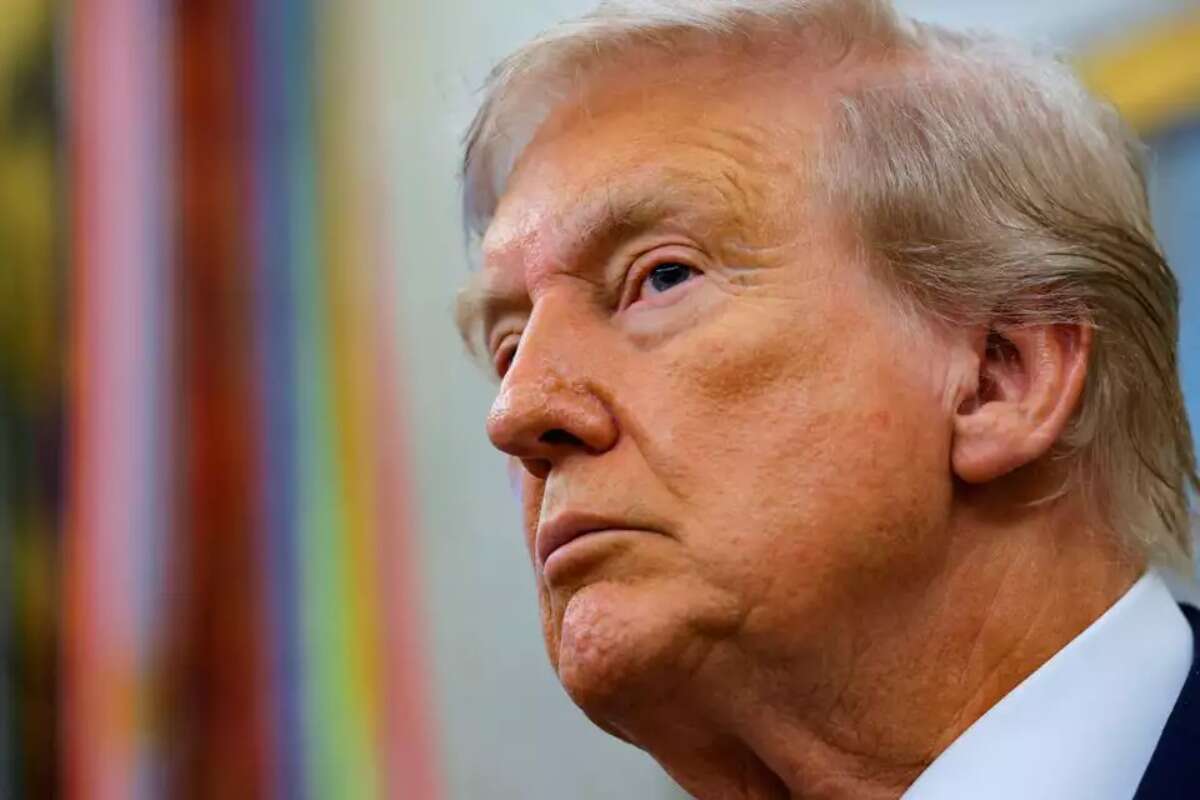
Trump. Photo: Reuters Reuters

From the outset of his presidency, Trump adopted a public style characterized by blunt language, personal insults, exaggerations, and threats. Adversaries were labeled with derisive nicknames—"Rocket Man" for Kim Jong-un, for example—while entire regions were disparaged in coarse terms. More strikingly, such rhetoric was not confined to rivals. Allies were treated similarly. European leaders were publicly belittled for alleged weakness or dependence on the United States. NATO partners were accused of "free-riding," and long-standing security commitments were described as unfair burdens rather than shared responsibilities.

His treatment of France's president Emmanuel Macron illustrates this pattern. Trump repeatedly mocked Macron's domestic political difficulties, minimized France's military contributions, and implied that Paris depended entirely on American protection. At public events and on social media, he portrayed Macron not as a partner but as a subordinate. Comparable behavior was directed at Germany's Angela Merkel, Canada's Justin Trudeau, and other democratic leaders, often through personal jabs that blurred the line between diplomatic negotiation and public shaming. Such conduct signaled that even close allies were subject to coercive pressure and symbolic degradation.

This rhetorical strategy frequently relied on questionable or inflated claims. A notable example concerns Israel's Iron Dome missile defense system. Trump asserted that the system was essentially based on American technology and implied primary U.S. ownership of the achievement, despite the broad recognition that Iron Dome represents a distinctly Israeli innovation developed by Israel's defense industries, albeit with important American financial support. The statement reflected a broader tendency to appropriate allies' successes in order to reinforce narratives of American primacy.

Trump's speeches, including high-profile international forums, often amplified this approach. Instead of coded diplomatic language, he employed ridicule and intimidation to project dominance. These choices appear deliberate rather than impulsive. They form part of a coherent worldview that challenges the post-1945 liberal order. In this conception, international politics is hierarchical and transactional: legitimacy derives from power, not norms; alliances are conditional bargains; and respect is extracted through pressure rather than earned through cooperation.

Trump's diplomatic style therefore represents more than unconventional behavior or rhetorical excess. It reflects an attempt to normalize insult, humiliation, and coercion as legitimate tools of statecraft. Whether such tactics strengthen deterrence or instead erode trust, weaken alliances, and accelerate fragmentation of the international order remains uncertain. What is clear, however, is that this approach marks a substantive transformation in the language and practice of contemporary diplomacy.
Tags: Donald Trump

Related Posts

Donald Trump

What Backgammon can teach Washington about Iran

by Liron Rose and Amit Shabi

Iran's survival is not accidental. It is the structural foundation of Tehran's strategy. For decades, Washington has asked the wrong...

Israeli ally fumes: 'Reconsider recognition of Armenian genocide'Shalev Man

Jerusalem and Baku owe each other loyalty, not sovereignty

by Shay Gal

The Jewish state does not bargain over truth – and Azerbaijan deserves Israel’s loyalty, not a veto over its memory.

'Favorite Jewish uncle' and the limits of learning from NazismSarah Rice/Getty Images/AFP

'Favorite Jewish uncle' and the limits of learning from Nazism

by Josh Warhit

The postwar West learned to recognize anti-Jewish bigotry through Nazism’s form rather than its function.

Menu

Analysis 

Archaeology

Blogpost

Business & Finance

Culture

Exclusive

Explainer

Environment


Features

Health

In Brief

Jewish World

Judea and Samaria

Lifestyle

Cyber & Internet

Sports


Diplomacy 

Iran & The Gulf

Gaza Strip

Politics

Shopping

Terms of use

Privacy Policy

Submissions

Contact Us

About Us

The first issue of Israel Hayom appeared on July 30, 2007. Israel Hayom was founded on the belief that the Israeli public deserves better, more balanced and more accurate journalism. Journalism that speaks, not shouts. Journalism of a different kind. And free of charge.

All rights reserved to Israel Hayom

Hosted by sPD.co.il

  • Home
  • News
    • Israel at War
    • Israel
    • United States
    • Middle East
    • Sports
  • Opinions
  • Jewish World
    • Archaeology
    • Antisemitism
  • Lifestyle
    • Food
    • Travel
    • Fashion
    • Culture
  • Magazine
    • Feature
    • Analysis
    • Explainer
    • Environment & Wildlife
    • Health & Wellness
  • In Memoriam
  • Subscribe to Newsletter
  • Submit your opinion
  • Terms and conditions

All rights reserved to Israel Hayom

Hosted by sPD.co.il

Newsletter

[contact-form-7 id=”508379″ html_id=”isrh_form_Newsletter_en” title=”newsletter_subscribe”]

  • Home
  • News
    • Israel at War
    • Israel
    • United States
    • Middle East
    • Sports
  • Opinions
  • Jewish World
    • Archaeology
    • Antisemitism
  • Lifestyle
    • Food
    • Travel
    • Fashion
    • Culture
  • Magazine
    • Feature
    • Analysis
    • Explainer
    • Environment & Wildlife
    • Health & Wellness
  • In Memoriam
  • Subscribe to Newsletter
  • Submit your opinion
  • Terms and conditions

All rights reserved to Israel Hayom

Hosted by sPD.co.il