Ahead of an expected announcement on the establishment of the ISF stabilization force, the proposed multinational force for the Gaza Strip, contacts are under way with several countries regarding their principled participation, including Greece and Albania.
Israel would welcome the presence of troops from both countries as a counterweight to Turkey and its soldiers. Greece maintains deep ties with Israel and has strengthened military cooperation within the Eastern Mediterranean alliance framework. Albania, a Muslim-majority country, is seeking to expand economic and tourism ties with Israel. Both nations are also wary of Turkish expansionism in the Eastern Mediterranean and President Recep Tayyip Erdogan's aggressive policies.

A diplomatic source said the two were friendly countries preferable to others mentioned, foremost Turkey. They stressed that this did not constitute permission or an opening for Turkish troops to join the force slated for deployment in Gaza, and that Israel's opposition to such a move remained unchanged. At the same time, they acknowledged that the practical establishment of the force was still far off, as were agreements among all parties on its deployment.
For now, any celebration would be premature. The countries' statements amount only to declarations in principle. They are expected to be added to a list that President Donald Trump is set to announce this week at a Board of Peace meeting in the US, a list that currently exists only on paper.
Troops in Gaza only after Hamas disarmament
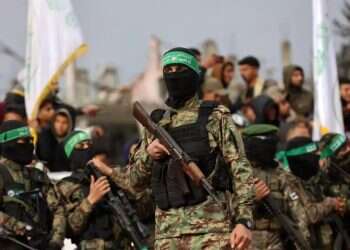
All countries that have agreed to be included on the list have made clear they will not send troops into the Gaza Strip before Hamas is disarmed. In practice, the upcoming announcement is therefore likely to be largely declarative, or at most involve the dispatch of military experts in various fields to a joint headquarters in Kiryat Gat. That headquarters has reportedly thinned out in recent weeks amid a lack of progress toward the second phase in Gaza.
In Israel, officials believe Hamas' refusal to disarm will continue to delay and obstruct any negotiations over the full conclusion of the war and the reconstruction of Gaza. Without a viable agreement on disarmament and the creation of an enforcement mechanism, Israel will not consent to the deployment of other forces on the ground.
Because no such breakthrough appears imminent, the prevailing assessment is that once the ultimatum period granted to Hamas ends, the IDF will renew military pressure on the terrorist organization.

Beyond its demand to retain light weapons, Hamas has conditioned its agreement to the next phase on leaving thousands of its "police" personnel within the framework of a new police force in Gaza. It has also conditioned the transfer of civilian governance to a national committee, a technocratic government, on keeping Hamas-affiliated civil servants in their positions.
Thus, just days before the convening the Board of Peace in the US, the deadlock in negotiations persists. Efforts to persuade Hamas to retract its demands have so far failed. A compromise proposal under which a small group of Hamas guards would remain armed to protect the organization's senior leadership was rejected by a leadership determined to retain its status, even if behind the scenes, and above all to maintain control over its weapons.