


"At this round, compared to the previous one, the discussions were more serious and the atmosphere was more constructive," Araghchi said at the conclusion of the talks. "Various ideas were raised, and we reached a general agreement on guiding principles on the basis of which we will enter into drafting the text of a possible agreement."
He cautioned that "the path has begun, but we will not reach an agreement soon. When you begin drafting text, the work becomes difficult." According to Araghchi, no date has been set for a third round, and it was agreed that both sides would work on draft proposals before scheduling further talks. "We now have a clearer picture of what needs to be done," he said. "Both sides have positions that require time to narrow, but there are now principles on the basis of which both sides are moving forward."
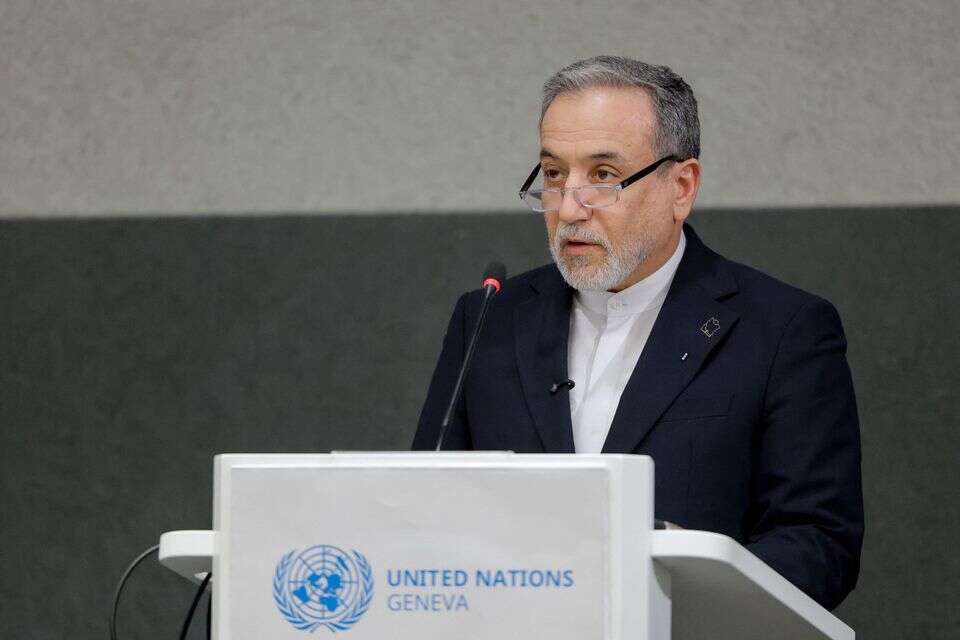
The talks were held at the residence of Oman's ambassador to the United Nations institutions in Geneva. As in the first round earlier this month in Muscat, the negotiations were conducted indirectly through Omani mediation led by Omani Foreign Minister Badr al-Busaidi. The US delegation was headed by special envoy Steve Witkoff and Jared Kushner, President Donald Trump's son-in-law. The Iranian delegation was led by Araghchi. Outside the venue, hundreds of Iranian exiles demonstrated, chanting "No talks with terrorists" and "Long live the shah."
According to The Wall Street Journal, Iran floated the idea during the talks of not resuming uranium enrichment, transferring part of its enriched uranium stockpile to another country, and offering economic deals, but stopped short of committing to a complete halt to enrichment.
American, Iranian and regional diplomats who spoke to the newspaper said Tehran had expressed willingness to transfer part of its enriched uranium stockpile, about 440 kilograms of uranium enriched to 60 percent, close to weapons-grade, to a third party such as Russia. This is a central US demand. The fate of the stockpile has been unclear since the war, though it is believed to remain buried under the rubble of nuclear facilities damaged in the June US strike that disabled Iran's main enrichment sites.
The Wall Street Journal also reported that Iranian officials hinted in talks with regional diplomats that they might propose freezing enrichment for up to three years. Such a pledge would change little in practice, however, since Iran appears to have halted enrichment after the June US attack crippled its primary nuclear facilities. The idea also falls short of Washington's demand that Iran completely relinquish enrichment on its soil.

Back to a regional consortium?
In the first round of talks in early February, Iran proposed establishing a regional consortium to produce nuclear fuel rods from enriched uranium for civilian use. The proposal was intended to lend international legitimacy to Iran's civilian use of uranium. However, Tehran insisted that the enrichment and production process remain on Iranian territory, a position unacceptable to Washington because it would leave Iran in control of nuclear material and infrastructure that could also be used for military purposes. The proposal had also been raised in pre-war discussions.
Regional diplomats are considering a far broader framework that would address not only the nuclear issue but also nonaggression commitments and economic arrangements. The idea, according to The Wall Street Journal, is to capture Trump's attention with a large, multi-phase plan modeled on the Gaza agreement.
As part of that concept, Iranian officials have suggested incorporating shared economic interests in oil and gas, mining investments and even aircraft purchases in exchange for sanctions relief. "To ensure the sustainability of the agreement, it is essential that the US also benefit from areas with high and rapid economic returns," officials were quoted as saying by the semi-official Fars News Agency.
Parallel to the Geneva talks, Iran temporarily closed the Strait of Hormuz to shipping for several hours on Tuesday, as the naval arm of the Islamic Revolutionary Guard Corps conducted missile fire from coastal batteries and missile boats and practiced special forces landings from helicopters in the strait area. The drill, which began Monday, was dubbed "Smart Control of the Strait of Hormuz."
Separately, Nikolai Patrushev, an aide to Russian President Vladimir Putin, said warships from three countries were deployed in the Strait of Hormuz as part of the "Maritime Security Belt 2026" exercise, according to Iran's IRNA news agency. He said this was the seventh round in a joint series of exercises held since 2018 and that Russia is working to build a "multipolar world order in the oceans."
Shortly after the talks began, Khamenei addressed a gathering in the city of Tabriz and issued a direct threat to the US. "It seems the American president keeps saying that their military is the strongest in the world. The strongest military in the world can sometimes suffer a blow so severe that it cannot recover. They keep saying they sent an aircraft carrier toward Iran. Very good, an aircraft carrier is indeed a dangerous tool, but more dangerous than it is the weapon that can send it to the bottom of the sea," Khamenei said.

Khamenei also referred to what he described as American efforts to topple the regime. "for 47 years, America has not succeeded in eliminating the Islamic Republic – he complained to his people. That's a good admission. I say, you too will not succeed in doing that."

