


According to sources who spoke with Israel Hayom, the atmosphere at the talks was positive, and US representatives responded favorably to several Iranian proposals. The sides agreed to hold another meeting after internal consultations. However, there was no confirmation of Iranian Foreign Minister Abbas Araghchi's claim that the parties had reached understandings on several guiding principles for continuing negotiations.

Among the details emerging from the meeting, Iran no longer categorically rejects transferring enriched uranium out of the country. Tehran revived a proposal raised in previous rounds of negotiations to deposit the material with a third country, suggesting Russia as a possible custodian.
At the same time, Iranian negotiators claimed that some of the enriched uranium had been buried under rubble following Israeli and US airstrikes during the June 2025 war. Western intelligence assessments reject that assertion, saying the entire stockpile, estimated at about 440 kilograms (approximately 970 pounds), was removed from one facility and relocated to another undisclosed site.
During Tuesday's talks, Iran refused a US demand to allow an international inspection of the site in question or to assist in recovering the enriched uranium.
The material in question is enriched to levels of 80 percent or higher, sufficient for the production of several nuclear bombs. Iran has long maintained that its enrichment activities are for civilian purposes, but uranium used for civilian nuclear energy is typically enriched to no more than 3.75 percent.
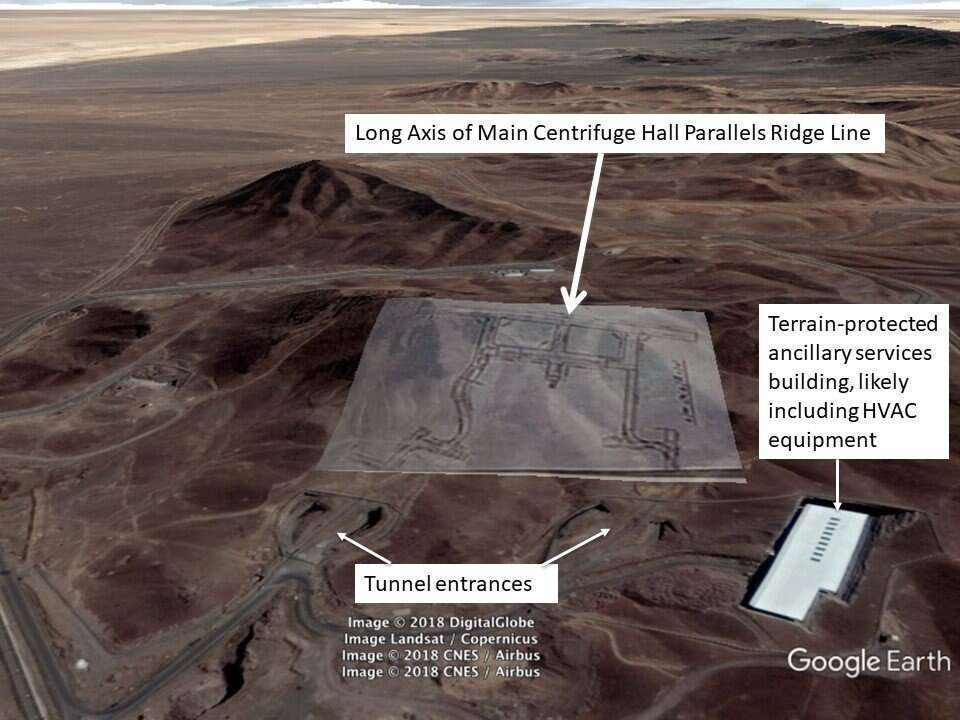
On enrichment policy, Iran proposed a temporary suspension followed by the construction of a regional enrichment facility on its own soil under international supervision. The facility would supply low-enriched uranium for civilian use to neighboring countries. The United Arab Emirates, for example, operates a nuclear power plant using uranium purchased abroad. Similar proposals were raised in earlier negotiations and were not ruled out at the time by US officials.
Araghchi also suggested launching a trilateral round of talks involving representatives of the International Atomic Energy Agency to determine the scope of oversight for Iran's nuclear facilities. He pledged readiness to grant inspectors access at any time to all sites. In exchange, Iran demanded a phased lifting of sanctions, beginning immediately "to demonstrate seriousness and build mutual trust."
On other contentious issues, Iran responded indirectly to US demands to address its missile program and support for regional terrorist organizations, chiefly Hezbollah. Iranian officials expressed in-principle agreement to discuss matters "that concern our Arab neighbors" within the framework of a regional conference to be convened after understandings are reached on the nuclear file.
Tehran argues that such issues should be addressed directly with neighboring states, rather than through US representation. Turkey and Qatar have voiced support for hosting such a conference. Israel would not be included in that forum.

Regarding its missile arsenal, the Iranian delegation said the weapons are necessary for self-defense against Israeli aggression, citing the June conflict as proof of the threat. Without them, the delegation argued, Iran would lack the ability to respond to future attacks.
The issue of Iran's crackdown on domestic protests was barely discussed. Tehran rejected a proposal to allow an international delegation to visit and examine allegations of massacres of demonstrators and executions. Israel Hayom has reported that Iran misled US officials after promising there would be no executions. In practice, hundreds and possibly thousands were executed following arrest, most without trial and some after expedited proceedings conducted via video conference.
In what appeared to be an effort to bolster the diplomatic track, Araghchi floated the idea of a broad regional economic arrangement with significant US involvement, alluding to President Donald Trump's past "mega deal" vision and the "Deal of the Century." He thereby confirmed a previous Israel Hayom report that American companies could be granted access to Iran's oil, gas and mining sectors, all of which require massive investment but promise potentially substantial returns. The possibility of renewing Iran's civilian aviation fleet through purchases from US manufacturers, chiefly Boeing, was also raised.
The approach is intended to present Iran as open to compromise while offering potential benefits to American companies and the US economy, in contrast to the costs and uncertainties of a military confrontation.
At the same time, Iran's Supreme Leader Ayatollah Ali Khamenei showcased the more confrontational side of Tehran's strategy, issuing threats against US forces and warning of a severe blow if Iran is attacked. He posted similar messages in multiple languages on the social media platform X, including in Hebrew.
Iran has also continued influence campaigns inside the US aimed at reinforcing the narrative that a strike on Iran serves only Israeli interests and that Israel is dragging Washington into an unnecessary war, as it has done in the past.
Tehran has sought backing from its allies Russia and China, both of which announced participation in a naval exercise during which parts of the Strait of Hormuz were partially blocked, an implicit threat to a waterway through which roughly one-third of the world's oil supply passes. The involvement of Moscow and Beijing is meant to signal that Iran has diplomatic support and a potential military supply line should the US opt for military action.
Israeli officials had anticipated that Iran would present proposals that may look positive, but they assess that the offer still falls short of meeting US demands, particularly on nuclear transparency and certainly on broader issues. As part of close coordination with the Trump administration, Israel is expected to receive a detailed update on the outcome of Tuesday's meeting.

