


Tensions ahead of a possible war with Iran eased slightly over the weekend, but reports emerging from Washington indicate that the likelihood of military action has in fact increased, even if it is delayed by days or weeks.
A series of additional developments point in that direction. The New York Times reported that US troops are being evacuated from several bases in the Gulf and that Washington is moving additional air defense systems to the region to help protect its forces and allies. The expanded deployment is expected to be completed by mid-March, potentially signaling what American planners see as the optimal timing in the delicate balance between offense and defense.

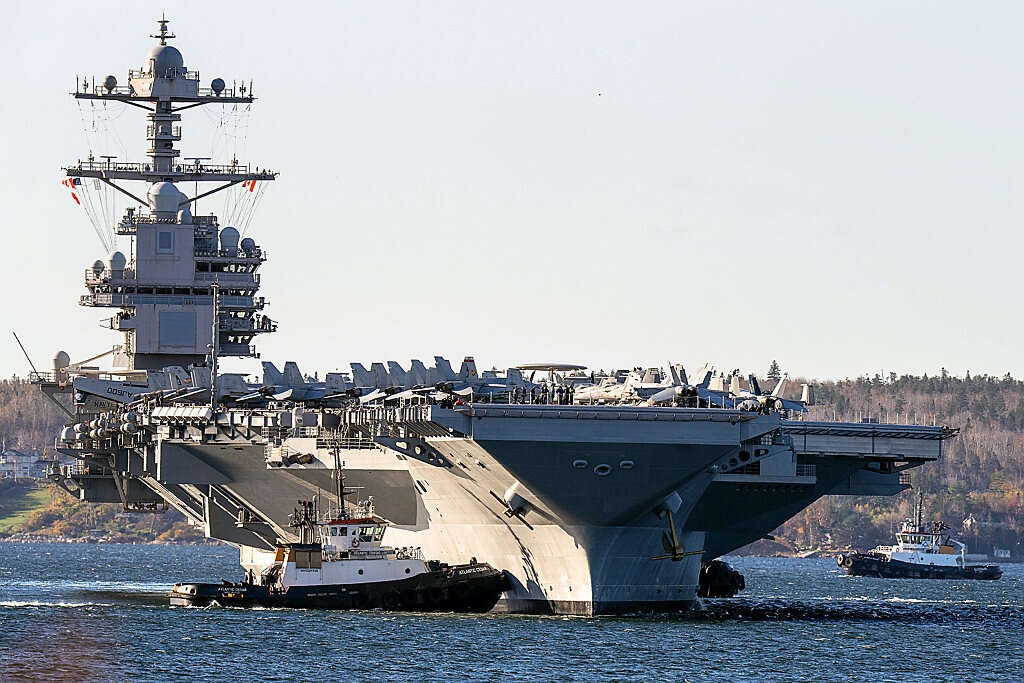
The USS Gerald R. Ford, the largest and most advanced aircraft carrier in the world, was seen crossing the Strait of Gibraltar last week en route to the eastern Mediterranean. As previously reported, it is expected to dock near Israel's coast to assist in its defense and potentially serve as a platform for strikes against Iran. Stationing the carrier in the Mediterranean rather than in the Persian Gulf, where other carriers are deployed, may reflect a desire to disperse strategic assets in the face of the Iranian threat and to deter Tehran's proxies, chiefly Hezbollah, from joining a broader conflict.
The last time a US aircraft carrier was positioned near Israel was immediately after the October 7 massacre carried out by Hamas in 2023. At the time, Washington assessed that Israel could face an existential threat and sought to bolster its defense and deter its enemies. The deployment was accompanied by then president Joe Biden's well-known "Don't" speech, which in retrospect appeared aimed not only at Israel's enemies but also at Jerusalem, as it weighed a pre-emptive strike against Hezbollah. It is possible that Washington now again seeks to set clear boundaries and ensure that any campaign, if launched, does not spiral beyond them.
In Israel, officials had prepared for the possibility that a strike could be launched as early as last weekend, but tensions subsided after Trump said he would allow another 10 to 15 days for negotiations. Assuming this is not a deception tactic, it suggests that the US intends to give Iran one more opportunity before war breaks out. The delay also allows time to complete operational preparations in the region and to stabilize the diplomatic and public messaging framework needed to support such action.
European leaders were reported Monday to be demanding clarification from Trump regarding the objectives of any war, while a US poll indicated that only 36% of Americans support the president. Given the American public's understandable reluctance to enter another potentially protracted Middle East conflict, it is clear why Trump wants to be seen as having exhausted every opportunity to avoid one.
Trump is weighing several options, including a limited strike designed to pressure Iran into concessions at the negotiating table. It is unclear whether such a move would succeed. Reuters reported that Iranian Foreign Minister Abbas Araghchi refused even to open an envelope containing a US proposal on missile issues. That could indicate Tehran believes it still has room to maneuver in talks, or that it is badly misreading Washington's intentions.

Israel, for its part, is preparing for a longer campaign than the one waged last June. Despite the self-imposed media blackout by the political and security leadership, it is hard to ignore the impression that some in Israel would prefer the campaign to begin now, with an openly declared objective not only of damaging Iran's nuclear and missile infrastructure but also toppling the regime. That is an especially ambitious goal, dependent on numerous factors, including the willingness of the Iranian public to return to the streets and the emergence of internal actors capable of seizing power in Tehran.
In the meantime, Israel is acting to reduce risks. Friday night's strike on Hezbollah targets, primarily linked to its missile array, was intended to deny capabilities that could have been used against Israel and to target those commanding them. Hezbollah's decision once again not to respond underscores the strength of Israeli deterrence in Lebanon and raises further questions about whether it would join a war. It refrained from doing so last June, but it is currently under heavy pressure from Iran as Tehran seeks to activate every possible lever to defend itself and deter its enemies.


