


The US administration has updated Israel on the state of negotiations with Iran following talks held in Geneva on Friday night, amid growing American frustration over proposals that fell short of Washington's demands. At the same time, mediation efforts continue, led primarily by Omani Foreign Minister Badr al-Busaidi, who serves as the official intermediary and has been holding a series of meetings with senior officials in Washington.
Al-Busaidi arrived in the US capital directly from Geneva. After meeting with Vice President JD Vance, he issued notably optimistic statements, claiming Iran had agreed to relinquish its stockpile of enriched uranium, a step it had previously refused to consider. Even if accurate, however, significant gaps remain.

Key disputes persist over the fundamental issue of uranium enrichment on Iranian soil, which the United States categorically rejects, as well as over Iran's ballistic missile program and its support for terrorist organizations, among other matters.
Meanwhile, Israeli assessments increasingly suggest that, at least in the initial phase of a potential US strike, Tehran would refrain from directly targeting Israel. That scenario becomes more plausible if President Donald Trump opts for a limited strike designed to leave the door open for a return to negotiations.
Nuclear sites in crosshairs
According to a Israeli security official, such a strike would focus primarily on Iran's nuclear facilities, especially those Tehran has recently attempted to restore to operational status after they were severely damaged during Operation Rising Lion, the recent Israeli military campaign against Iranian targets.
In a limited operation, US forces would likely target and neutralize Iran's air defense systems, including surface-to-air missile batteries, as well as long-range missile capabilities.
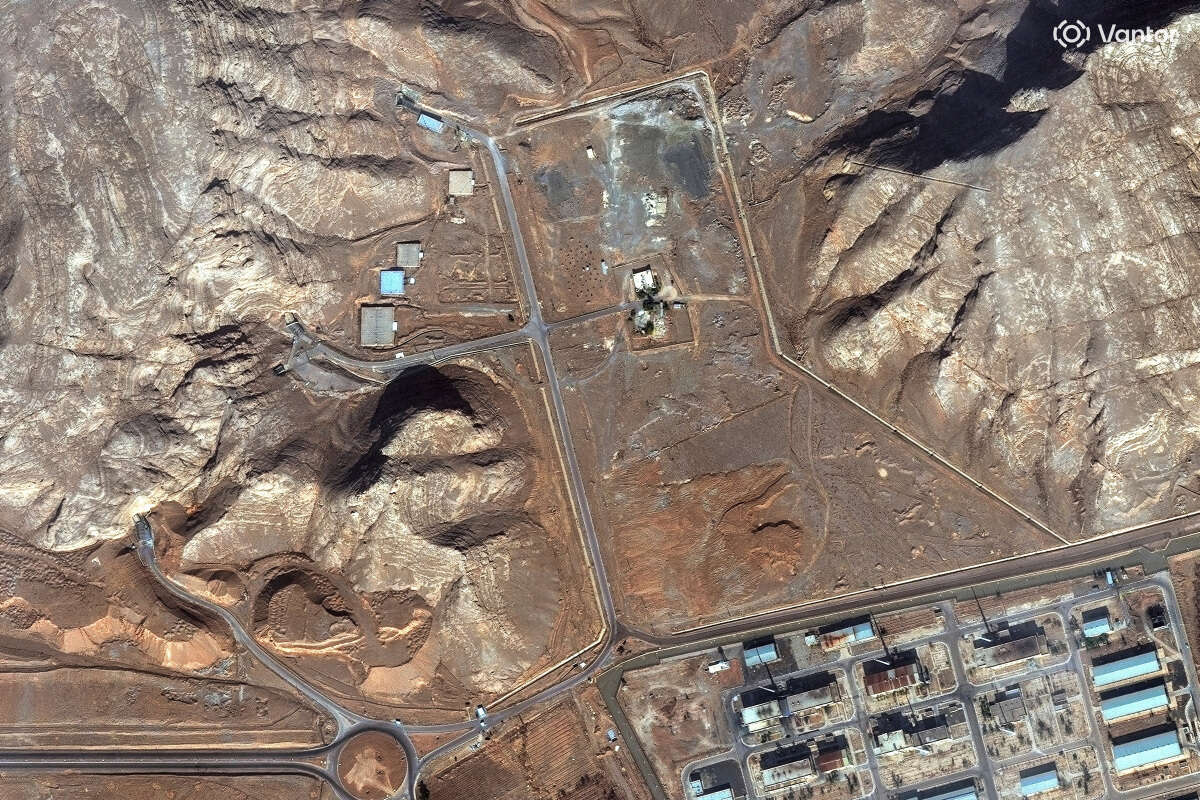
Israeli officials assess that as long as central regime institutions are not struck, and as long as the attack stops short of the full-scale military force the United States is capable of deploying, Iran will seek to avoid an all-out war. Instead, it would likely retaliate against US forces stationed at bases across the Middle East and against US naval vessels, and might attempt to disrupt maritime traffic in the Strait of Hormuz.
A direct Iranian attack on Israel, according to the assessment, would almost certainly transform the confrontation into a full-scale regional war. The entry of the Israeli Air Force into the equation would render virtually any target in Iran legitimate, including critical infrastructure and regime assets. That, in turn, would likely prompt a significant escalation by Washington, with strikes on a scale that could seriously threaten the stability of the regime.
"Minimum damage" strategy
"Despite their rhetoric, the Iranians are not capable of withstanding a sustained American assault, and certainly not a joint American-Israeli campaign," a senior Israeli security official said. "Such an attack would paralyze the regime's power centers and could encourage millions of regime opponents to take to the streets."
He argued that a measured Iranian response to a limited US strike would keep the conflict within manageable bounds, allowing the regime to contain the fallout and aim for minimum damage, while keeping domestic unrest on a low flame.

The official added that the regime would likely seek to exploit any American strike to rally public support against a common enemy, thereby preventing the protest movement from expanding beyond the social groups that have led it so far.
He further estimated that if Iran were to attack Israel, the scale would not match the scope seen during Operation Rising Lion, both because of the severe damage inflicted on Iran's missile and drone systems, which have yet to fully recover, and due to full US involvement in countering missile launchers.
Iran would be preoccupied with defensive operations and retaliatory fire against multiple targets across the region, with Israel this time only one among several fronts. Improved Israeli defensive capabilities are expected to handle such threats more effectively than during the fighting in June.
These assessments are also expected to inform decisions regarding air travel to and from Israel. Officials believe that, unlike in June, there will not be a complete shutdown of Israeli airspace.


