


Senior officials in Israel now acknowledge that the chances of overthrowing the regime in Iran are lower than initially estimated, and that the current military campaign may end without bringing down the government in Tehran. The assessment reflects the regime's firm grip on its security apparatus and the ruthless repression that has instilled deep fear among the Iranian public.
In recent days, Iran's leadership has appeared to regain a more orderly control over events inside the country, following the chaos that erupted after the elimination of Supreme Leader Ali Khamenei. Decisions are now reportedly being made mainly by Ali Larijani, secretary of the Supreme National Security Council, and Mohammad Bagher Ghalibaf, speaker of parliament. It remains unclear whether the new supreme leader, Mojtaba Khamenei, is involved in decision making or is currently serving mainly as a symbolic figure while others effectively run the country.
Larijani and Ghalibaf both appeared Friday at a mass rally in Tehran marking Iran's annual "Quds Day." Their appearance was intended to signal that the leadership remains in control and is not afraid to appear in public. In reality, the two, along with other senior Iranian officials, are reportedly behaving like wanted men, aware they could be targets for elimination.
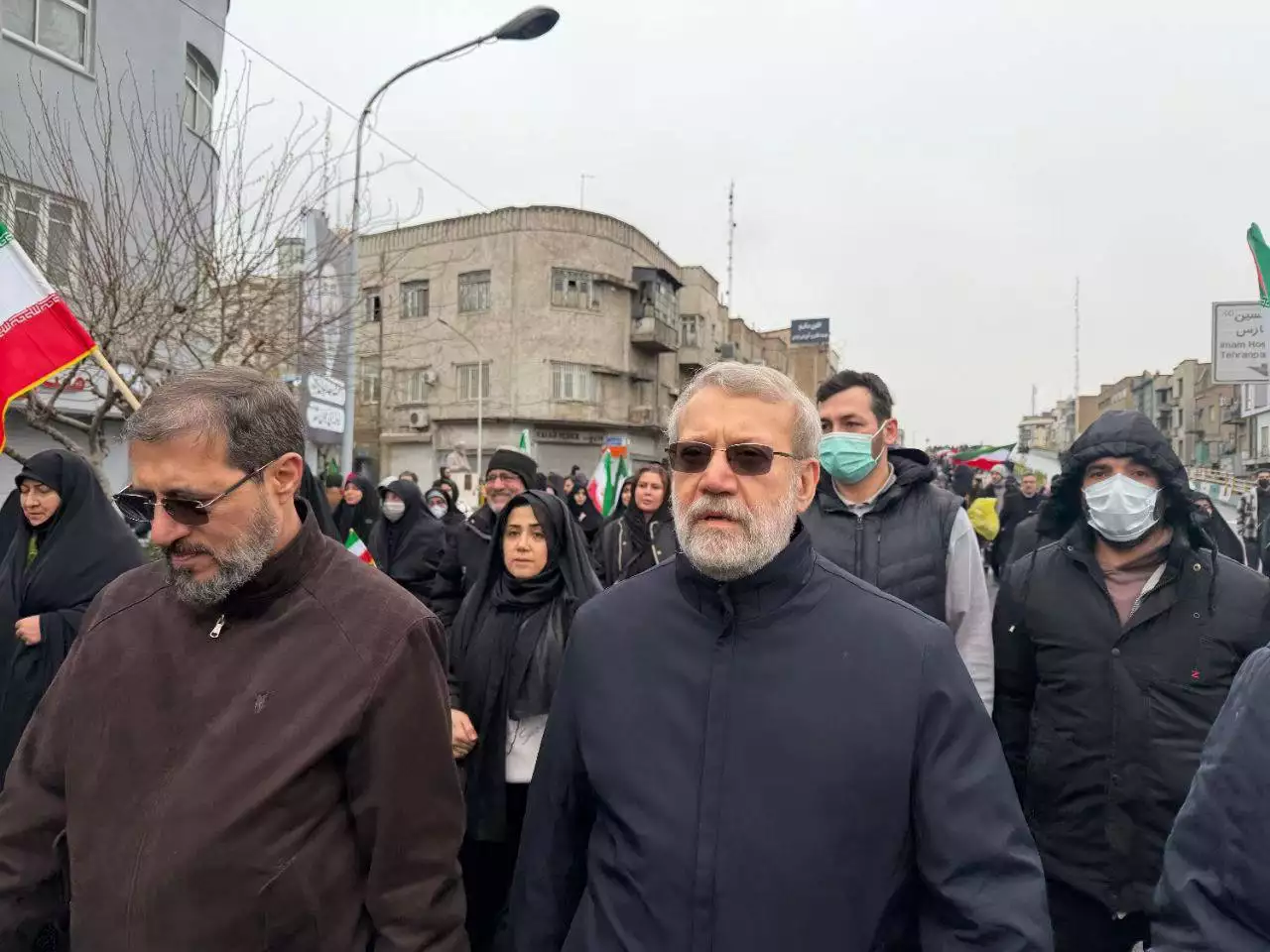
Mojtaba Khamenei did not attend the rally, apparently because of injuries he sustained during the strike that killed his father, in which his mother and brother were also killed. Instead, the crowd heard a recording of the elder Khamenei from last year.
Although overthrowing the regime was never formally defined as one of the campaign's goals, it was widely perceived as such by the Israeli public. Now Israeli officials are seeking to lower expectations, partly to prevent disappointment once the operation ends.
Decision makers in Israel still hope that a chain of events could lead to the regime's collapse, but the scenario in which the ayatollahs and their supporters remain in power is now considered more realistic. Israeli strategy is therefore being shaped around that assumption.
Three main lines of attack
Israel's offensive effort in Iran is now focused on three primary targets.
The first is Iran's missile threat to Israel, including launchers, missile stockpiles and air defense systems that could limit the Israeli Air Force's freedom of action.
Contrary to some highly optimistic estimates circulated earlier, the effort to dismantle Iran's missile-launch infrastructure is far from complete. Still, the Israeli Air Force's systematic hunt for launchers has made it harder for Iran to carry out attacks. In recent days, Iranian forces have begun redirecting some missiles toward northern and southern areas and have attempted to challenge Israel's air defense system by altering launch patterns and dispersing warheads.

The second effort targets Iran's weapons industry, particularly facilities involved in producing missiles and unmanned aerial vehicles.
US War Secretary Pete Hegseth emphasized this objective last week, stating that the campaign will not end until Iran's production capabilities are completely destroyed. The network includes hundreds of factories, research centers, laboratories and other facilities, which are now being systematically struck according to a coordinated plan dividing the work between the Israeli Air Force and US forces.
Israel already struck production facilities during the 12-day war with Iran last June. At the time, the goal was to create leverage for a future agreement restricting missile production and Iran's nuclear program. Now the objective is to physically dismantle those capabilities so that even if the regime survives and no agreement is reached, Iran will need years to restore large-scale weapons production.

The third effort focuses on Iran's security forces and their infrastructure.
Israeli assessments indicate that about 4,000 members of the Islamic Revolutionary Guard Corps, the Basij militia and other security forces have been killed so far, with at least twice as many wounded. Only a very small number of civilians have reportedly been harmed. Unlike Hezbollah and the Hamas terrorist organization, which deliberately operate from within civilian populations, Iranian security forces generally operate from closed compounds that are easier to target.
US forces are assisting in strikes against these three target circles while also carrying out parallel missions to defend allied states in the Gulf and ensure freedom of navigation through the Strait of Hormuz.
At the same time, Gulf states appear reluctant to join the offensive effort directly, largely out of concern that Iran would intensify retaliatory attacks against them, especially against oil infrastructure.
Israeli officials estimate that about two more weeks will be needed to achieve the campaign's main objectives. IDF Chief of Staff Lt. Gen. Eyal Zamir has identified the eve of Passover, April 1, as a possible target date for ending the operation, while officials in Washington are discussing the possibility of ending it a few days earlier ahead of US President Donald Trump's planned visit to China at the end of March.
Jerusalem and Washington currently agree that the campaign should not be halted earlier, in order to avoid having to return to military action against Iran again in a few months.
Preparing for intensified fighting in Lebanon
At the same time, Israel is preparing to intensify fighting in Lebanon in the coming weeks.
This stems from two main factors. The first is Hezbollah's entry into the war, including attempts to deploy its Radwan force south of the Litani River in order to attack Israeli civilians and IDF troops. The second is Israel's effort to further weaken Hezbollah's capabilities and personnel in order to make it easier for the Lebanese government to assert control over the country in the future.
As part of the expanded activity, the IDF has moved infantry and armored forces to the northern Israel in recent days. Some units have deployed in forward positions in southern Lebanon to push Hezbollah away from Israeli border communities.
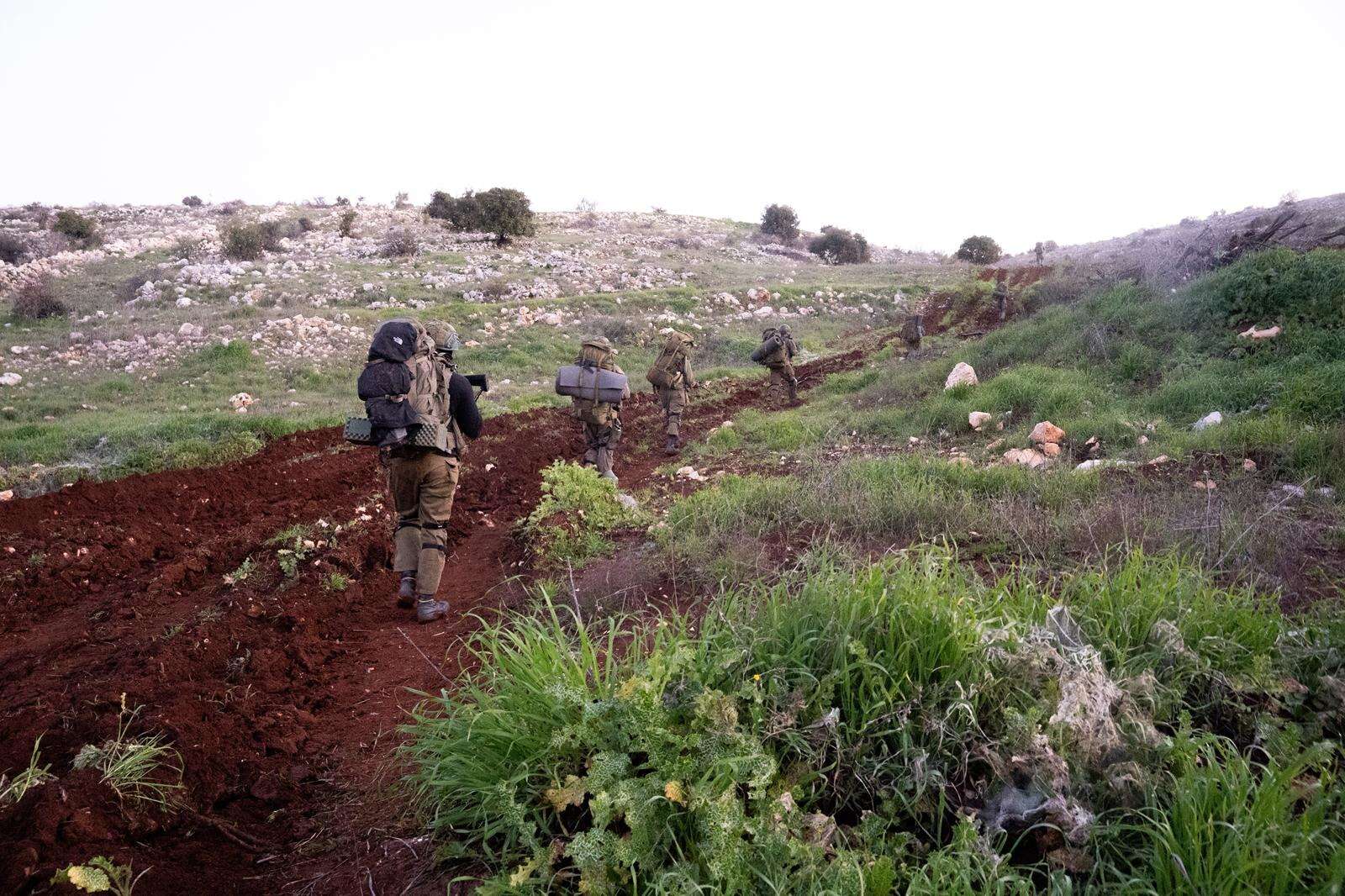
Israelis are naturally most concerned about the possibility of terrorist infiltrations into Israeli territory, but IDF Northern Command officials are also worried about anti-tank missile attacks on communities. The current operations are intended to reduce towns' exposure to such missiles and push additional communities out of rocket range.
During the previous round of fighting in Lebanon, which the IDF called "Northern Arrows," Hezbollah largely avoided ground combat in southern Lebanon and focused instead on launching rockets and drones into Israel. Now the organization has changed its approach, possibly under Iranian pressure or because its long-range attacks have had limited success.
This shift forces the IDF to adapt to the growing threat both to civilians and to ground forces.
The decision to engage more actively in combat also represents the first major test for Hezbollah leader Naim Qassem. Qassem has so far been seen as a cautious and relatively weak leader who has tried to maintain a low personal and organizational profile.
Israeli officials believe his current decision could also work to Israel's advantage, as it may increase friction between Hezbollah and the Lebanese government and strengthen Beirut's motivation to act against the group in the future.
Increasing pressure on Beirut
Until now, the fighting in Lebanon has been considered secondary to the campaign against Iran. However, after the massive rocket barrage fired at Israel on Wednesday night, it has gained greater weight in Israeli planning.
Israel is preparing to continue operations in Lebanon even after the main campaign against Iran ends, although it is unclear whether that will be possible depending on the policy pursued by Trump.

If a ceasefire is declared, Israel hopes to maintain control of extensive areas in southern Lebanon and evacuate them of residents, conditioned on significant action by the Lebanese army to disarm Hezbollah and demilitarize the south.
Before the current campaign began, the IDF held five positions inside Lebanese territory. It is now planning to control additional areas and prevent residents from returning to some villages in southern Lebanon, in an effort to increase pressure on the Lebanese government to act against Hezbollah.


